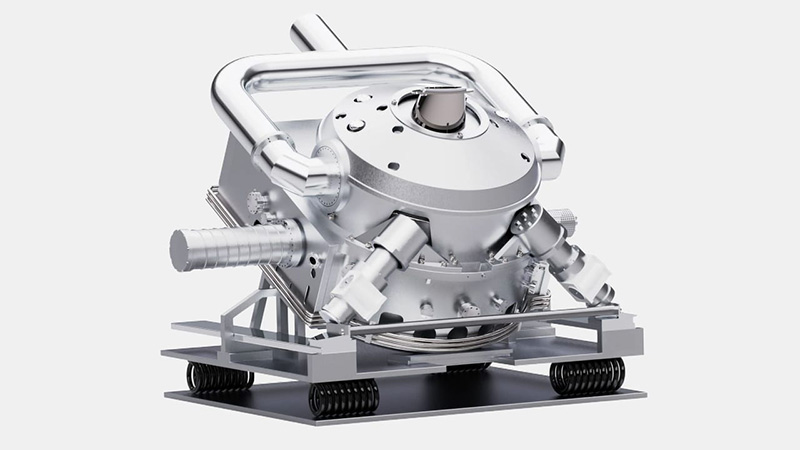
In the high-stakes world of semiconductor manufacturing, where nations compete for technological supremacy, a new claim has emerged from Beijing. Chinese startup Langdao Silex, in an announcement that rippled through global tech circles, unveiled what it described as a prototype extreme ultraviolet lithography (EUV) light source built with 90 percent domestically made components. The promise was bold: commercial viability within three to five years. For an industry dominated by Dutch giant ASML, such a claim from China represents more than just a technical achievement—it's a potential geopolitical earthquake in the making.

On October 21, 2026, Langdao Silex stepped into the spotlight with its EUV prototype. The announcement emphasized the 90 percent domestic component rate, a figure designed to signal China's progress toward technological self-sufficiency. In the complex world of semiconductor manufacturing, EUV lithography represents the pinnacle of precision, enabling the creation of smaller, more powerful chips that power everything from smartphones to artificial intelligence systems. The technology is so critical that ASML effectively holds a monopoly, with no other company capable of producing the most advanced EUV machines.

The most valuable insight from Damnang's latest expert call is not simply ASML's dominance in EUV lithography, but the economic limits of that dominance. The interview connects High NA adoption, manufacturing lead times, supplier bargaining power, and fab economics into one framework. It also examines Terafab and China's domestic EUV ambitions.
Behind China's public celebration of technological progress lies a strategic calculation. As Ahn Jin-ho observed, the messaging appears clear: "No matter how hard the US tries to block us, we can develop the technology ourselves, so the restrictions should be lifted." These announcements occur against a backdrop of increasingly stringent export controls imposed by the United States and its allies, designed to curb China's access to advanced semiconductor technology. By showcasing what appears to be indigenous progress, Beijing aims to pressure Western governments to ease these restrictions while simultaneously bolstering its domestic narrative of overcoming foreign technological containment.
The chasm between China's current capabilities and those of global leaders like ASML remains vast.
Despite the fanfare surrounding the prototype, experts remain deeply skeptical about China's actual capabilities and timeline. The reported performance of Langdao Silex's EUV light source, according to analysts, falls far short of commercial requirements. More fundamentally, many doubt China can develop a viable EUV lithography machine within the next decade. The technology represents an extraordinary engineering challenge, requiring not just innovation but decades of accumulated knowledge, specialized materials, and precision manufacturing that cannot be easily replicated through sheer determination or investment.
The chasm between China's current capabilities and those of global leaders like ASML remains vast. ASML's technology is so advanced that it effectively creates an insurmountable barrier for new entrants. China's claims, while politically potent, do not yet address the fundamental technological hurdles that have allowed ASML to maintain its dominant position in the market.
Within China's research ecosystem, state-backed projects face intense pressure to deliver results. As Kim Hyung-joon noted, "State-backed research projects face pressure to demonstrate results." This dynamic creates incentives for publicizing prototypes, even when the equipment remains far from commercial use. The announcements serve multiple purposes: attracting additional funding, raising China's technological profile both domestically and internationally, and maintaining momentum in a sector deemed critical to national security and economic competitiveness.

Chris Mack, world-renowned litho wizard, sat down with Tom's Hardware to talk about China's lithography strategy. Sadly, it's behind a paywall. https://t.co/EDWt14Tu5z https://t.co/Dv5VJ2Srh6
As China continues its pursuit of semiconductor independence, the gap between aspiration and reality remains wide. While the political messaging may resonate domestically and create diplomatic pressure on Western governments, the technological challenges are substantial. The semiconductor industry has proven resistant to shortcuts, with success requiring not just resources but time, expertise, and ecosystem development. For now, China's EUV claims appear more as political theater than technological breakthrough, leaving the global semiconductor landscape largely unchanged despite the bold announcements from Beijing.