
The quiet of the West Bank was shattered on October 23, 2026, by a shooting incident near the city of Hebron that would trigger a sweeping security response from the highest levels of the Israeli government. The attack, which took place in the region known as Judea and Samaria, left five Israelis injured, with two of them reported to be in critical condition. In the immediate aftermath of the violence, Israeli soldiers killed two men identified as the Palestinian attackers responsible for the shooting.

This single moment of violence acted as a catalyst for a series of rapid-fire executive orders. The incident did not merely prompt a localized police response; it set in motion a strategic pivot that would see the movement of millions of people restricted and the borders of the Palestinian territories effectively sealed.
By the end of that same day, Prime Minister Benjamin Netanyahu had moved to transform the security landscape. He ordered a total and indefinite closure of the occupied West Bank, a decision that encompasses the city of Hebron and the broader territories of Cisjordania. This is not a temporary measure of convenience, but a systemic shutdown designed to isolate areas deemed high-risk following the Hebron attack.
This sudden escalation arrives at a sensitive moment in the Israeli political calendar.
Netanyahu’s directive was not limited to the West Bank. He extended the reach of the military's control to the Gaza Strip, ordering the complete closure of its northern border. This dual-front approach—locking down the West Bank while simultaneously implementing a security blockade on Gaza's northern edge—represents a massive mobilization of Israeli security forces. The Prime Minister characterized these moves as essential components of a broader fight against terrorism, pledging that the state would continue to pursue members of Hamas and their supporters.
As the orders moved from the Prime Minister's office to the field, the Israeli military began the heavy work of implementation. The directive was clear: the military and security forces were to prepare for a full lockdown of the West Bank. This involves not just checkpoints, but a comprehensive security blockade intended to restrict movement and prevent further militant operations.
"I gave orders to the military to immediately apply a security blockade around the city of Al Khalil and prepare for the complete closure of the northern border of the Gaza Strip from today onwards," Netanyahu stated, identifying the city of Al Khalil—the Arabic name for Hebron—as a primary focal point of the new security perimeter. The blockade is intended to serve as a buffer, a way to physically separate potential combatants from civilian centers and Israeli population hubs.
This sudden escalation arrives at a sensitive moment in the Israeli political calendar. The country is currently navigating a period leading up to parliamentary elections, scheduled for October 27. Usually, this period is defined by rallies, debates, and intense political maneuvering, but the security crisis has forced a sudden change in tone.
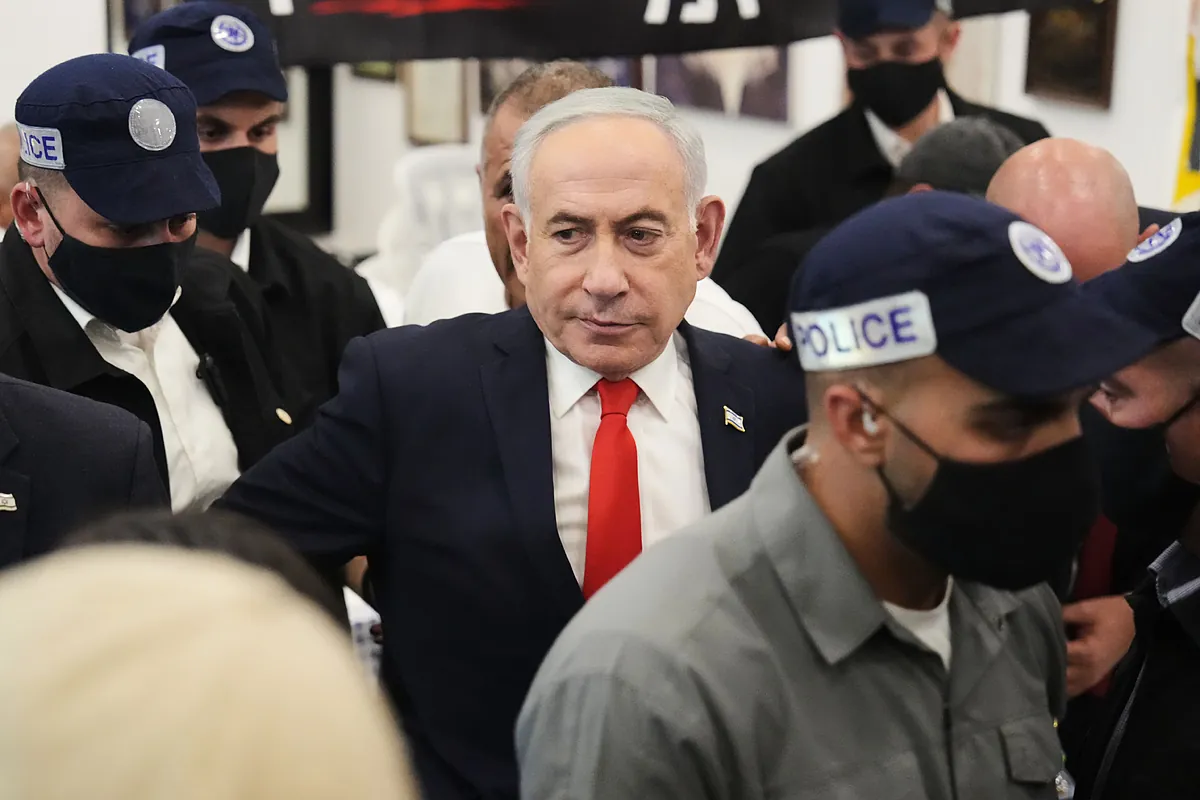
On October 23, Netanyahu called for the cancellation of all political meetings. The gravity of the security situation has effectively pushed campaign activities to the periphery, as the government shifts its focus from the ballot box to the battlefield. The administration is even considering more drastic measures, such as the disarming of Palestinian self-defense groups, as part of its effort to consolidate control and mitigate the risk of further violence during this volatile window.
The scale of the mobilization involves a wide array of state actors. Defense Minister Yaakov Katz stands alongside the Prime Minister in supporting these decisive security measures. The military's role has transitioned from routine patrolling to the active management of a large-scale blockade and the execution of increased security operations.
These operations include a mandate for new arrests across the West Bank, as authorities seek to preemptively address the threat posed by those they identify as terrorists. The objective is to create a state of total containment, ensuring that the instability sparked by the Hebron shooting does not spread into a wider regional conflagration before the elections conclude.
As the blockade takes hold, the reality on the ground in Hebron and the surrounding areas is one of profound restriction. The indefinite nature of the West Bank closure means that the normal rhythms of life—commerce, travel, and social interaction—are suspended under the weight of military necessity.
For the Israeli government, the priority is clear: the neutralization of threats from Hamas and the prevention of further attacks. For the territories under lockdown, the result is a sudden and total isolation. As the military continues to prepare for the complete closure of the northern Gaza border and the ongoing West Bank lockdown, the region remains in a state of high-tension suspension, waiting to see if these measures will bring the intended stability or merely deepen the existing fractures.