
In the bustling landscape of Hyderabad, where digital identity is the bedrock of modern life, the tools of civic participation are often handled by the most unassuming of intermediaries. For Ch. Mahadev, a 36-year-old man operating a local Xerox shop, these tools—the Aadhaar card and the PAN card—were not merely documents to be copied, but canvases to be manipulated. What appeared to be a standard service for the community was, in reality, a calculated enterprise in identity forgery.
Mahadev’s operation did not rely on crude physical tampering. Instead, he utilized software to reach into the digital architecture of these essential identity documents. By altering the data embedded within the cards, he could effectively rewrite a person's official history, creating a paper trail that did not exist in the real world. This was not a service of convenience, but a systematic subversion of the security measures meant to protect the integrity of national identification.
Identity, in its most formal sense, is often treated as an immutable fact. But for those willing to pay, Mahadev offered a way to make facts fluid. The economics of his forgery business were remarkably accessible, making the corruption of identity a low-barrier transaction. He operated on a sliding scale of deception, where the complexity of the lie determined the cost.
The task force, tasked with maintaining the security of the region, moved to intercept the flow of these fraudulent documents.
For a relatively modest sum of 300 INR, a customer could have their date of birth altered on an Aadhaar card. For more extensive changes—the kind that might involve shifting names, addresses, or other critical identifiers—the price climbed to between 700 and 1,000 INR. These were not high-stakes heists involving millions; they were small-scale, high-frequency transactions that undermined the very concept of a verified identity, one few hundred rupees at a time.
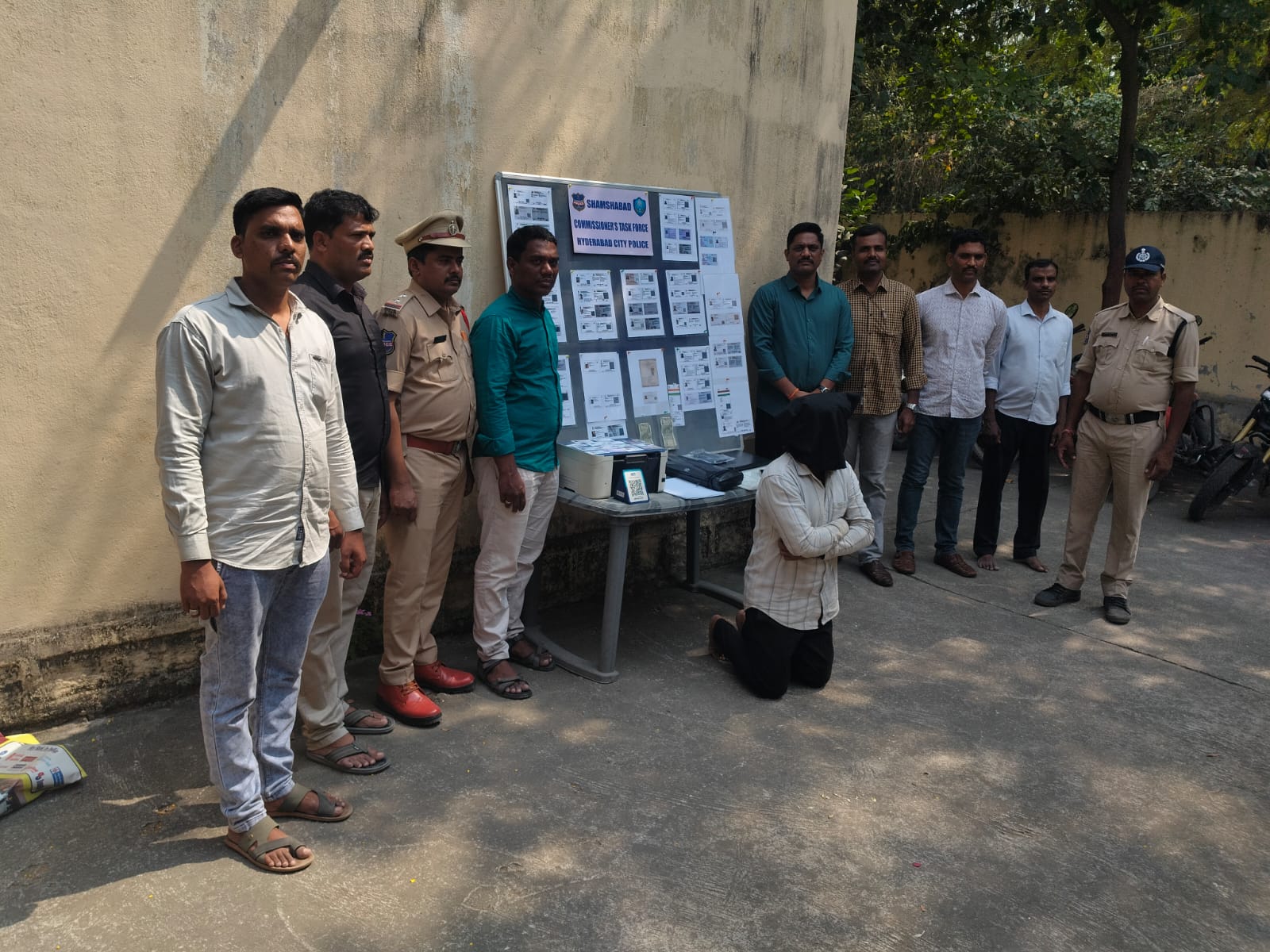
The quiet mechanics of this forgery operation eventually drew the attention of the authorities. The Commissioner’s Task Force, specifically the team operating within the Shamshabad zone, began an investigation that would pierce the veil of Mahadev’s legitimate-looking storefront. The task force, tasked with maintaining the security of the region, moved to intercept the flow of these fraudulent documents.
On October 30, 2026, the investigation culminated in the arrest of Mahadev. The raid on his premises transformed the perception of his Xerox shop from a place of clerical assistance to a hub of criminal activity. As officers moved through the space, they uncovered the physical evidence of a digital crime, revealing the scale of the deception that had been unfolding under the guise of routine business.
When the police processed the scene, the sheer volume of the illicit output became clear. This was not an isolated incident of a single forged document, but a production line of false identities. Among the items seized were 60 fake or altered Aadhaar cards, the primary biometric identity document used across the country. Alongside these, investigators recovered two PAN cards, which are essential for financial transactions and tax identification.

The presence of these materials—the software-driven forgeries, the physical cards, and the cash—provided a complete picture of a man who had turned the fundamental building blocks of civic identity into a profitable, albeit illegal, commodity.
Mahadev’s arrest serves as a stark reminder of the vulnerabilities inherent in a society that relies heavily on digital documentation. When the tools used to verify who a person is can be manipulated by a local shop operator with a computer and a few hundred rupees, the security of the entire system is called into question. The ease with which these details were changed suggests that the barrier between a legitimate document and a forged one is thinner than the public might assume.
As the legal proceedings move forward following his arrest, the focus remains on the implications of such widespread, small-scale forgery. The case of the Hyderabad Xerox operator highlights a growing challenge: how to protect the sanctity of identity in an era where the digital and the physical are inextricably linked, and where the gatekeepers of information can sometimes be the very ones undermining it.