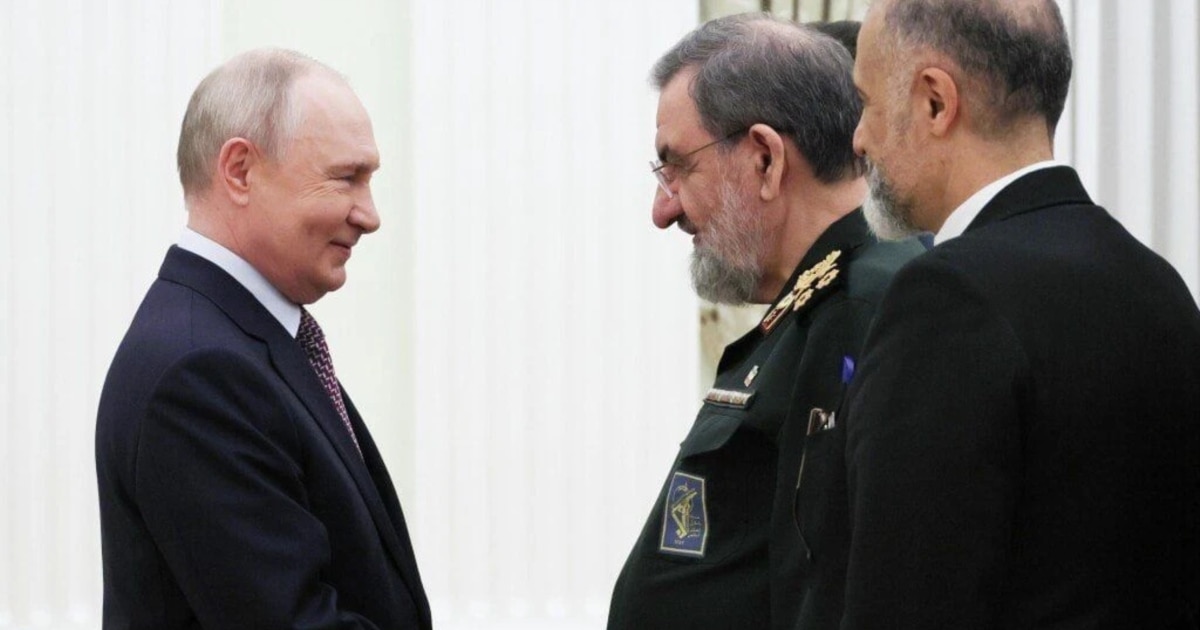
Diplomacy often begins with the quietest of sounds: the steady hum of a telephone line. For Mohsen Rezaei, the Secretary of Iran’s Supreme National Security Council, the groundwork for a significant geopolitical encounter was laid not in a grand hall, but through a conversation held in early November 2026. In a telephone call with Russian President Vladimir Putin, Rezaei expressed gratitude toward the Russian leader, specifically citing Moscow's support regarding the late leader of the Iranian Revolution and the broader context of Iran's national resistance.

This initial contact served as more than a mere courtesy; it was a signaling mechanism. By acknowledging Russia's stance on Iran's internal and revolutionary history, Rezaei established a foundation of shared sentiment before the physical movement of diplomats began. It was a moment of alignment, setting the stage for a face-to-face encounter that would carry the weight of statecraft.
By the afternoon of Thursday, November 5, 2026, the dialogue moved from the digital realm to the physical corridors of power. Rezaei arrived in Moscow. His mission was explicit and carried the highest level of authority: he was there to deliver a formal message from Iran's Supreme Leader directly to President Putin.
The delivery of such a message in the Kremlin serves as a physical manifestation of the bond between Tehran and Moscow.
The setting for this exchange was the Senate Palace within the Kremlin, a location synonymous with the exercise of Russian sovereign power. As Rezaei entered the Presidential Executive Office, the atmosphere was one of gravity. This was not a routine visit by a mid-level bureaucrat, but a high-level mission by a man whose title—Secretary of the Supreme National Security Council—underscores his role in the most sensitive corridors of Iranian decision-making.
The composition of the room in the Senate Palace revealed the true nature of the discussions. While the meeting was headlined by the two leaders, the presence of key advisors signaled that the talks were deeply rooted in security and intelligence coordination. Among those in attendance were Yury Ushakov, a Kremlin aide, and Igor Kostyukov, the Chief of the Russian Defense Ministry’s Main Intelligence Directorate.
The inclusion of Kostyukov, a figure representing the pinnacle of Russian military intelligence, transformed the meeting from a standard diplomatic greeting into a strategic summit. When intelligence chiefs sit at the same table as national security secretaries, the conversation inevitably shifts from the abstract language of friendship to the concrete realities of defense, surveillance, and coordinated security interests.
At the heart of the encounter was the message from the Supreme Leader. In the complex hierarchy of the Iranian state, a message delivered by a figure like Rezaei carries the direct intent of the nation's highest authority. The delivery of such a message in the Kremlin serves as a physical manifestation of the bond between Tehran and Moscow.
As the Kremlin released footage of the talks, the world was given a glimpse into the mechanics of this relationship. The visual record of the meeting between Putin and Rezaei serves as a testament to the continuity of their engagement. It was a moment designed to be seen, reinforcing the idea that the channels of communication between the two nations remain open, direct, and highly prioritized.
The discussions held on that November afternoon were characterized by a mutual emphasis on the future. Both parties underscored the vital importance of continuing strategic cooperation between Iran and Russia. This is not a relationship built on fleeting interests, but on a sustained effort to align their respective security postures.
This cooperation is multifaceted, touching upon the very essence of how both nations navigate a complex global landscape. By emphasizing the need to continue these strategic ties, Putin and Rezaei signaled that the partnership is viewed as an ongoing project—one that requires consistent high-level engagement to maintain its momentum and depth.
As the meeting concluded, the implications of the encounter remained etched in the diplomatic record. The transition from the telephone call to the formal presentation of the Supreme Leader's message illustrates a rapid and decisive escalation of engagement.
Today, the interaction stands as a clear marker of the ongoing diplomatic and security cooperation between Iran and Russia. Through the presence of intelligence directors and the direct delivery of high-level messages, the two nations have moved beyond simple dialogue into a structured, strategic partnership that continues to shape the security architecture of the region.