
For months, the opposition INDIA bloc has sought a platform to articulate its grievances against the federal government, but it is not their own marketing efforts that have drawn the largest crowd to their door. Instead, the Bharatiya Janata Party (BJP), the ruling party and the bloc's primary antagonist, has inadvertently handed them a megaphone. The dynamic has shifted so sharply that Rahul Gandhi, the leader of the opposition in the Lok Sabha, felt compelled to offer a public, and distinctly sarcastic, expression of gratitude. "A heartfelt thank you to the BJP and its allies for promoting this event so enthusiastically and ensuring its call reaches as many people as possible," Gandhi declared, framing the rival party’s aggressive campaigning as an unintentional gift to the opposition's cause.
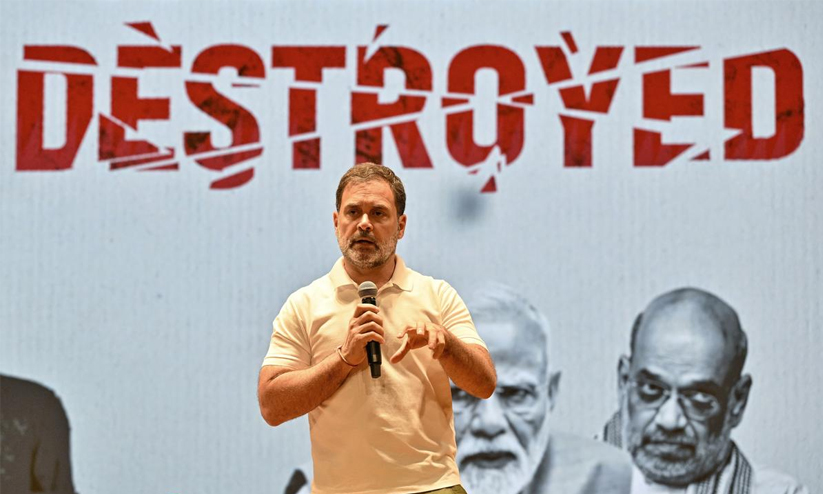
The event in question is a large-scale rally scheduled to take place in New Delhi, a logistical undertaking that goes far beyond a standard political speech. It is organized by the INDIA bloc, a coalition of parties united against the ruling coalition, and the All India Trinamool Congress is one of the voices calling for a response to what they characterize as a "violation of mat and values of democracy." While the specific phrasing "mat" appears to be a distinctive or translated term in their rhetoric, the intent is clear: the opposition is framing the coming days as a defense of democratic integrity. The rally is not a one-day occurrence; Gandhi emphasized that the movement will continue with the same enthusiasm and devotion for seven days, transforming a single day of protest into a sustained, week-long siege of public attention.

THE MAIN REASON WHY LEFT-WING GROUPS LIKE AISA ARE TRYING TO CREATE CHAOS IN DELHI: REASON: FOR THE FIRST TIME IN 50 YEARS, ZERO LEFT GOVERNMENTS ACROSS ALL STATES & UTs. https://t.co/67i8dmIkPe
The underlying mood of the opposition is one of rigid resolve, a sentiment best captured by Gandhi's unflinching promise: "We will not tolerate any violation of mat and values of democracy, even for any reason." This statement is not merely a slogan but the strategic anchor for the INDIA bloc's public actions. It positions the opposition as the guardian of a democratic ethos that they argue is under siege. To ensure the protest has a broad social base, Gandhi specifically called for the participation of students, farmers, workers, women, and youth. This is a deliberate move to expand the narrative beyond partisan politics and into a broader conversation about social justice, inviting the diverse fabric of Indian society to stand under the INDIA banner.
Leaders of the opposition INDIA bloc are set to hold a public impeachment of the Chief Election Commissioner, Gyanesh Kumar, on October 30.
The BJP’s response was swift and aimed at undermining the rally’s moral high ground. Rather than ignoring the event, the party accused the Congress of strategic insensitivity, arguing that the choice of date was calculated to "rub salt to the wounds" of victims of the 1984 anti-Sikh riots. By tying the rally to one of the darkest chapters in modern Indian history, the BJP sought to paint the opposition as exploiting historical trauma for contemporary political gain. This was a calculated move to shift the public’s focus from the opposition's stated goal of defending democratic values to a critique of their historical sensitivity. The framing by the BJP is critical; it is an attempt to control the narrative by questioning the intentions of the opposition.
Beneath the headline-grabbing rally lies a more legal and targeted maneuver. Leaders of the opposition INDIA bloc are set to hold a public impeachment of the Chief Election Commissioner, Gyanesh Kumar, on October 30. This action is a direct challenge to the integrity of the electoral process and is part of a broader campaign against what the bloc describes as vote theft. The public nature of the impeachment suggests that the opposition is looking to force a national conversation about the conduct of the elections, using the media spotlight to pressure for accountability. This legal front works in tandem with the physical rally, creating a two-pronged strategy of public protest and formal challenge.
As the calendar turns to early November, the political stakes in Delhi are higher than ever. The seven-day rally begins on November 1, a date that will likely be saturated with media coverage and public scrutiny. The sarcastic thanks from Gandhi to the BJP has already made its rounds, signaling to the public that the opposition is not easily deterred by their opponents’ attacks. The question for the next seven days is whether the INDIA bloc can sustain the momentum they have built, turning the BJP’s unintentional promotion into a defining moment for their political strategy. For now, the opposition stands ready, its message clear and its patience exhausted.