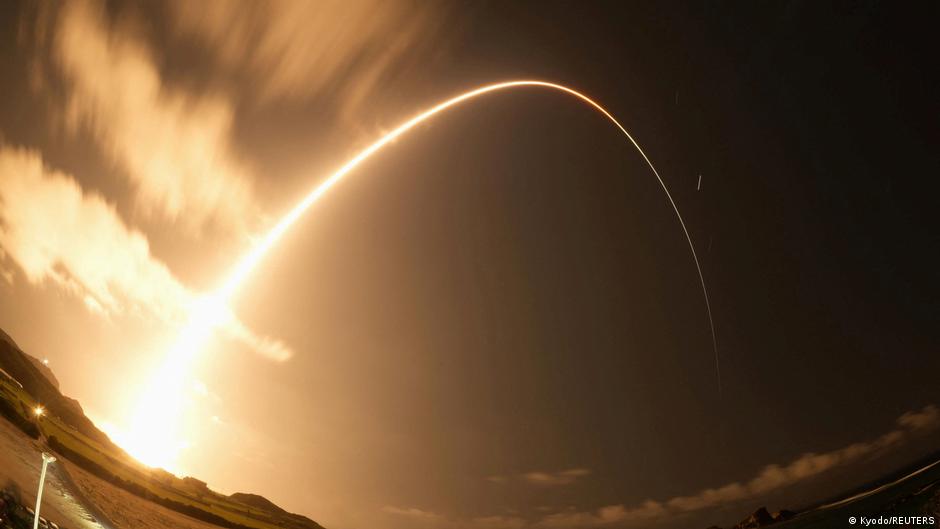
On a crisp Monday morning, history was written not on Earth's surface, but against the backdrop of space itself. Japan's space program achieved a monumental milestone with the successful launch of its MMX probe from the Tanegashima Space Center. For the scientists and engineers who dedicated years to this mission, the moment was nothing short of transcendent. "I'd dreamt of this day, so I'm incredibly happy," shared Mari Aida, a scientist at the Japan Aerospace Exploration Agency (JAXA), her voice carrying the weight of a dream realized. The launch represented more than just a technological achievement; it symbolized humanity's unquenchable curiosity about the cosmos and our place within it.

The MMX (Martian Moons eXploration) spacecraft embarks on an extraordinary journey to Mars, with its primary target being Phobos—the larger of Mars' two moons. While Mars has long captured the imagination of scientists and space enthusiasts alike, its moons remain relatively unexplored territories. This mission aims to change that by landing on Phobos not once, but twice, during its planned operations. The spacecraft will deploy a small rover to help collect samples from the Martian moon's surface, marking humanity's first attempt to bring back material from a natural satellite orbiting another planet.

🇯🇵 Japan just launched a spacecraft to a moon of Mars, and it's planning to bring a piece of it home. The uncrewed probe is headed for Phobos, one of Mars' 2 small moons. If it pulls this off, it'll be the first mission ever to collect samples from Phobos and return them to Earth. Writer: Julie https://t.co/gBRvfpkUr1
Ambition in space exploration rarely comes cheap, and the MMX mission is no exception. The project carries a price tag of ¥55.3 billion, a substantial investment reflecting the complexity and scope of the undertaking. This funding covers the development, launch, and operation of the spacecraft throughout its multi-year journey. For Japan, this represents a significant commitment to advancing its space capabilities and contributing to the global understanding of our solar system. The mission's cost is justified by the potential scientific returns and the technological advancements that will be developed along the way.
The mission's cost is justified by the potential scientific returns and the technological advancements that will be developed along the way.
The MMX probe's journey to Mars will span approximately four years, with an expected arrival date in August 2027. This extended travel time is necessary given the vast distances involved and the complex orbital mechanics required to reach Mars and its moons. The spacecraft will follow a carefully calculated trajectory, making precise course corrections along the way to ensure it arrives at its destination with the proper orientation and velocity. Upon reaching Mars, the MMX will begin its detailed observations of Phobos, mapping its surface and identifying optimal locations for sample collection.

Japan probe on its way to Mars moon https://t.co/Nid7CZQm1u
If all goes according to plan, the culmination of this ambitious mission will come in 2031 when the MMX spacecraft returns to Earth carrying its precious cargo. These samples will represent the first-ever material brought back from a Martian moon, a historic achievement in space exploration. The return of these samples to Earth will allow scientists to conduct detailed laboratory analyses that are impossible to perform with remote sensing instruments. This material could provide crucial insights into the formation of our solar system, potentially revealing information about the early stages of planetary development and the processes that shaped Mars and its moons.
While the collection of samples is the mission's primary objective, the MMX probe carries broader scientific implications. By studying Phobos, scientists hope to better understand the relationship between Mars and its moons, potentially shedding light on whether these moons are captured asteroids or formed from material ejected during a massive impact on Mars. The mission's findings could also inform future human exploration of Mars, providing valuable data about the Martian environment that may one day support human presence. As Japan's space program reaches for the stars with this ambitious mission, it not only advances scientific knowledge but also strengthens humanity's collective ability to explore the cosmos.

Japan launched a probe bound for a moon of Mars, giving the nation a head start over China in the race to become the first to return samples from the Red Planet or one of its moons https://t.co/Ts7nIq0pfZ