
The morning of November 2, 2026, began like any other for Sharad Pawar, a man whose name had long been synonymous with Maharashtra's political landscape. But by midday, his world had shifted. A bout of coughing—nothing more, nothing less—sent him to Ruby Hall Clinic in Pune, where doctors would soon detect pleuritic pain, a sharp discomfort in the chest that often signals something far more serious. For Pawar, a former chief of the Nationalist Congress Party (NCP) and a towering figure in Indian politics for decades, the admission was not just a medical event. It was a moment that forced the public to confront the reality of aging: even the most resilient figures are not immune to the body's quiet revolts.
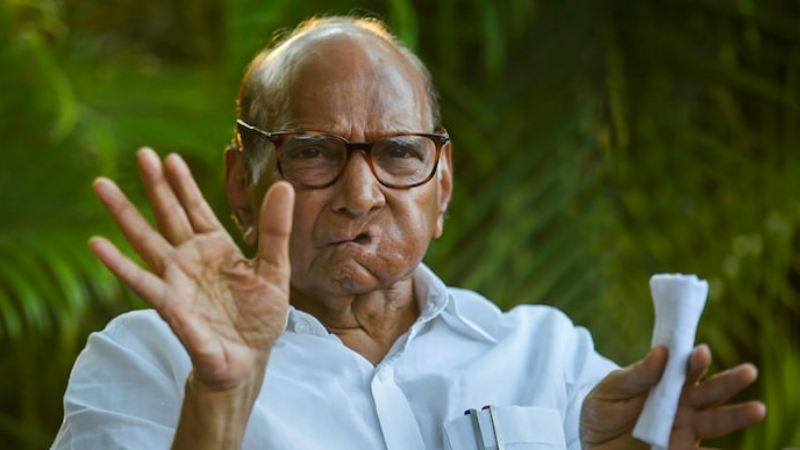
For Pawar, 85 years old, the concern was immediate. His daughter, Supriya Sule, confirmed in a statement that while his health parameters were stable and improving, the admission was a precautionary measure. But the question lingered: How had a man who had weathered storms of political opposition, economic crises, and personal loss ended up here?
The answer, in this case, was simple: a cough. Not the kind that signals a cold, but the kind that makes you pause, that makes you wonder if something deeper is at play. For Pawar, it was the first crack in a facade of endurance that had defined his career.
She had seen her father navigate crises before—political scandals, personal losses—but this was different.
Sharad Pawar's political journey is one of resilience. He rose through the ranks of Indian politics, becoming a prominent figure and eventually forming the Nationalist Congress Party, which has been influential in Maharashtra's political landscape. His influence has been felt not just in state politics but in national affairs, as he navigated alliances, economic policies, and the ever-shifting tides of Indian democracy. But politics, for Pawar, was never just about power—it was about legacy. His daughter, Supriya Sule, has often spoken of his dedication to public service, his quiet strength, and his ability to endure. Yet, even the strongest pillars can weaken.
The admission to Ruby Hall Clinic was not just a medical procedure; it was a reminder that Pawar, like all humans, is subject to the same fragilities. His family has been a steadfast presence in his life, but even they must now grapple with the uncertainty of his health. The cough, that seemingly innocuous trigger, had set in motion a chain of events that would test not just his physical resilience, but also the emotional and political landscape around him.
Ruby Hall Clinic, a name synonymous with medical excellence in Pune, became the stage for Pawar's latest chapter. The moment he arrived, the doctors moved swiftly. The medical team, therefore, did not waste time. They were monitoring his condition closely, and every parameter was being observed. The goal was not just to diagnose but to ensure that Pawar's health did not deteriorate further.
For Supriya Sule, the waiting room became a space of quiet vigilance. She had seen her father navigate crises before—political scandals, personal losses—but this was different. This was about his body, about the limits of his endurance. Her statement, delivered with measured calm, carried the weight of a daughter's concern: "Baba has been admitted to Ruby Hall Clinic, Pune, following a bout of cough. He is undergoing medical tests, and all his health parameters are stable." The words were reassuring, but they also hinted at the underlying tension. Stability is not the same as strength. It is a holding pattern, a pause before the next move.
Pawar's health has always been a topic of speculation, but this admission was different. It was not just about his personal well-being; it was about the symbolism. For decades, he had been a pillar of Maharashtra's political establishment, a man who had shaped policies, built alliances, and navigated the complexities of Indian governance. Now, at 85, the question was: What comes next?
The Nationalist Congress Party, which Pawar helped establish, has always been closely tied to his leadership. His absence, even temporarily, could send ripples through the party's structure. But Pawar himself has never been one to retreat. His political career has been defined by adaptability, by the ability to pivot when necessary. Whether this admission would alter that trajectory remained to be seen.
In the days following his admission, there were no grand statements, no dramatic announcements. Instead, there were quiet conversations—between doctors and patients, between family and friends, between political allies and opponents. The cough had become a metaphor for something larger: the passage of time, the inevitability of change, and the fragility of even the most formidable figures.
Supriya Sule's reassurance was a balm, but it also carried an unspoken message. Pawar's health was stable, but