
On the morning of Oct. 22, 2026, the ground beneath Tibet shivered with a force measured at 7.0 on the Richter scale. The epicentre lay in the northern reaches of the autonomous region, roughly 400 kilometres from Lhasa, the capital. At a shallow depth of just 10 kilometres, the quake’s energy surged upward, shaking villages perched at an average altitude of 4,864 metres. Residents reported the tremor echoing through stone walls and wooden roofs, a reminder that even the world’s highest plateau is not immune to the planet’s tectonic restlessness.
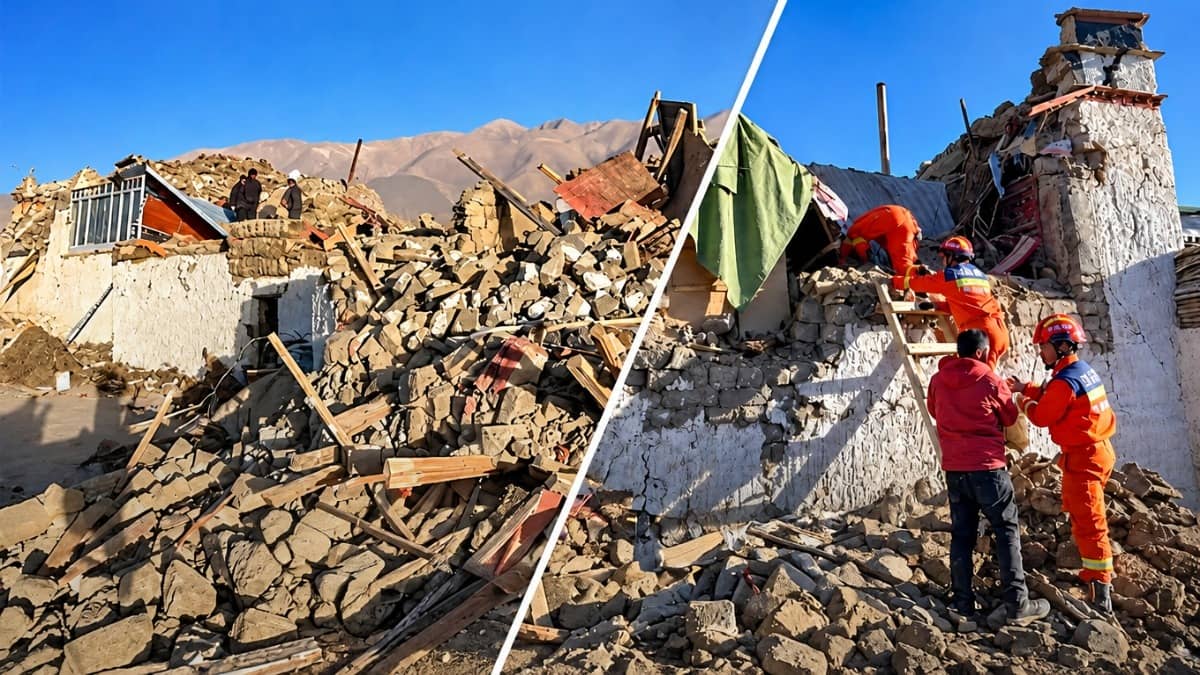
The statistics that emerged were stark: 16 people lost their lives, and 32 more suffered injuries ranging from broken limbs to crush injuries. In a region where medical facilities are already stretched thin, each casualty represents a profound strain on families and communities. The loss of life underscores how quickly a sudden slip of the earth can turn ordinary days into scenes of grief.

Deeply saddened by the tragic loss of precious lives and injuries caused by the devastating earthquake in Nagqu, Xizang Autonomous Region of China. On behalf of the Government and people of Pakistan, I extend our heartfelt condolences to President Xi Jinping, and our Chinese brothers and sisters, especially the bereaved families who have lost their loved ones and prayers for the swift recovery of the injured. Pakistan stands in solidarity with its Chinese brothers and sisters in this difficult time and is ready to extend every possible support. 🇵🇰🤝🇨🇳
More than 300 houses collapsed in the quake’s wake. Traditional dwellings, often built from locally sourced stone and timber, proved vulnerable to the sudden lateral forces. The destruction left dozens of families without shelter, forcing them into temporary camps that must contend with the same thin air and rugged terrain that hampered rescue crews.
The recurrence of such powerful tremors within a three‑year span has kept disaster preparedness a constant concern for local officials.
In response, roughly 300 police officers were dispatched to the hardest‑hit zones. Their mandate extended beyond crowd control; they acted as first responders, clearing debris, establishing triage points, and coordinating with rescue teams that had to navigate steep inclines and thin oxygen levels. The sheer number of officers highlights the scale of the emergency response required in a region where every kilometre can mean a longer trek for aid.

China orders 'all-out' rescue after #Tibet quake kills at least 16, injures dozens. https://t.co/WPXVWHsUDF
Thursday proved especially volatile. Alongside the 7.0‑magnitude main shock, a 5‑magnitude tremor rattled the same area later that day, followed by a 5.2‑magnitude quake across the border in China. While the smaller quakes caused fewer casualties, they compounded the difficulty for rescuers, who had to reassess aftershocks while already stretched thin.
This was not Tibet’s first encounter with a magnitude‑7 earthquake in recent memory. On Oct. 5, 2023, a similar‑sized quake struck the region, reminding authorities that the plateau sits atop a complex fault system. The recurrence of such powerful tremors within a three‑year span has kept disaster preparedness a constant concern for local officials.

16 killed, 65 injured after powerful earthquake struck Tibet https://t.co/PkQ17a8m64
The compounded impact illustrates how sequential natural events can erode resilience.
Even communities beyond the immediate epicentre reported feeling the quake. The tremor’s reach across surrounding areas underscored the interconnectedness of settlements on the plateau, where a single seismic event can ripple through valleys and high passes alike.
Local officials moved quickly to catalog the damage. The assessment process, conducted amid ongoing aftershocks, is essential for directing resources and planning reconstruction.
Rescue operations continue, with teams working around the clock to locate survivors trapped under rubble. The high altitude—nearly five kilometres above sea level—adds a physiological challenge; responders must monitor for altitude sickness while navigating steep, unstable slopes. The combination of altitude, depth of the quake, and the sheer number of collapsed structures makes each hour critical.
The October 22 earthquake spotlights enduring challenges in disaster response on the plateau. Sparse road networks, limited medical facilities, and the logistical nightmare of moving supplies across high‑altitude terrain converge to test even well‑trained emergency units. The deployment of 300 police officers reflects an acknowledgment that security, logistics, and medical aid must be coordinated in a single, cohesive effort.
As the dust settles, the focus shifts to rebuilding. Reconstructing the 300 destroyed homes will require not only material resources but also an understanding of how to build more resilient structures in a seismically active zone. The experience of the 2023 quake and the recent series of tremors will likely inform new building codes and emergency protocols, aiming to reduce future casualties.
Today, the plateau remains on alert. Rescue crews continue to sift through debris, families mourn their losses, and officials grapple with the twin tasks of immediate relief and long‑term resilience.