
In the late October chill of Michigan, the air at the campaign rally was thick with political tension. The political landscape of the state became a theater for aggressive rhetoric. President Donald Trump arrived not merely to campaign for his Republican allies, but to launch a targeted offensive against the Democratic nominee for the United States Senate, Abdul El‑Sayed. The rally served as a focal point for a campaign strategy that seeks to frame the upcoming election as a struggle for the very identity of the nation.
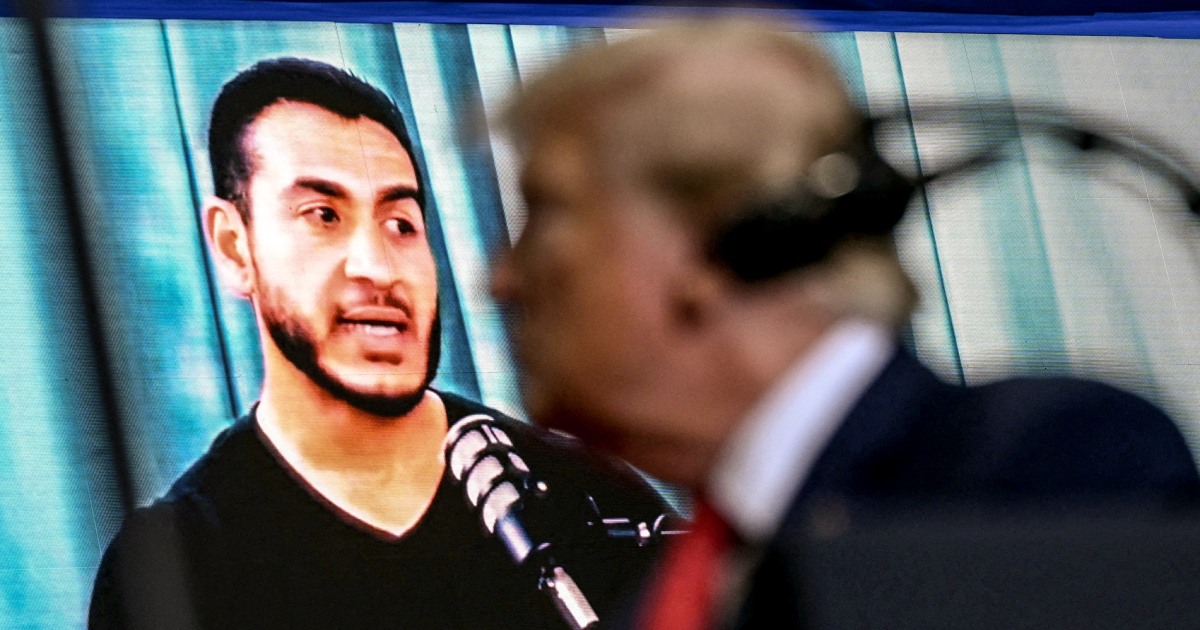
Trump’s approach to the Michigan electorate was direct and uncompromising. He centered his address on El‑Sayed, a Democratic candidate, using the platform to cast doubt on the nominee’s fundamental loyalty to the country. The President did not mince words, characterizing El‑Sayed through the lens of religious and political extremism. He explicitly accused the candidate of being a "jihadist" and a "Muslim Brotherhood member," framing the Senate race as a defensive measure against a perceived internal threat.
"I'm here today in Michigan for a very important reason," Trump told the crowd, his voice carrying the weight of his campaign's central thesis. "I'm here to keep a jihadist Muslim Brotherhood member from becoming a United States senator, and that's the fact. Not going to let that happen."
David Beamer, the father of a victim of the 9/11 attacks, stood as a symbolic figure of this perspective.
The rhetoric moved beyond political disagreement into the realm of national trauma. By invoking the imagery of the September 11 attacks, Trump sought to link El‑Sayed to the most profound moment of American vulnerability in the 21st century. Trump suggested that the scrutiny applied to El‑Sayed should be far more rigorous than what is standard for political candidates, comparing the level of suspicion to the security protocols found in modern aviation.
"Anyone with that record of support for jihadists would be screened and unable to get a seat on an airplane," Trump remarked, drawing a sharp line between the candidate and the safety standards expected of the American public. "They certainly should not give him a seat in the United States Senate."
This sentiment of an internal threat was echoed and amplified by voices within the rally's orbit. David Beamer, the father of a victim of the 9/11 attacks, stood as a symbolic figure of this perspective. His presence lent a personal, emotional weight to the President's claims, transforming political rhetoric into a narrative of domestic peril. For Beamer, the danger was no longer a distant force crossing oceans, but a presence embedded within the American political system itself.
"What’s different this time is the enemy has not come from abroad," Beamer told the assembly. "The enemy is right here among us, local terrorists, local citizens that want to demolish our country."

Biden campaign uses Trump 2016 rally to Michigan autoworkers to tout record https://t.co/3pTZBwWr9Q https://t.co/w45i8hDyk3
While the Michigan Senate race provided the primary target, the rally's scope widened to include broader criticisms of the Democratic Party and its representatives. Trump turned his attention to Representative Ilhan Omar, utilizing the Michigan stage to criticize her. The President used these moments to reinforce his endorsement of Republican rival Mike Rogers, positioning the choice in Michigan as a choice between traditional American stability and what he characterized as a radicalized opposition.