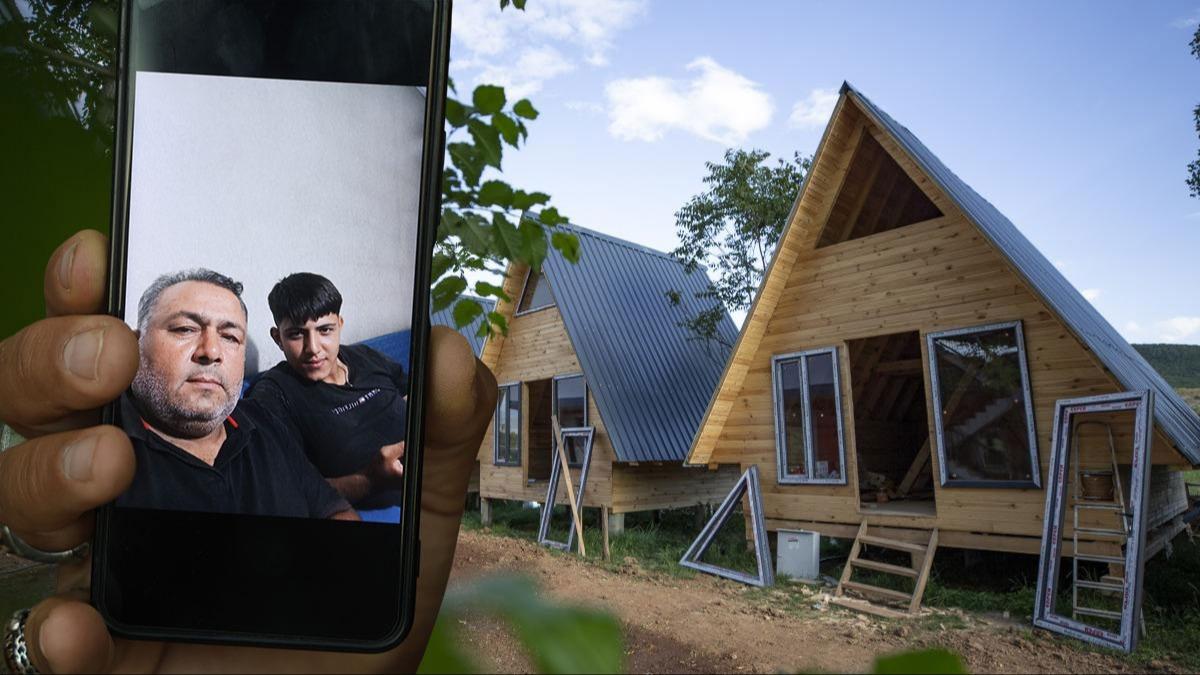
In the quiet town of Reyhanli, 20-year-old carpenter's apprentice Abdurrahman Evli was just trying to do his job. His father, Harun Evli, recalls how his son worked diligently under his master, a common arrangement for young tradesmen in the region. "My son Abdurrahman was working as a carpenter in Reyhanli," Harun explains. "His master's nephew told him, 'Abdurrahman, you're working for my uncle. Let's deposit your weekly wage into your account.'" It seemed like a straightforward solution for receiving payment, a routine administrative task that would make his life easier. What neither Evli nor his father could have imagined was that this simple request would set in motion a chain of events that would threaten to destroy his future.

The master's nephew, who helped set up the mobile banking account, had access to Evli's personal details. What began as a helpful gesture soon turned sinister. Using Evli's information, including his IBAN number, the nephew created fake advertisements for rental bungalows and cars across social media platforms. These fraudulent listings appeared authentic, complete with Evli's banking details for potential renters to make deposits. The scam operated in cities across Turkey, including Sakarya, Antalya, Bursa, Ankara, and Istanbul, each time duping unsuspecting victims who believed they were securing legitimate accommodations or vehicles.
As the fake ads proliferated, so did the complaints against Abdurrahman Evli. By the time authorities caught on, 27 separate fraud complaints had been filed against him in various jurisdictions. Each complaint represented a victim who had lost money to the scam, and each one became a separate legal case against the unwitting carpenter's apprentice. The sheer volume of complaints quickly overwhelmed Evli's ability to defend himself, creating a complex web of legal troubles that would challenge even the most experienced legal team.
The irony was bitter: a young man who had done nothing wrong found himself incarcerated while the actual perpetrators remained at large.
The legal system moved swiftly against Evli, with 17 investigation files opened and 10 prosecution files initiated against him. The most devastating development came when he began serving prison time in Kilis Prison following prison sentences from three of the cases. The irony was bitter: a young man who had done nothing wrong found himself incarcerated while the actual perpetrators remained at large. His father watched helplessly as his son's life unraveled, knowing that Abdurrahman had fallen into a trap through no fault of his own.
"My son Abdurrahman fell into a trap out of innocence," Harun Evli stated, his voice heavy with the weight of a parent's helplessness. He described how his son had trusted those around him, never suspecting that the simple banking arrangement would lead to such catastrophic consequences. The elder Evli painted a picture of a hardworking young man who had dedicated himself to learning his trade, only to have his future threatened by someone he had every reason to trust. His words carried the raw emotion of a family caught in a legal nightmare beyond their comprehension.
As Evli's legal team worked to navigate the complex web of charges against him, the potential consequences became increasingly dire. His lawyer, Ferhat Karli, issued a stark warning: if Evli received maximum sentences across all 27 cases, he could face up to 250 years in prison. The astronomical number reflected the severity of the charges, which included unauthorized GSM lines and accounts opened in Evli's name without his knowledge or consent. "My client is a victim who has been defrauded through unauthorized GSM lines and accounts opened in his name," Karli emphasized, highlighting the fundamental injustice of a situation where the victim was being treated as the perpetrator.
The case of Abdurrahman Evli has become a chilling example of how digital fraud can ruin innocent lives. What began as a simple banking arrangement spiraled into a legal nightmare that could cost the young carpenter's apprentice his entire adult life behind bars. As of October 24, 2026, Evli remained in Kilis Prison, serving sentences from three cases while facing 24 more. His story serves as a cautionary tale about the vulnerabilities in digital banking systems and the potentially devastating consequences when personal information falls into the wrong hands. For now, Abdurrahman Evli's future remains uncertain, trapped in a legal system struggling to distinguish between perpetrator and victim in an age of increasingly sophisticated cybercrime.
