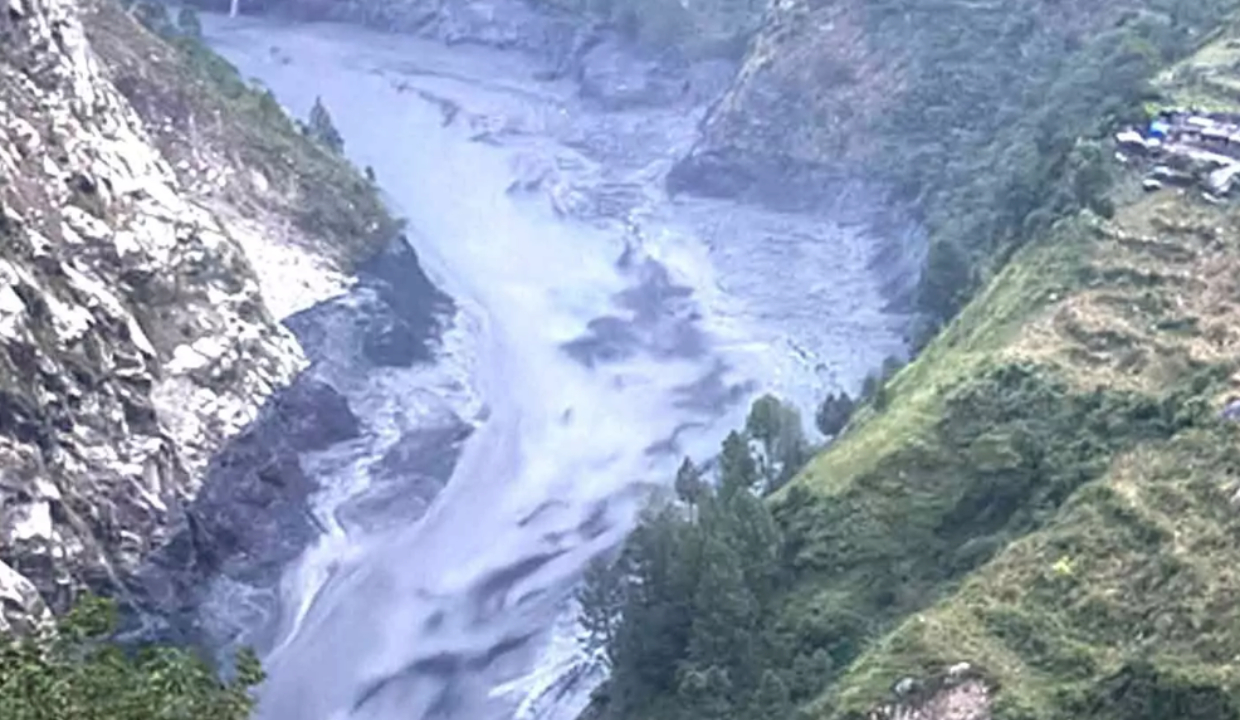
At approximately 4 a.m. on a Sunday in October, the silence of the Gorkha district was shattered by a sound that residents could only describe as a roar. For those living in riverside settlements like Chumling and Lokpa, the noise was not merely a passing storm, but a signal of imminent danger. In the darkness, the sound suggested a terrifying rhythm—a flow of water that seemed to repeatedly stop and then resume with renewed violence.
-858445_850x460.jpg)
Sherap Gurung, a resident, noted that the darkness made it nearly impossible to discern the source of the chaos. There had been no rain to explain the sudden surge, leaving the community to wonder whether they were facing a massive landslide or a sudden blockage in the mountains above. Residents in Chumling and Lokpa evacuated after hearing roaring sounds around 4 am, with no casualties reported as of the time of reporting. The roar had been the herald of a flash flood that tore through the Budhigandaki River, turning a quiet mountain night into a desperate struggle for survival.
While the exact mechanics of the disaster are still under investigation, the physical evidence points toward a catastrophic geological event. Preliminary reports indicate that a landslide near Siringe Himal may have been the catalyst. This movement of earth is believed to have blocked the Uingulung stream, creating a temporary natural dam.
In the immediate aftermath, the priority shifted from flight to rescue.
When the dam burst, the released water surged into the Budhigandaki River, transforming it into a destructive engine of debris. Some reports suggest the landslide occurred above Siuribas, contributing to the suddenness of the surge that caught the residents of Salleri, Paiyuka, and Jagat completely off guard.

The flood swept away five sheep sheds at the foothills of Siringe Himal. People who were staying in the sheds have been reported missing, but details about their condition and the extent of the damage remain unclear. https://t.co/YsVAtydtg1
As the floodwaters surged through the Gorkha district, the scale of the devastation became visible in the wake of the receding torrents. The floodwaters swept away more than 35 houses and several bridges, including the connection between Nyakchet and Philim Bazaar. The destruction was not limited to human dwellings; the local economy, often tied to the land and livestock, took a heavy hit as livestock sheds were carried off by the current.
In the Chumnubri Rural Municipality, the infrastructure that connects communities was severed. Sudan Gurung observed that the flood had destroyed the critical bridge connecting Nyakchet and Philim Bazaar in Chumnubri-3. The loss of the bridge hindered movement between communities.
In the immediate aftermath, the priority shifted from flight to rescue. The Nepali Army, Nepal Police, and the Armed Police Force were mobilized to navigate a landscape that had become both unstable and inaccessible. Rescue efforts were hindered by difficult terrain, and the landslide and flood made rescue operations more challenging.
Search and rescue operations have been a primary focus as authorities work to locate individuals reported missing. While authorities have confirmed the successful rescue of 47 individuals, the presence of missing persons keeps the tension high. Rescue teams continue to face challenges due to the difficult terrain.
With bridges destroyed, helicopters were used to reach affected areas. Helicopters were deployed to manage the crisis, performing a multi-faceted role that included conducting rescue operations, distributing essential relief supplies, and evacuating those trapped by the rising waters. Helicopters helped reach areas where ground access was cut off.
Authorities continue to assess the full extent of the damage. Laxmi Gurung noted that dozens of houses had been swept away and the full scale of the damage was still being assessed. The loss of homes and livestock sheds disrupted residents' livelihoods.
As of the current reporting, the situation remains fluid. While no casualties had been reported as of Sunday, the uncertainty regarding the number of missing persons and the total extent of the structural damage persists. Dharmendra Kumar Mishra stated that while preliminary reports indicated the landslide above Siuribas, the full extent of the damage remained unclear.
Authorities, including the Home Minister and local officials, continue to oversee the response. The focus remains on stabilizing the affected communities and determining exactly how the landslide at Siringe Himal triggered such a concentrated burst of energy in the Budhigandaki River.