
For the residents and businesses of Gurugram, the economic engine of Haryana, the morning of October 22, 2026, began not with the hum of industry, but with a sudden, unsettling silence. Across the bustling urban centers of Gurugram, Faridabad, and Nuh, the lights flickered and died. The cause was not a technical glitch or a storm, but a coordinated labor action that has brought the region’s essential services to a grinding halt. As the power grid faltered, the infrastructure supporting millions of people—including the critical supply of water—began to collapse, leaving the state’s most vital economic hubs in a state of paralysis.
The crisis was ignited by a regulatory decision that sent shockwaves through the workforce. On October 22, 2026, the Haryana Electricity Regulatory Commission (HERC) granted a license to Eleven Power Private Limited, effectively opening the door to the privatization of power distribution in the region. For the employees of the Dakshin Haryana Bijli Vitran Nigam (DHBVN), the state-owned utility, this move was a red line. The decision, which signals a shift toward a private model for the next 25 years, prompted an immediate and fierce reaction from those who have long maintained the state’s electrical backbone.

#EnablingMore reliable power supply, customer satisfaction & DISCOM revenues, we've signed MoUs with the two DISCOMs in #Haryana to install 10 Lakh #SmartMeters in #Gurugram, #Faridabad, Hisar, Karnal, Panipat & Panchkula in phases over the next three years @MinOfPower @cmohry https://t.co/K3GJ5Vy8GY
By the time the sun had fully risen on October 22, the scale of the resistance became clear. A coalition known as the Haryana Bijli Karamchari and Engineers Joint Sangharsh Morcha, alongside the Bihar Electricity Workers' Union, mobilized a staggering 40,000 employees to join a three-day strike. This was not merely a localized walkout; it was a total withdrawal of labor from the power sector. The impact was instantaneous. Within just 12 hours of the strike’s commencement, authorities were flooded with over 3,000 complaints from residents and business owners, all reporting the same dire reality: no electricity, no water, and no clear path to restoration.
Shiv Kumar Sharma, reflecting the sentiment of many trapped in the blackout, noted the gravity of the situation: "Electricity and water are both essential services.
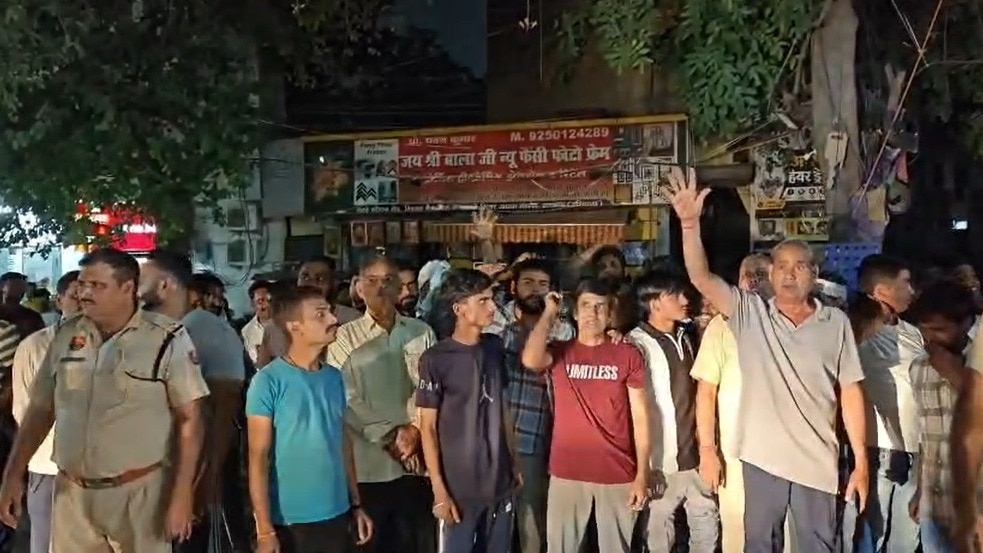
As the hours turned into days, the frustration among the public reached a boiling point. Shiv Kumar Sharma, reflecting the sentiment of many trapped in the blackout, noted the gravity of the situation: "Electricity and water are both essential services. Where is the government? Residents are held hostage by DHBVN staff." The streets of Gurugram, usually teeming with corporate activity, saw a heavy police presence and the imposition of a curfew, as the authorities struggled to maintain order amid the growing public outcry. The strike, originally intended to last three days, has extended into a longer protest, highlighting the deep-seated tension between the workforce and the state’s privatization agenda.
In the halls of power, the response has been one of defensive maneuvering. Chief Minister Saini held an urgent review meeting on October 22, 2026, to assess the fallout and determine the state’s next steps. While the government faces intense pressure from the striking unions, it has signaled that it does not intend to let the privatization order stand unchallenged. Anil Vij, speaking on behalf of the administration, clarified the government's stance: "The state government is against this order and will appeal to the High Court and Supreme Court." The Chief Minister is now tasked with representing the state’s case before the Appellate Tribunal for Electricity (APTEL), hoping to find a legal resolution to a crisis that has effectively held the state’s economy hostage.
As the legal battles begin to take shape, the situation on the ground remains precarious. The strike has exposed the fragility of the region’s infrastructure when faced with a total breakdown in labor relations. With the government seeking to overturn the HERC’s licensing decision and the unions remaining steadfast in their opposition to the 25-year privatization plan, the path forward is fraught with uncertainty. For now, the residents of Gurugram, Faridabad, and Nuh remain caught in the middle, waiting for the lights to return and for a resolution that can bridge the divide between the state’s economic ambitions and the demands of its workforce.