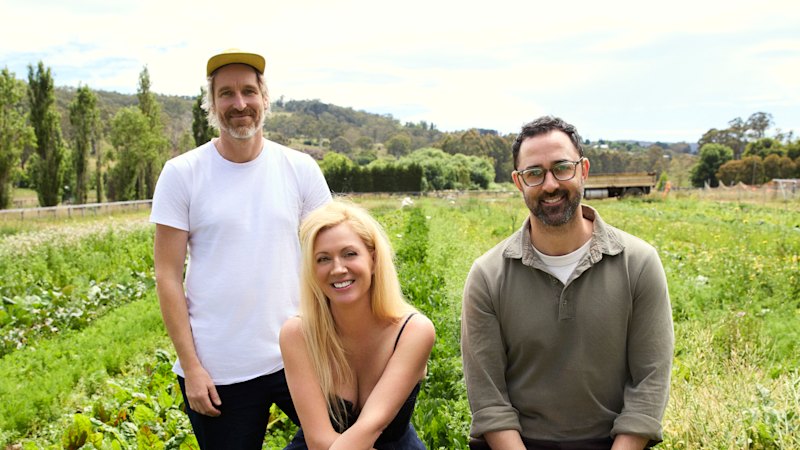
Annie Cannon-Brookes’ Burradoo Park Farm is a 250-hectare property in the Southern Highlands that brings hospitality and agriculture together. It is home to the award-winning Three Blue Ducks restaurant, a bakery, a cafe, an orchard, a market garden and grazing operations. The farm consolidated multiple properties five years ago, but it was Cannon-Brookes who reimagined the site after her 2023 separation from Atlassian co-founder Mike Cannon-Brookes. The central question is whether the scale of the operation fits the fast-tracked legal pathway used to obtain development consent.

The scrutiny of Burradoo Park Farm begins with the purpose of the legislation used there. New South Wales introduced its farm-gate development laws in 2022 to help struggling farmers earn extra income through agritourism without requiring full development approval. The laws were designed to provide a more straightforward route for farmers turning agricultural properties into income-generating destinations.
At Burradoo Park, Cannon-Brookes used those laws to obtain fast-tracked development consent. A private certifier granted the consent, but Wingecarribee Shire Council is now reviewing the operation’s compliance. Those two stages sit at the heart of the dispute: a private certifier has approved the development, while the council is examining whether the scale and form of the project qualify under the farm-gate framework. Local residents have also questioned whether a venture encompassing a restaurant, bakery, cafe, orchard, market garden and grazing operations fits a system designed to help struggling farmers.
Resident David Coulthard said calling the site a farm-gate operation did not reflect what had been created.

Climate activist billionaire Mike Cannon-Brookes was paid $4 million by his own company to use his private jet in the 2026 financial year, new documents show. https://t.co/F7bmZeb2vJ
The operation has also drawn complaints from the surrounding community. Burradoo Park Farm’s mix of hospitality, food production and grazing has generated heavy traffic, with residents reporting parking problems and safety concerns near a rail line. Those local concerns have prompted a pointed nickname: residents call the traffic controls “Checkpoint Charlie”.
For those living nearby, the issue is the effect the farm has had on the area around it. The restaurant and other visitor attractions sit alongside working agricultural operations, while the fast-tracked consent process has allowed the broader development to proceed without full development approval. That combination has intensified the debate over whether the farm-gate laws are being used as intended and whether additional checks are needed.
The clearest criticism of Burradoo Park’s development has focused on its scale. Resident David Coulthard said calling the site a farm-gate operation did not reflect what had been created.
“It’s such a joke to call this a farm-gate operation. It’s so much bigger than that. This is a farm gate on an industrial scale,” Coulthard said.

His concern is that a property with an award-winning restaurant, food businesses, market gardens, orchards and grazing operations is materially different from a small farm seeking additional income through agritourism. The review now underway will determine whether the operation’s size is compatible with the legislation despite its use of a private certifier for consent.
“You have to be able to see who did what when,” Atlassian cofounder Mike Cannon-Brookes told Fortune. https://t.co/ImGfYZNUaC
The Three Blue Ducks restaurant is one of the most prominent parts of the Burradoo Park development and has been described as award-winning. Its place alongside the bakery, cafe, orchard, market garden and grazing operations illustrates how the property has developed into a destination rather than a single farm attraction.
That success has not ended the compliance questions. The private consent and the council’s investigation concern whether the operation’s scale qualifies under the fast-tracked farm-gate pathway. In other words, the features that make Burradoo Park a significant agritourism destination are also the features drawing scrutiny from residents and the council.
Rachel Russell, another resident, questioned how broadly the fast-tracked legislation is being used.
“Theoretically this fast-tracked farm-gate legislation was to help struggling farmers. How is it actually being used? Could we need just a couple more checks and balances to get it right for everyone?” Russell asked.
Her question captures the dispute between the law’s stated purpose and the scale of the development at Burradoo Park. The farm-gate laws were introduced in 2022 to help struggling farmers earn extra income through agritourism without full development approval, while Cannon-Brookes’ property has developed into a 250-hectare destination with several commercial and agricultural operations. A private certifier granted consent, but Wingecarribee Shire Council is now reviewing compliance.
The council declined to say more. “No further comment will be provided,” it said. The unanswered questions are the ones at the centre of the investigation: does Burradoo Park’s operation qualify as farm-gate development, and are the checks around the fast-tracked pathway strong enough for the law to achieve its stated purpose?