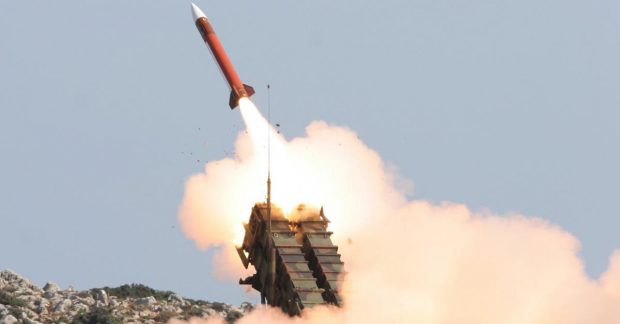
In the cold calculus of modern air defense, numbers often tell the story of survival. For Ukraine, the number is now 500. That is the count of Patriot missiles that the United States State Department formally approved for sale to Kyiv on October 30, 2026. The price tag attached to this potential transfer is $2.1 billion. It is a staggering sum, representing not just the hardware but the logistical skeleton required to keep it flying. The approval, issued through the State Department’s routine but significant diplomatic channels, signals that Washington is willing to move inventory to support a war that has fundamentally reshaped European security. Yet, to understand the weight of this decision, one must look not just at what is being sent, but at what is expected to arrive, and who is footing the bill.

The centerpiece of this package is the PAC-3 missile, a sophisticated air and missile defense weapon. Developed and handled by Lockheed Martin, the PAC-3 is designed to intercept ballistic missiles, cruise missiles, and tactical missiles in their terminal phase. It is the kind of system that turns the sky into a grid of probability, where a launcher, a radar system, and an interceptor work in concert to deny an enemy the ability to strike. This specific sale is not just about the rockets; it includes the critical support elements that make the system functional. Spare parts, logistical support, and software updates are bundled into the deal, recognizing that a missile without a supply chain is merely an expensive paperweight. The goal is to enhance Ukraine’s ability to counter threats that are both current and anticipated, integrating these new assets into a broader air defense architecture.
Perhaps the most complex aspect of this transaction is the payment structure. While the United States is the supplier, the primary financial burden is being shared by allies. The deal is structured so that Canada, Germany, and Norway will make payments through the JUMPSTART program and their national funds. Additionally, an EU credit supports this financing. This arrangement allows the United States to export a critical security asset without directly increasing its own defense budget outlays for this specific transfer. It is a diplomatic and financial mechanism that reinforces the transatlantic partnership, showing that the cost of defense is being distributed among the countries whose security is most directly at stake. The approval note explicitly states that this transaction will not affect US defense capabilities, a reassurance to domestic audiences that the stockpile remains robust.
There are concerns among policymakers about potential delays in missile deliveries due to political considerations.
There is, however, a dissonance between the volume of missiles approved and the volume of threats faced. According to assessments highlighted in recent defense discussions, Ukraine’s actual need for PAC-3 missiles is significantly higher than the proposed purchase. Estimates suggest that Ukraine requires between 100 and 150 missiles per month to maintain effective coverage against incoming attacks. In the context of a war that has seen thousands of missile strikes over the years, a one-time or initial transfer of 500 missiles, while substantial, does not close the gap entirely. This discrepancy creates tension. It forces Kyiv to ration its assets, potentially leaving some sectors exposed while others are fortified. The 500-missile approval is a step, but it is not the destination.
Behind the scenes, the path to these deliveries is not smooth. There are concerns among policymakers about potential delays in missile deliveries due to political considerations. The approval of a sale is a diplomatic signal, but the physical movement of hardware involves export controls, congressional oversight, and the complex bureaucracy of international arms transfers. When politics intrudes into logistics, timelines slip. For a country under active missile attack, time is a scarce resource. Every week of delay in receiving the PAC-3 systems and their associated support is a week of reduced defensive capability. The risk is that the gap between the approval and the arrival of the missiles widens precisely when the threat level is highest.
NATO’s commander in Europe has confirmed that missile supplies to Ukraine are ongoing, providing a layer of reassurance that the 500-missile deal is not an isolated act but part of a sustained effort. The US government frames this approval as supporting foreign and national security goals, aligning the defense of Ukraine with the broader stability of the region. By providing integrated air and missile defense, the United States and its partners are attempting to shape the outcome of the conflict. The sale of these Patriots is more than a commercial transaction; it is a strategic statement that the sky over Ukraine will not be left open. It is a bridge built from American technology, European funds, and shared resolve, aiming to keep the lights on and the people safe, one interceptor at a time.
As of late October 2026, the diplomatic machinery is in motion. The State Department has cleared the hurdles, and the financial framework with Canada, Germany, Norway, and the EU is in place. The next phase is execution. The world is watching to see if the physical delivery of these 500 missiles can keep pace with the war. For now, the approval stands as a testament to the depth of alliance, a concrete measure of how much these nations are willing to invest to protect Ukraine’s skies. It is a start, significant in its scale, but only the beginning of the long game of air defense.