
On October 24, 2026, the rhythm of the midterm campaign cycle reached a personal milestone for the White House. President Donald J. Trump and First Lady Melania Trump arrived in West Palm Beach, Florida, to participate in the early voting process. This act, while routine for many American citizens, carried a distinct weight given the President’s own history of vocal skepticism regarding the use of absentee ballots. By choosing to cast his vote in person ahead of the November 3 deadline, the President bridged the gap between his past rhetoric and the practical realities of a modern election landscape where early voting—whether by mail or in person—has become a cornerstone of political strategy.
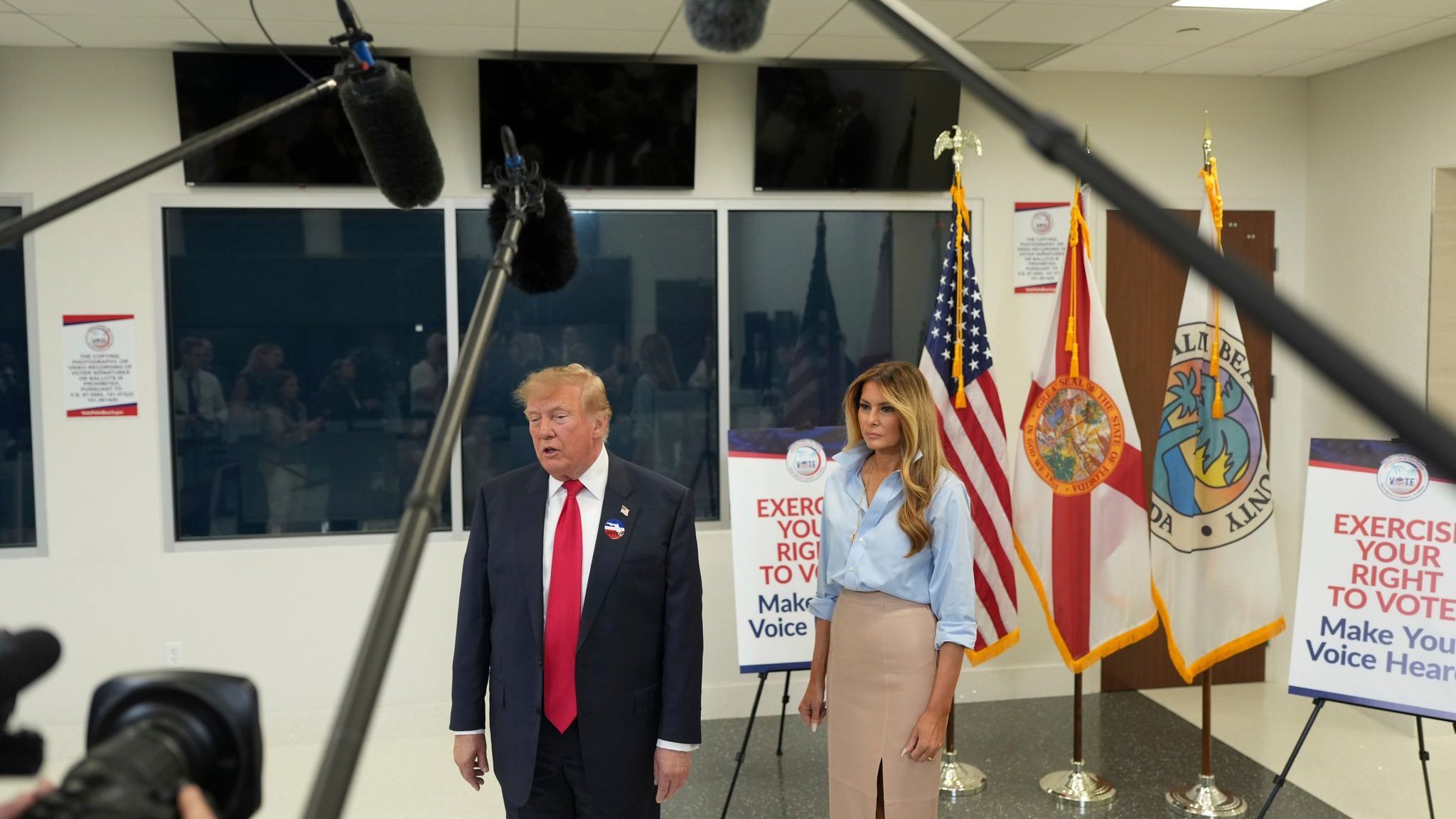
The midterms are rarely kind to a sitting president, a reality that Donald J. Trump acknowledged with a sense of historical fatigue. Reflecting on the political landscape, he noted, "A sitting president always does badly in the midterms." This historical trend serves as a constant pressure point for the Republican Party, which currently finds itself fighting to defend slim majorities in both the House of Representatives and the Senate. With one-third of the Senate seats and the entirety of the House up for re-election, the stakes for the legislative agenda in Washington, D.C., could not be higher. The elections, taking place on November 3, will see one-third of the Senate and the entire House of Representatives up for re-election.
Beyond the immediate tactical concerns of the ballot box, the President’s campaign schedule has taken a visible toll. The relentless pace of rallies and public appearances has left him weary. "It’s a strain on your voice. It’s a strain. You know, it’s not normal, what I’ve done," he remarked, offering a rare glimpse into the physical demands of the presidency. This exhaustion is set against a backdrop of historical comparison, as Trump weighed his own tenure against those of his predecessors. In his view, the political challenges he faces are part of a long lineage of presidential struggle, noting that while he viewed Bill Clinton as someone who might have been a good president outside of his scandals, he remained sharply critical of Barack Obama’s legacy.
This exhaustion is set against a backdrop of historical comparison, as Trump weighed his own tenure against those of his predecessors.
For the Republican Party, the President’s early appearance in Florida was more than a personal civic duty; it was a campaign event designed to project strength. By casting his vote early, Trump sought to signal to his base that the system of early voting is a tool to be utilized, not feared. The early voting in West Palm Beach serves as a microcosm of the larger national effort to secure turnout in a climate of intense political polarization. The Republican Party’s defense of its majorities rests on the ability to mobilize voters who, like the President, are navigating a complex and often contentious electoral process.

Flying from West Palm Beach to DC & the majority of my flight are Trump supporters. Meeting so many people & making sure they are all registered to vote at their current address. Asking for their votes in 2026.
As the calendar turns toward November 3, the focus shifts from the personal act of voting to the broader national tally. The early voting in West Palm Beach serves as a microcosm of the larger national effort to secure turnout in a climate of intense political polarization. The Republican Party’s defense of its majorities rests on the ability to mobilize voters who, like the President, are navigating a complex and often contentious electoral process. Whether this push will be enough to defy the historical trend of midterm losses for a sitting president remains the central question of the season. For now, the President has made his choice, casting his ballot and turning his attention back to the campaign trail, where the final, decisive weeks of the 2026 cycle await.