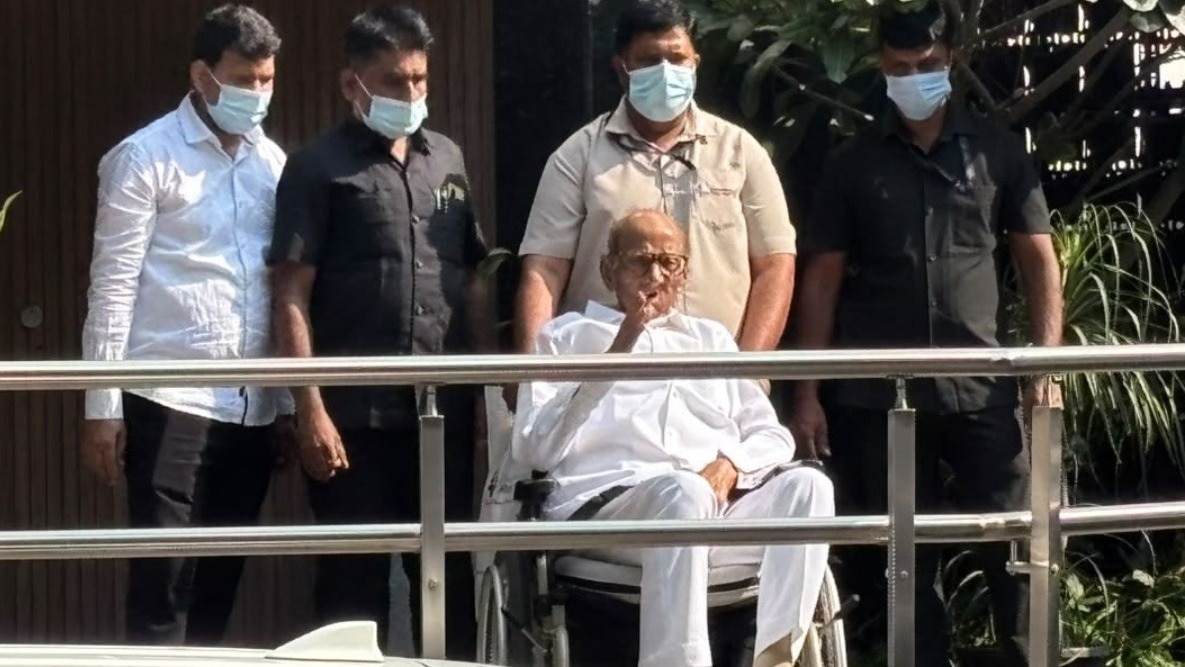
In the high‑stakes arena of Indian politics, where alliances shift with the wind and public statements are often meticulously calibrated for strategic impact, a quiet phone call can carry a weight disproportionate to its brevity. For Sharad Pawar, a veteran statesman of the Nationalist Congress Party (NCP), a recent hospitalization in Mumbai triggered a personal outreach from Prime Minister Narendra Modi. The incident offers a glimpse into the human relationships that underpin the formal diplomatic distances of national leadership.

The sequence of events began with a health concern that required immediate attention. Pawar was initially admitted to Ruby Hall Clinic in Pune, a city that has long been the political heart of his legacy. Medical professionals there conducted a preliminary assessment, attributing the admission to chest pain. The initial hospitalization was brief, with records indicating he was discharged on the same day. However, the medical team recommended further comprehensive diagnostics, prompting a transfer to a major metropolitan facility for specialized care.
Pawar was subsequently admitted to Breach Candy Hospital in Mumbai. His personal assistant, Surve Sule, officially confirmed the admission. In a statement that mixed Marathi with English, Sule noted that the 85‑year‑old leader was being kept for further tests. "We are admitting Baba for further tests at Breach Candy Hospital. I am thankful to you for the good wishes," Sule stated. This formal announcement served to manage the public narrative, ensuring that speculation about the severity of the chest pain was replaced with the calm demeanor of a routine medical procedure.
The conversation itself was characterized by a shared sense of responsibility.
The hospital’s own medical authorities reinforced this stability. The chief cardiologist at Breach Candy confirmed that Pawar’s condition was stable, a crucial detail that alleviated immediate concern among his political supporters. The confirmation of stability is significant in the context of a senior leader’s health, as it signals that there is no acute, life‑threatening emergency, but rather a precautionary step to ensure long‑term wellness.
It was in this context that Prime Minister Modi stepped in. According to Vitthal Maniyar, a senior figure associated with the NCP, Modi called to enquire about Pawar’s health. "Prime Minister Narendra Modi called Pawar saheb to enquire about his health. He spoke to him with great affection and respect and requested him to take complete rest," Maniyar reported. The use of the term "Pawar saheb," which translates to a respectful address akin to "Sir" or "Honorable," underscores the mutual deference between the two men, despite their longstanding political differences.
The conversation itself was characterized by a shared sense of responsibility. Modi reportedly told Pawar, "Supriya and we will take care of the country, you take care of your health and rest." This remark is politically significant; by explicitly delegating the caretaking of the nation to Pawar’s wife, Supriya Sule, and their political team, Modi is allowing the veteran to step away from his duties. It is a form of political grace, acknowledging that a leader’s health is a prerequisite for their service to the country.
Pawar’s response highlighted his enduring belief in collective leadership. He replied, "When you all are together, I have no worries about the country." This statement frames the political landscape not as a zero‑sum game, but as a shared stewardship. For observers of Indian politics, the exchange illustrates the complex reality of the NCP’s position; they are often part of larger coalition dynamics, and such personal interactions can smooth over the frictions of coalition politics.

The social‑media sphere played a distinct role in the day’s events. Supriya Sule, the daughter of Sharad Pawar, shared updates on her social‑media platforms. Her presence added a personal dimension to the narrative. Her updates helped to humanise the story, turning a medical bulletin into a family matter, which often resonates more broadly with the public than official statements alone.
As of now, the situation is one of monitored recovery. Further health checks have been scheduled at Breach Candy Hospital, ensuring that Pawar’s chest pain is fully addressed before he resumes his political duties. The episode serves as a reminder that in the often‑polarised debate of Indian democracy, personal relationships and mutual respect can still exist among opponents. The phone call between the Prime Minister and the NCP veteran stands as a small, but telling, moment of stability in the broader political landscape.