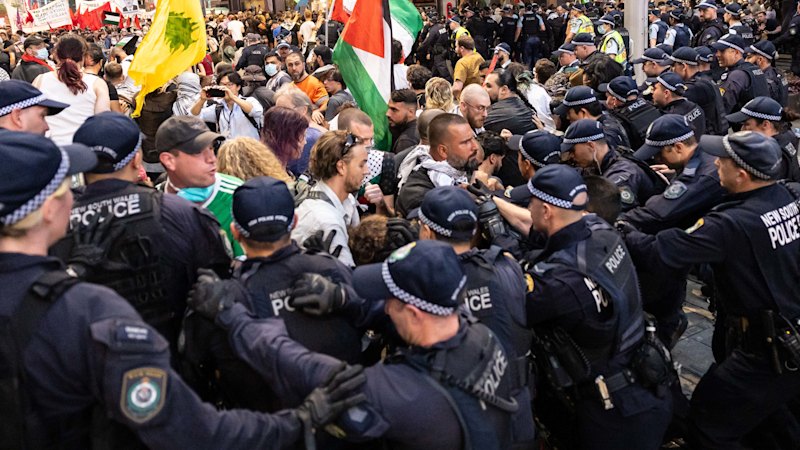
On a bustling afternoon in Sydney, a protest at the iconic Sydney Cricket Ground (SCG) unfolded, drawing attention not just for the cause it championed but for the police response that followed. What began as a gathering of voices evolved into a flashpoint, prompting the Law Enforcement Conduct Commission (LECC) to launch an inquiry into the use of force by police, including the deployment of capsicum spray and the role of miscommunications among officers and between police and protesters.

The LECC, tasked with ensuring accountability and transparency in law enforcement, has taken a neutral stance as it delves into the events of that day. At the heart of the inquiry is a critical briefing led by Police Commissioner Mal Lanyon at the SCG, which has become a focal point for understanding the decisions made during the protest.
Commissioner Lanyon’s briefing was intended to coordinate the police response to the protest. However, as the inquiry has revealed, miscommunications among officers may have complicated the situation. Kirsten Edwards, SC, noted during the proceedings, ‘Witnesses’ recollection of what was said has varied.’ This inconsistency highlights the challenges in piecing together a clear narrative of what transpired and why certain decisions were made.
As the investigation unfolds, it is becoming clear that the SCG protest serves as a case study in the complexities of crowd control.
The inquiry is not just about assigning blame but about improving how police handle protest events in the future. By examining the flow of information and the chain of command, the LECC aims to identify systemic issues that could lead to better outcomes for both law enforcement and the public.

A further two people have been charged as investigations continue into a planned public assembly in Sydney’s CBD. MORE INFORMATION ➡️ https://t.co/TsveILEyfl https://t.co/b4HcxUp6xM
One of the most contentious aspects of the police response was the use of capsicum spray. While the inquiry has found limited evidence of physical violence on the part of the protesters, the decision to deploy the spray has raised questions about proportionality and necessity. The LECC is scrutinizing whether the use of force was justified and whether alternative de-escalation tactics could have been employed.
This aspect of the inquiry touches on broader debates about policing protests and the balance between maintaining order and respecting the right to peaceful assembly. As the investigation unfolds, it is becoming clear that the SCG protest serves as a case study in the complexities of crowd control.
Miscommunications between police and protesters, as well as among officers themselves, appear to have played a significant role in the escalation of tensions. The LECC is exploring how these misunderstandings occurred and what could have been done to prevent them. Premier Chris Minns emphasized the need for a comprehensive review, stating, ‘The LECC must consider not only the decisions of police, but of the state government as well.’

This call for accountability extends beyond the police force to the broader governance structures that shape how protests are managed. By examining the state government’s role, the inquiry aims to provide a holistic understanding of the events and their aftermath.
The SCG protest inquiry is more than just a local issue; it has implications for how protests are policed across Australia. The findings could set precedents for future events, influencing training protocols, communication strategies, and the use of force guidelines. As the LECC continues its work, the nation watches closely, recognizing that the outcomes could reshape the relationship between law enforcement and the communities they serve.
As of now, the inquiry remains ongoing, with the LECC meticulously reviewing evidence and testimony. The goal is clear: to ensure that lessons are learned and that future protests are handled with greater clarity, communication, and restraint. While the events at the SCG were specific to that day and place, the insights gained from this investigation have the potential to resonate far beyond Sydney, informing policing practices nationwide.

The Law Enforcement Conduct Commission has launched an investigation into police actions during an anti-Israel protest outside Sydney Town Hall, where thousands demonstrated against the arrival of Israeli President Isaac Herzog. https://t.co/I3FXQJUQUp