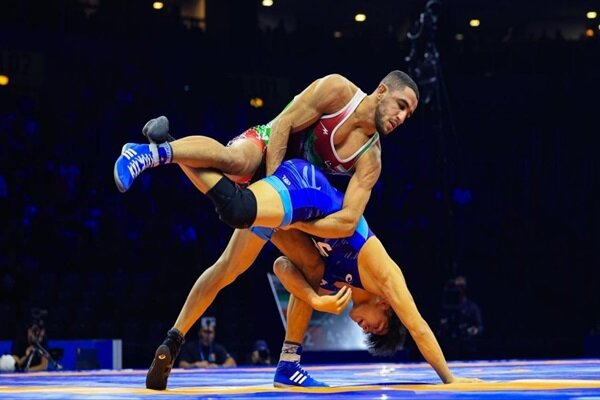
The atmosphere at the 2026 World Wrestling Championships in Kazakhstan is charged with the gravity of international competition. Among them is Shamil Mammadov, a holder of the bronze medal, whose presence underscores the depth of talent competing for dominance in this weight. For the participants, every takedown and point earned is a step toward keeping a Olympic qualification or personal title bid alive. It is in this high-pressure environment that Rahman Omouzad, representing Iran, began his campaign with a clear objective: to navigate through the early rounds and establish himself as a threat in the tournament's upper echelons.
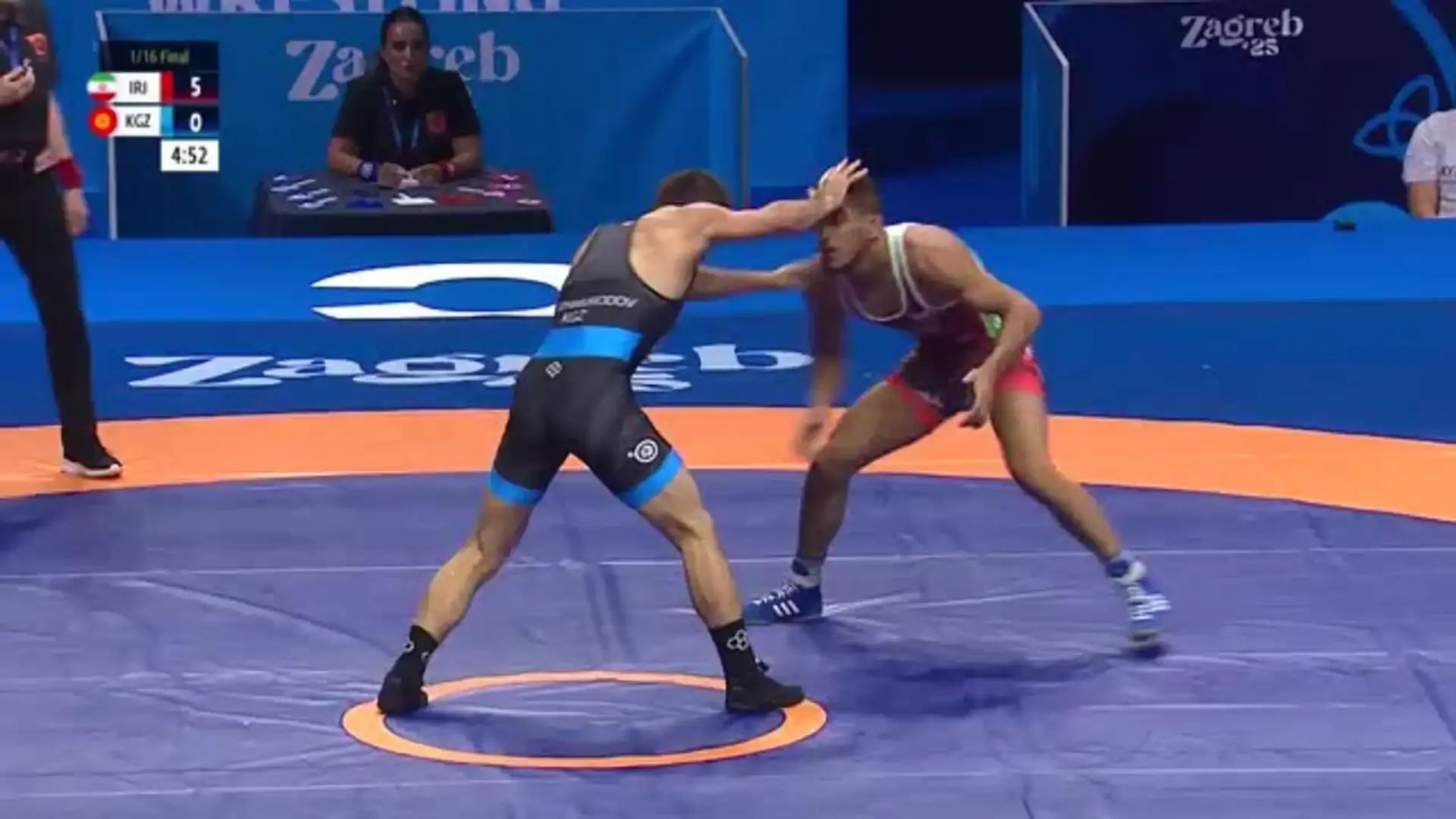
Oumouzad’s journey through the bracket began in the first round, where he faced Mousayef, a wrestler identified in the tournament records as holding Belgian-Russian heritage. The match was not close. Omouzad controlled the contest from the opening whistle, securing a decisive victory with a final score of 13-2. The result was recorded as a technical fall, a classification that ends the match early when one wrestler achieves a significant score advantage. For a competitor aiming to conserve energy for the later rounds, a technical fall in the opening bout is an ideal scenario. It allows the athlete to avoid the attrition of a grueling, point-by-point decision match and step onto the mat for the next round with their momentum intact. The 13-2 margin signaled to the rest of the field that Omouzad was in peak form.
The immediate next hurdle was far more daunting. In the second round, Omouzad was paired against Ahmet Duman, a wrestler from Turkey who holds a silver medal from a previous World Wrestling Championships. Facing a medalist in such a high-profile event is a psychological test; the opponent carries the prestige of past international success and the technical pedigree to back it up. Yet, Omouzad did not flinch. The match ended with a score of 9-0 in favor of the Iranian. In wrestling, a 9-0 score indicates a dominant performance where the winner accumulated points through effective control and effective counter-moves while the opponent was unable to register a single point. The clean sweep of points suggested that Omouzad neutralized Duman’s technical strengths, dictating the pace and positioning on the mat. This victory was not merely about points; it was a statement that Omouzad could compete with and defeat seasoned medalists at the highest level.
The stakes are elevated: a loss here would typically end the tournament journey for many weight classes, depending on the specific match-up rules.
With the 9-0 victory over Duman, Omouzad secured his spot in the quarter-finals. The tournament structure now places him against the bronze medalist from Armenia. This is a critical junction in the competition. Quarter-finals in major wrestling events often feature the toughest remaining opponents, as athletes are pushed to the limit of their endurance and tactical repertoire. The presence of the Armenian bronze medalist means Omouzad will face another athlete with proven success on the world stage. The stakes are elevated: a loss here would typically end the tournament journey for many weight classes, depending on the specific match-up rules. The path forward is narrow but open, contingent on Omouzad maintaining the same level of control and scoring efficiency he displayed against Duman.
While Omouzad advanced, the Iranian team experienced mixed fortunes in the 65 kg bracket. Hassan Yezdani, another wrestler from Iran, did not share the same trajectory. In the first round, Yezdani faced Arash Yoshida. The match was tightly contested, reflecting a high level of tactical engagement between the two. Ultimately, Yoshida edged out Yezdani with a final score of 7-5. In wrestling, a two-point difference in a close match often comes down to the execution of a single sequence in the final moments of the period. Yezdani’s elimination marks a difficult end to his participation in this edition of the championships, contrasting sharply with the continued momentum of his teammate. For the Iranian squad, the divergence in results highlights the unpredictability of single-elimination style brackets, where one match can determine the difference between a deep run and an early exit.
The 65 kg weight class at the 2026 championships is not a minor event. With 32 wrestlers, it represents a significant portion of the competition's total participants in that weight range. The inclusion of names like Shamil Mammadov, the bronze medalist, alongside current medalists like Duman and upcoming opponents from Armenia, creates a dense field of elite competitors. This depth ensures that upsets are possible, but also that the eventual champion will have likely faced high-caliber resistance throughout the tournament. For the athletes advancing, the physical and mental toll of consecutive matches against such a strong pool of competitors will be the defining challenge. The transition from the early rounds to the quarter-finals marks the point where the tournament shifts from a group-like format to a true single-elimination gauntlet.
As the competition moves into the quarter-final stages, the focus now shifts entirely to Omouzad’s upcoming bout against the Armenian bronze medalist. The outcome of that match will determine whether he advances to the next round or exits the tournament.