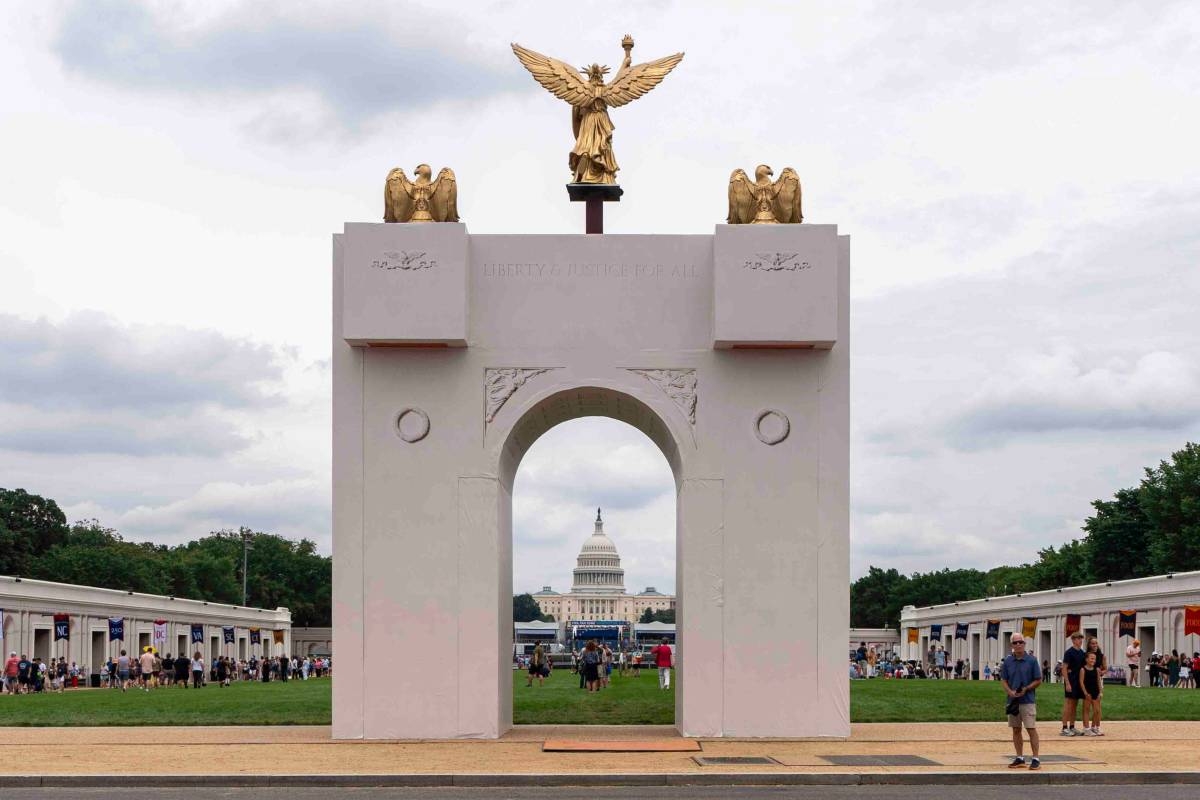
On October 31, 2026, the Commonwealth of Virginia and the District of Columbia filed a 45-page lawsuit in the U.S. District Court for D.C. to block the construction of a proposed 250-foot triumphal arch, championed by former President Donald Trump. This ambitious project, which aims to stand 100 feet taller than the Statue of Liberty, has ignited fierce legal battles, with state attorneys general arguing that the arch is ‘flagrantly unlawful’ and poses severe risks to the surrounding areas. The arch is intended to be constructed between Arlington National Cemetery and the Lincoln Memorial, a site of profound historical significance.
As they argue, the project lacks adequate consultation with local authorities and communities, raising questions about its legality and necessity. The lawsuit represents a critical moment in the ongoing debate over how public spaces should be developed and who gets to decide their fate.

DC, Virginia sue to block Trump’s triumphal arch https://t.co/Ux9gbVDpcm
In response to the growing opposition, the Trump administration has framed the arch as a symbolic tribute to veterans, asserting its importance as a ‘gateway’ to Arlington National Cemetery. A White House spokesman, Davis Ingle, emphasized the arch’s potential to become one of the most iconic landmarks in the nation’s capital, serving as a visual reminder of the sacrifices made by American heroes. However, this narrative has not quelled concerns from local leaders and community members who fear the project’s implications for public safety and urban planning.
Judge Tanya Chutkan, overseeing the case, has consolidated these lawsuits and is considering an injunction to halt construction pending resolution.
Originally, Trump had defended the arch as a potential military complex, suggesting it would house weapons and snipers. However, recent plans have excluded such military elements, focusing instead on its role as a memorial. The arch’s towering design, reaching 250 feet or approximately 76 meters, is intended to symbolize strength and resilience. Still, critics argue that its height and location will lead to traffic snarls and pollution, disrupting emergency services and daily commutes in the area.

🚨 IT'S OFFICIAL: Facing lawsuits, President Trump designates his DC Triumphal Arch as a MILITARY PROJECT — meaning it just got a lot more difficult for activist judges to stop it. LFG! REPORTER: DC and Virginia just sued to stop your Triumphal Arch because it violates— TRUMP: They sue me on everything, THEY LOST EVERY LAWSUIT. The arch is very important militarily for DC and our country, and it's going to be beautiful! 👏🏻 The 250-foot arch is needed to defend Washington — serving as a perch for snipers and anti-drone operations against threats 🇺🇸 A judge is NOT stopping it.
The lawsuit is not an isolated incident; it follows a series of legal challenges from various groups, including Vietnam War veterans and architectural historians, who have voiced their opposition to the project. These plaintiffs argue that the arch’s construction will exacerbate existing traffic congestion and environmental issues, leading to long-term detrimental effects on the community. Judge Tanya Chutkan, overseeing the case, has consolidated these lawsuits and is considering an injunction to halt construction pending resolution.
The urgency of the situation is underscored by the fact that construction could begin as early as the following week. Both Virginia and D.C. have expressed that immediate and costly measures will be necessary to mitigate the harmful effects of the project if it proceeds. Jones and Schwalb have articulated that the arch’s construction would not only disrupt traffic but also necessitate significant adjustments in local infrastructure, further straining already limited resources.

The arch's construction could begin as soon as Nov. 5, and attorneys general for the District and Virginia are urging a federal court to intervene. https://t.co/NkEKzKew1m
The proposed site for the arch is strategically located near Arlington National Cemetery, a hallowed ground for American veterans and their families. This proximity raises additional concerns about the appropriateness of such a monument overshadowing a site dedicated to honoring the fallen. Critics argue that the arch, while intended to commemorate military service, could inadvertently detract from the solemnity of the cemetery and the memories it holds.

As the legal battle unfolds, the future of the Trump arch remains uncertain. The contrasting narratives from state attorneys general and the Trump administration highlight a broader debate about public memorials and their role in society. While proponents see the arch as a necessary tribute to veterans, opponents view it as an unnecessary and potentially harmful imposition on the landscape of Washington, D.C. The outcome of this lawsuit could set a significant precedent for how monumental projects are approved and constructed in the nation’s capital, reflecting the ongoing tension between development and community impact.
In the coming days, as negotiations continue and a briefing schedule for a temporary restraining order is proposed, the fate of the arch hangs in the balance. The legal arguments will not only determine the future of this specific project but may also influence how similar initiatives are approached in the future, shaping the very identity of public spaces in America.