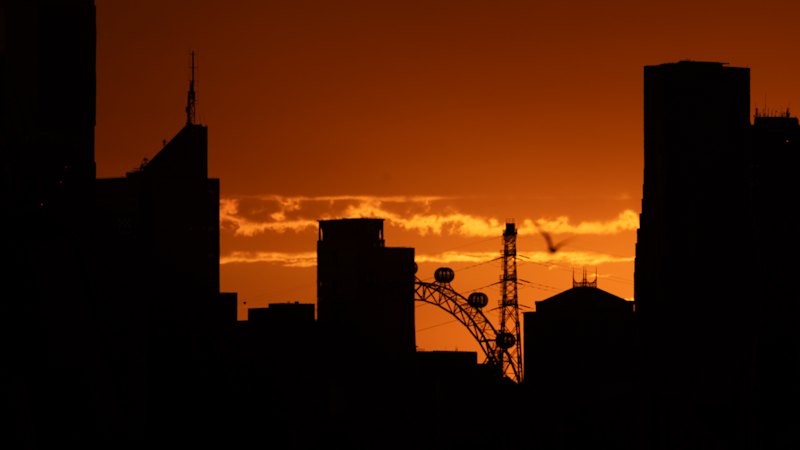
For decades, the arrival of summer in Melbourne was marked by a predictable rhythm of sunburned shoulders and air-conditioned arguments. Today, that rhythm is being replaced by a more urgent frequency: the siren of a public health emergency. As the city prepares for an El Niño summer, the conversation has shifted from discomfort to danger. Environmental and health experts are sounding the alarm, arguing that the coming heatwave is not merely a seasonal inconvenience but a systemic threat that could trigger a cascade of medical crises. The stakes are no longer just about the weather; they are about the fragility of the human body under stress that is growing undeniably stronger every year.
The science backing this alarm is no longer speculative; it is mounting and consistent. Research clearly shows that soaring temperatures can increase rates of stillbirth and premature birth, placing vulnerable newborns at risk before they even take their first breath beyond the womb. But the danger does not end at the nursery. The same heat that strains pregnancy also triggers heart attacks, placing immense pressure on the cardiovascular system. For the elderly, this heat acts as a multiplier, exacerbating chronic illnesses that manage just to remain stable under cooler conditions. It is a physiological ambush. The body’s cooling mechanisms are pushed to their limits, and for those with pre-existing health conditions, the margin for error disappears entirely.
Often overlooked in discussions about heat is the profound impact on mental health. Experts highlight that extreme heat worsens mental health conditions, creating a vicious cycle of anxiety, sleep deprivation, and irritability. This is not a secondary concern; it is a primary health risk. As temperatures soar, the psychological toll becomes a measurable burden, compounding the physical strain. For a city like Melbourne, which prides itself on its cultural vibrancy, this mental erosion is a quiet crisis. The heat does not just break bones or strain hearts; it frays the nerves, leaving the population more vulnerable and less resilient.
It was a gathering not of politicians promising subsidies, but of voices from the front lines of public health.
The consequences of this climate hazard extend far beyond the hospital ward. The human cost translates directly into economic terms, a figure that illustrates just how deep the impact runs. Estimates suggest that extreme heat results in 6 billion AUD in lost productivity every year. This is not a rounding error; it is a staggering drain on the economy, representing the value of labor lost to heat-related illness, fatigue, and death. The productivity loss is a symptom of a deeper failure: the inability of current infrastructure to protect workers and citizens from a changing climate. As the economy slows to a crawl under the weight of heat-related inefficiency, the call for action becomes a matter of fiscal as well as moral urgency.
At the Melbourne Assembly civic forum held on October 21, 2026, the reality of this shift was laid bare. It was a gathering not of politicians promising subsidies, but of voices from the front lines of public health. Professor Ollie Jay, a leading voice in environmental health, encapsulated the prevailing sentiment with stark clarity. "Basically, we’ve got this hazard, which is extreme heat and chronic hot weather that is growing undeniably in Australia," he said. His words underscored that this is not a temporary anomaly but a chronic condition of the modern Australian landscape. The forum served as a stage for experts to outline the specific interventions needed, moving the debate from abstract concern to concrete policy demands.
The experts’ calls are for urgent infrastructure and housing interventions. The current housing stock in Melbourne is largely ill-equipped to handle the extreme temperatures of an El Niño year. Without cooling solutions, homes become furnaces, trapping the most vulnerable populations—children, the elderly, and the chronically ill—in lethal conditions. The demand is for a fundamental rethinking of how cities are built and maintained. This includes not only retrofitting homes but also reimagining public spaces, water systems, and healthcare access. The goal is to create a buffer between the human body and the brutal heat of the outside world. Until these gaps are closed, the city remains exposed.
As the 2026 summer approaches, the clock is ticking. The combination of El Niño conditions and the long-term trend of global warming creates a perfect storm for health crises. The research is clear, the economic data is stark, and the health risks are immediate. From the risk of stillbirth to the surge in heart attacks and the degradation of mental health, the evidence forms a complete picture of a city under siege. The response from experts is uniform: the time for hesitation has passed. Without a decisive push toward infrastructure reform and public health protection, Melbourne will pay the price in human lives and lost potential. The next hot summer is not just a weather event; it is a test of the city’s ability to protect its people against a hazard that is growing, undeniably, in Australia.
