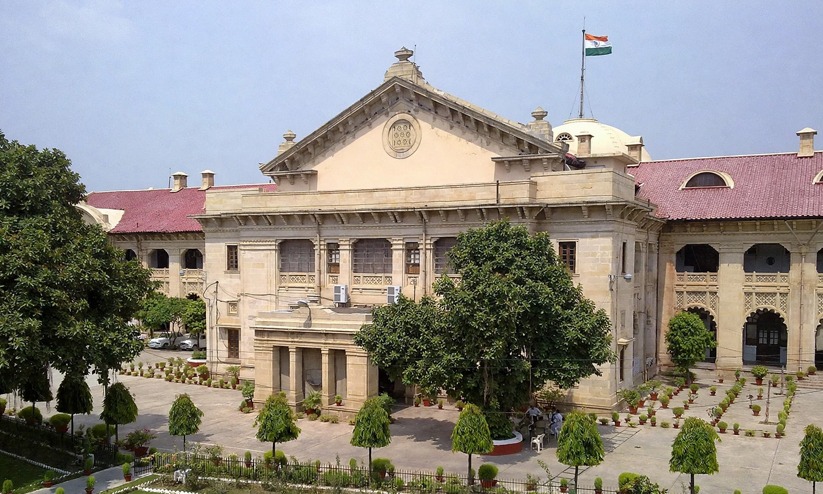
In the quiet corridors of justice, where legal technicalities often clash with human trauma, a recent decision by the Allahabad High Court has drawn a bright line between forensic evidence and the reality of survival. On October 22, 2026, the court issued an order that goes beyond a simple monetary award; it redefines how the law perceives the body of a survivor under the Protection of Children from Sexual Offences (POCSO) Act. The judgment asserts a fundamental truth that has long been obscured by bureaucratic rigidity: the lack of visible scars does not negate the existence of a crime.

At the heart of this ruling is a minor who sought redress under the Uttar Pradesh Rani Lakshmi Bai Mahila Samman Kosh scheme. This state-sponsored initiative is designed to provide financial assistance to women and girls who have suffered violence, aiming to offer a measure of economic security during their recovery. However, when the survivor applied for compensation, her claim was initially stalled. The authorities pointed to a glaring omission in her medical documentation: there were no recorded physical injuries. In the cold logic of administrative processing, the absence of bruises or lacerations was treated as a deficiency in proof, leading to a denial of funds. It was a decision that prioritized the tangible over the traumatic, ignoring the complex nature of sexual violence.
The High Court, however, refused to accept this narrow interpretation. The bench, comprising Justices Amitabh Ray and Shekhar B. Shetty, dismantled the argument that physical marks are a prerequisite for validating an allegation of sexual assault. The judges reasoned that the legal framework of the POCSO Act is built to protect children from a spectrum of offenses, many of which do not leave immediate, visible physical traces. To demand a bruise as proof of abuse is to misunderstand both the anatomy of coercion and the intent of the law. The court emphasized that if the First Information Report (FIR) and the subsequent chargesheet clearly indicate an offense under Section 4 of the POCSO Act, the judicial process must proceed on the strength of those legal filings, not the presence or absence of dermatological evidence.
It validated the survivor’s account without requiring her to carry the additional weight of proving physical damage.
This distinction is vital because it shifts the burden of proof away from the survivor’s body and back onto the legal merits of the case. Sexual assault is frequently characterized by psychological terror, threats, and manipulation rather than brute force that leaves marks. By ruling that the absence of injury marks cannot negate an allegation, the court acknowledged that trauma is often invisible. It validated the survivor’s account without requiring her to carry the additional weight of proving physical damage. This approach aligns with a broader understanding in modern jurisprudence that recognizes the multifaceted nature of victimization, particularly among minors who may be too young or too frightened to resist physically.
The practical outcome of this philosophical stance was a directive for immediate action. The court ordered the relevant authorities to pay Rs 3 lakh to the survivor within ten days of the production of a certified copy of the order. This sum, while symbolic in the face of profound harm, represents more than just financial aid; it is a state acknowledgment of the violation. The tight deadline imposed by the court underscores the urgency of such support. For a minor navigating the aftermath of assault, delays in compensation can exacerbate feelings of abandonment and injustice. The court’s insistence on speed ensures that the promise of the Rani Lakshmi Bai Mahila Samman Kosh is fulfilled in spirit, not just in letter.
The implications of this ruling extend far beyond this single case. It serves as a corrective to a systemic tendency within law enforcement and administrative bodies to look for easy, visual shortcuts when evaluating claims of sexual violence. When officials dismiss cases or delay compensation due to a lack of physical injury, they risk re-traumatizing survivors and undermining public trust in the justice system. The Allahabad High Court’s decision acts as a guardrail against such oversights, reminding all stakeholders that the law’s primary duty is to uphold the dignity and rights of the victim, regardless of whether their suffering is written on their skin.
As India continues to grapple with the challenges of implementing the POCSO Act effectively, decisions like this one provide a roadmap for a more compassionate and legally sound approach. They challenge the status quo, urging institutions to look deeper than surface-level evidence. For survivors, this ruling offers a glimmer of hope that their experiences will be taken seriously, even when they cannot be seen. It reinforces the idea that justice is not merely about punishing the perpetrator, but also about restoring a sense of agency and worth to the survivor. In denying the right to compensation based on a clean bill of health, the initial authorities had inadvertently suggested that the survivor’s pain was invalid. The High Court corrected this record, affirming that some wounds heal only when they are first recognized.