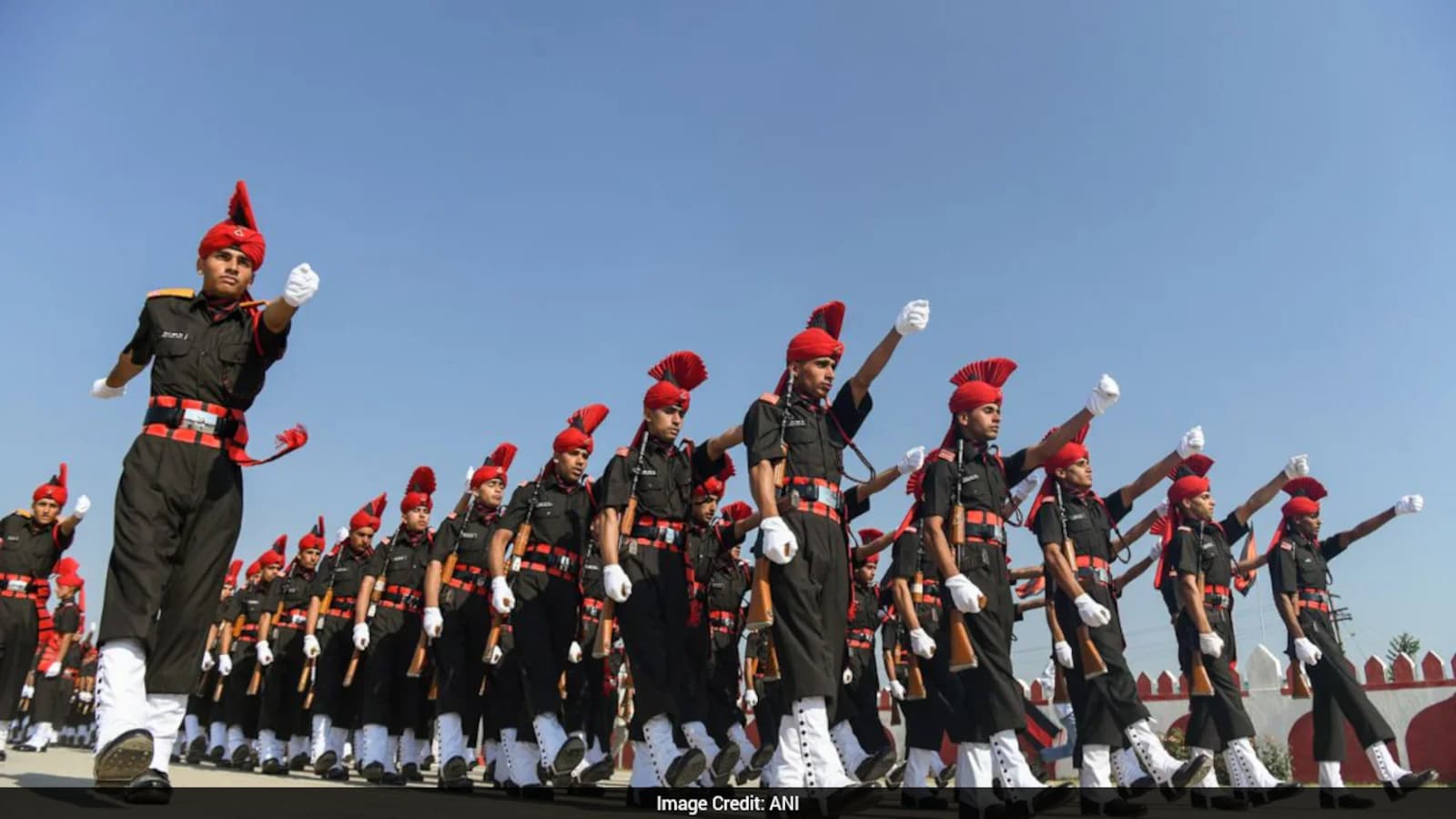
In 2022, the Modi government launched the Agnipath scheme, a unique recruitment program designed to attract young, motivated individuals to the Indian Armed Forces. The program was innovative in that it offered a four-year engagement period, after which recruits could either leave the service or apply for permanent positions.

On November 4, 2026, the Indian Cabinet made a significant decision. General N.S. Subramanian, the Chief of Defence Staff (CDS), announced that the government had approved a two-year service extension for 75% of Agniveers, along with a path to permanent soldier status for 25% of them. This decision was part of a broader effort to enhance the operational efficiency and organizational needs of the Indian armed forces. The CDS stated, 'Today is a very important day for the Indian Defense Forces and our firefighters.'

#WATCH | Delhi: Chief of Defence Staff General NS Raja Subramani says, "Today is a very significant day for the Indian Defence Forces and for our 'Agniveers'. The Cabinet has created a pathway for all Agniveers to be absorbed into the Indian Defence Forces. As you are aware, the 'Agnipath' scheme was introduced on June 14, 2022. At that time, it was stated that there would be continuous performance evaluation of the Agniveers and that the scheme would be reviewed periodically. The first batch of Agniveers is now nearing the completion of their four-year tenure. Based on the performance evaluations conducted over these four years, we have received very positive feedback regarding their performance. As you know, 25% of the Agniveers are to be enrolled into the regular forces based on merit. Previously, the provision was for 75% of the Agniveers to transition back into society as disciplined and motivated youth. However, under this updated scheme, the remaining 75% of Agniveers will now be offered an additional engagement period of two years. Upon the completion of this two-year period, all those who are willing will be enrolled into the Armed Forces, subject to objective selection criteria. These are the four major aspects of this scheme."
The decision to extend the service period for Agniveers was based on their performance evaluation. According to the CDS, the Agniveers had demonstrated excellent performance during their service, including physical fitness, motivation levels, mental resilience, and technical skills. General Subramanium explained, '25% Agniveers will be made permanent soldiers, and 75% will get a two-year service extension based on their performance evaluation. This two-year period will be completed, and based on their performance, those who are willing will be selected for permanent positions in the armed forces.'
The decision to extend the service period and offer permanent positions to Agniveers addressed some of the criticisms of the Agnipath scheme.
For the 18,000 Agniveers who were to exit the armed forces, this decision provided a much-needed lifeline. The extension of their service period by two years would allow them to continue their military careers and potentially secure permanent positions. This move was seen as a positive step, as it addressed the concerns of those who had joined the Agnipath scheme with the hope of a long-term career in the armed forces.

Taking a significant decision today, the Union Cabinet chaired by PM Shri @narendramodi has approved a two-year ‘Second Tour of Duty’ for Agniveers under #Agnipath. I sincerely thank PM Modi for taking the decision of additional 2-year ‘Second Tour of Duty’ for Agniveers under the Agnipath scheme. This would also provide enrollment of all willing Agniveers as regular soldiers after the tenure of 4/6 years, who meet the selection criteria. This decision is continuation of long-term structural reforms of our defence forces, aimed at creating a younger, fitter, technologically equipped and future-ready military. It is not merely a recruitment policy; it is a way forward to prepare India's military for the changing character of warfare.
In a related development, the Indian government also announced that 25% of firefighters would be integrated into the regular military forces, with their service period extended to six years. This decision was part of a broader scheme to improve the Indian Defense Forces' performance and engagement. General Subramanium provided details on the scheme and its benefits, emphasizing the importance of integrating diverse skills and experiences into the armed forces.
The decision to extend the service period and offer permanent positions to Agniveers addressed some of the criticisms of the Agnipath scheme. Critics had argued that the four-year engagement period was too short, leading to a high turnover rate and a lack of commitment from young recruits. The extension of the service period and the path to permanent positions would help to address these concerns and ensure a more stable and committed force.

#Cabinet has created a pathway for all #Agniveers to be absorbed into the Indian Defence Forces. As you know, 25% of Agniveers will enrolled in the Forces, based on merit. Previously, the Scheme envisaged that 75% of Agniveers would transition back into civilian life as disciplined and motivated youth. However, the remaining 75% will now be given an extended engagement period of two years under the scheme. Upon completion of this period, all the willing Agniveers will be enrolled in the #ArmedForces, subject to objective selection criteria. - Chief of Defence Staff, General N.S. Raja Subramani during the Cabinet Briefing #CabinetDecisions
The decision to extend the service period for 75% of Agniveers and make 25% of them permanent soldiers was seen as a significant policy change for veterans. General Subramanium stated, 'From the beginning it was clear that this scheme will be reviewed. Every year the Agniveers were reviewed and we arrived at a decision that there should be a two year extension.' This review process, which had been ongoing, had led to the current decision, ensuring that the Agnipath scheme remained relevant and effective in the long term.

The Indian government's decision to extend the service period for Agniveers and offer permanent positions to 25% of them marks a significant shift in the Agnipath scheme. This move not only addresses the concerns of young recruits but also enhances the operational readiness and organizational needs of the Indian armed forces. As the Agnipath scheme continues to evolve, it is clear that the government is committed to ensuring a stable and committed force that can meet the challenges of the 21st century.