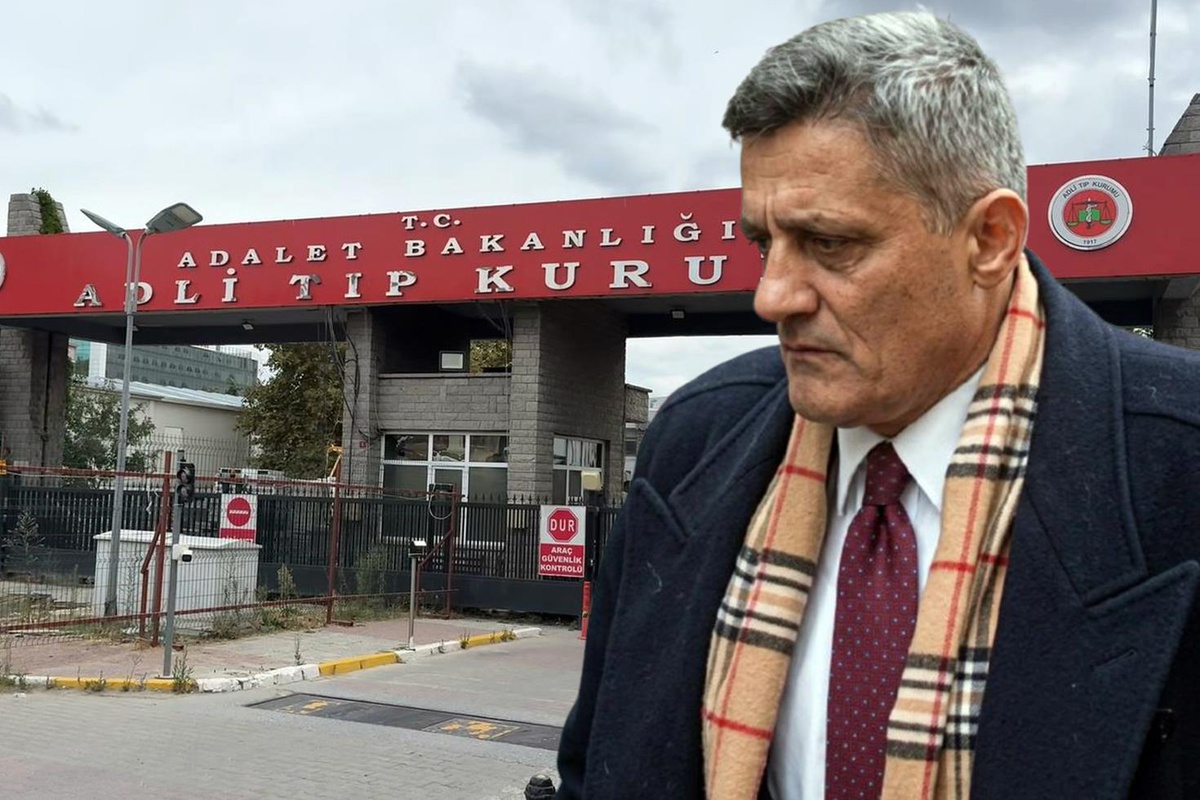
In the cold corridors of Silivri Prison in Istanbul, time usually moves at the pace of court orders and concrete walls. For the families and legal teams involved in the death of Kaşif Kozinoğlu, that pace has been painfully slow. Kozinoğlu, a former director of the Directorate of Foreign Operations at Turkey’s National Intelligence Organization, died in that facility in 2011. For more than a decade, his death remained shrouded in ambiguity, a puzzle piece that would not quite fit the rest of the narrative. That ended on November 4, 2026, when the Adli Tıp Kurumu, Turkey’s Institute of Forensic Medicine, completed its long-awaited expert report and transmitted it to the Silivri Chief Public Prosecutor’s Office. The document is dense, clinical, and definitive on several fronts, but it leaves one thread dangling: a suspicious chemical signature.
The primary function of a forensic autopsy is to answer the question of how a body died. In this case, the Institute of Forensic Medicine’s First Specialist Board examined the evidence to determine whether Kozinoğlu’s death was the result of trauma, poisoning, or underlying medical conditions. The report is clear on the physical state of the remains. It states explicitly that there was no medical evidence to support the claim that he died from traumatic impact. In other words, no signs of beating or external physical violence were found that could account for the death. Similarly, the board concluded that there was no medical evidence indicating he was poisoned. This dual exclusion is critical. It removes two of the most dramatic and politically charged possibilities from the table, at least in terms of direct medical proof found on the individual. Instead, the report identifies heart disease as the cause of death. The conclusion is that Kozinoğlu’s death resulted from cardiac complications. For years, advocates and critics alike had speculated about foul play. The forensic record, however, places the blame on a biological failure, not an external agent.
If the report were purely about the body, the story would likely have closed with a sigh of relief from those who wanted the case dismissed, and fury from those who suspected murder. But the report contains a detail that complicates that closure. While the direct analysis of the body did not prove poisoning, investigators examined samples taken from Kozinoğlu’s grave. In those samples, high levels of antimony were detected. Antimony is a naturally occurring mineral, often found in the earth, but it is also a toxic heavy metal. Its presence in the soil where a body is interred is not automatically proof of murder; it can be a result of the local geology. However, in the context of a high-profile death that had long been suspected of foul play, the detection of antimony raises the suspicion that toxic substances may have been present. The report does not claim this antimony killed Kozinoğlu. It claims, based on the absence of medical evidence of poisoning in the body, that it did not. Yet, the discrepancy between the grave samples and the body analysis keeps the door ajar. It suggests that while the body may have failed due to heart disease, the environment around his death and burial warrants scrutiny. This nuance is vital: the absence of proof of poisoning is not the same as proof of innocence in all aspects of the events surrounding the death.
This was not a quiet, back-office affair; it was a major judicial undertaking.
The investigation into Kozinoğlu’s death was never just about a former spy; it was a window into the broader, turbulent history of Turkey’s national security apparatus. As the forensic process concluded in late 2026, the judicial side of the case had already moved with significant force. The ongoing legal proceedings resulted in actions taken against 30 individuals. This was not a quiet, back-office affair; it was a major judicial undertaking. Of those 30 people subjected to legal processing, 9 suspects were arrested. Among the most notable of these individuals was Enver Altaylı, a former MİT official. His arrest signaled that the investigation had penetrated deep into the circles of intelligence officials who had been part of the era when Kozinoğlu died. The framing of the case often intersected with broader political narratives, including those critical of FETÖ (Gülen movement) elements within the state, though the forensic report itself remains a neutral technical document. The arrests indicate that while the medical cause of death may be natural, the circumstances surrounding the care, monitoring, or even the handling of the body may have involved neglect or malice that the judiciary is still prosecuting.
It is difficult to overstate the significance of the timeline. Kozinoğlu died in 2011. The forensic report was finalized in November 2026. That is a gap of fifteen years. In forensic science, time is an enemy. It degrades evidence, complicates tissue analysis, and makes it harder to isolate specific toxins or diseases. The fact that the Institute of Forensic Medicine could reach such a specific conclusion—heart disease, no trauma, no direct evidence of poisoning in the body—after a decade and a half suggests that the preservation of evidence was rigorous, or that the analysis relied heavily on data that could withstand the test of time. The delay also reflects the complexity of the legal landscape in Turkey. The investigation did not move in a straight line; it was entangled with the broader upheavals of the 2010s. The eventual completion of the report in 2026 represents the point where the technical investigation finally outpaced the political and legal turbulence, allowing for a clear, albeit complex, statement of fact.
The decision to test samples from Kozinoğlu’s grave is a forensic technique that speaks to the thoroughness of the inquiry. Grave soil analysis is not standard in every death investigation. It is used when there is a specific suspicion that the body may have been tampered with, or when the surrounding environment might contain contaminants that could skew results or indicate external interference. The detection of antimony is the only element in the report that introduces a new variable. It does not prove murder, as the body showed no signs of poison-induced death. But it does suggest that the chemical footprint of the death is not simple. For the 30 individuals facing legal proceedings, this finding adds another layer of complexity to their defense. They must now explain not just why they are being charged, but also how a toxic metal came to be present in the grave, or why it is inconsequential. The report sends this complexity to the Silivri Chief Public Prosecutor’s Office, where legal interpretations will now wrestle with the medical findings.
As of late November 2026, the case stands at a crossroads. The forensic science has done its part, delivering a report that is as clear as the evidence allows. It confirms heart disease as the cause of death. It clears the body of direct poisoning evidence. But it flags the grave’s antimony as an anomaly. The 9 arrested suspects, including Altaylı, face charges that likely relate to their roles in the custody and care of Kozinoğlu, or the handling of the case after death. The 30 individuals in legal proceedings represent the breadth of the inquiry. For the public, the report offers a partial answer. It says Kozinoğlu did not die from a beating, and it says the body did not show he was poisoned. But it does not close the book on the suspicion that something unnatural influenced the scene of his death. The narrative is no longer one of pure uncertainty; it is now one of targeted legal scrutiny based on specific forensic findings, where the human error or intent of the officials involved is being weighed against the clinical facts of the heart that stopped in 2011.