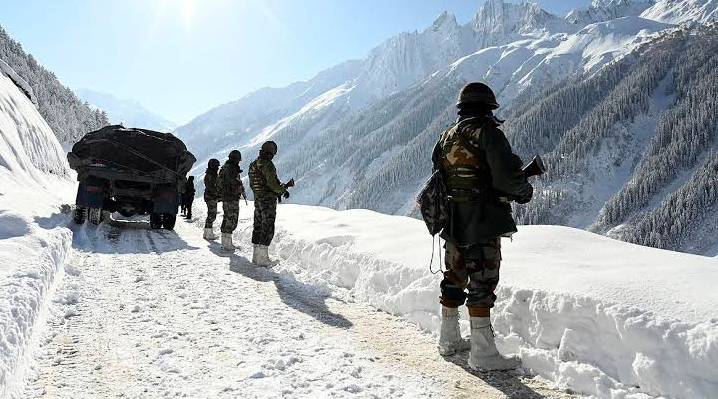
In October 2026, the tension between India and China over the region of Ladakh reached a new height. The issue, which had simmered for years, came to a head as China made its latest territorial claims. The region, known for its strategic importance and breathtaking landscapes, has long been a point of contention between the two nations. India, however, has shown no wavering in its stance, dismissing China's claims outright and emphasizing that Ladakh is an integral part of India.
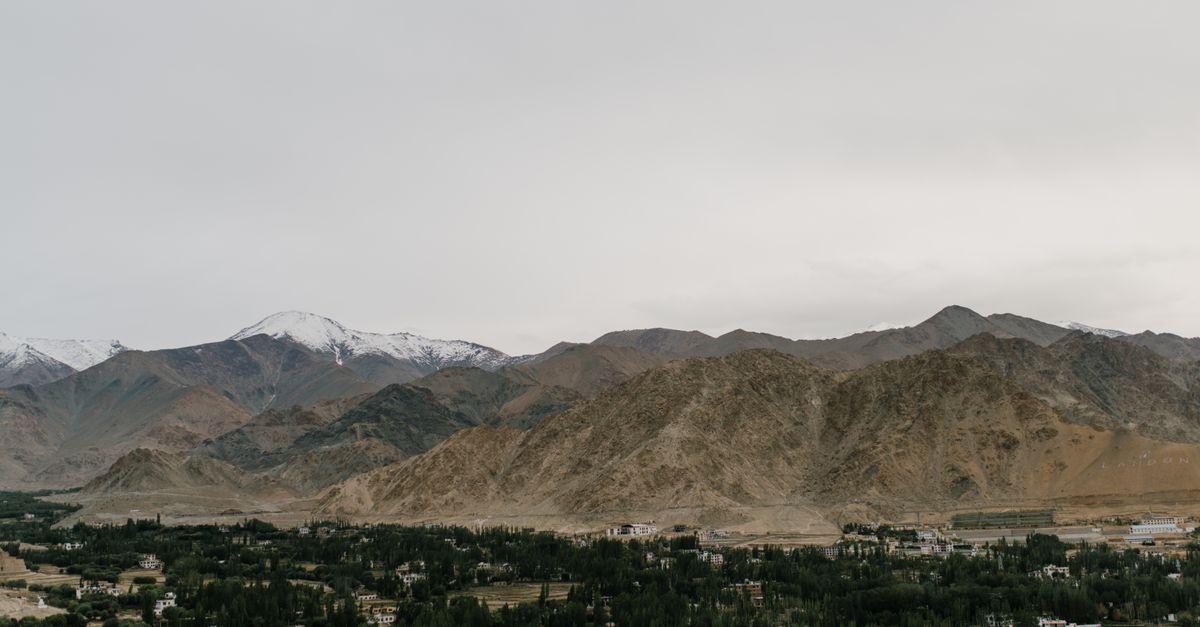
To bolster its position, India has taken a significant step. On October 13, 2026, the Ministry of External Affairs (MEA) formally identified 28 places and features in Ladakh by standard names. These names, mapped out by the Survey of India, are part of a broader strategy to counter China's territorial claims and assert India's sovereignty over the region. The move is seen as a direct response to China's growing assertiveness in the region, particularly in the wake of recent military standoffs.
China, however, has not taken the Indian move lightly. In a statement, China termed India's move as 'illegal and invalid.' This reaction underscores the deep-rooted nature of the dispute and the complex geopolitical landscape surrounding Ladakh.
The dispute over Ladakh has significant implications for the broader regional dynamics.
In a statement, Jaiswal said, 'It is reiterated that the UT of Ladakh is an integral and inalienable part of India. No amount of denial by the Chinese side can change this established fact.' Jaiswal's words reflect the firm resolve of the Indian government to uphold its sovereignty over Ladakh, despite China's continued denials.

China has once again objected to India’s actions regarding Ladakh, stating that it does not recognize the Union Territory of Ladakh established by India in 2019. #India #China #Ladakh https://t.co/8KnARqW7Dl
India's move to identify places in Ladakh is part of a larger strategy to counter China's growing influence in the region. The Ladakh region, with its strategic importance, has become a focal point in the ongoing Sino-Indian border tensions. The region is home to several military installations and serves as a crucial transit route for trade and communication. By formally identifying these places, India is sending a clear message to China that it will not back down in the face of territorial claims.
The dispute over Ladakh has significant implications for the broader regional dynamics. The tension between India and China has been on the rise, with multiple standoffs and skirmishes along the border. The identification of places in Ladakh by India is likely to further escalate the situation, as China is unlikely to accept the Indian claims without a fight. This move could lead to increased military activities in the region, potentially destabilizing the already fragile peace.

TAKING OFF TO NEW HEIGHTS! ✈️⚡ Leh Airport’s New Passenger Terminal opens tomorrow! 🏔️🇮🇳 For a region that holds a special place in India’s heart, a historic revolution in air connectivity begins tomorrow as Hon’ble PM Shri @narendramodi Ji inaugurates the New Terminal at Leh Airport! ⚡ #Ladakh #BJPLadakh #LehAirport
As the dispute over Ladakh continues to simmer, India's firm stance is clear. The identification of 28 places and features in Ladakh by standard names is a significant step in countering China's territorial claims. While China has dismissed India's move as 'illegal and invalid,' the Indian government remains resolute in its position. The issue of Ladakh is not just about territory; it is about the broader strategic interests of both nations. As the standoff continues, the region remains a critical point of contention in the ongoing Sino-Indian rivalry.
