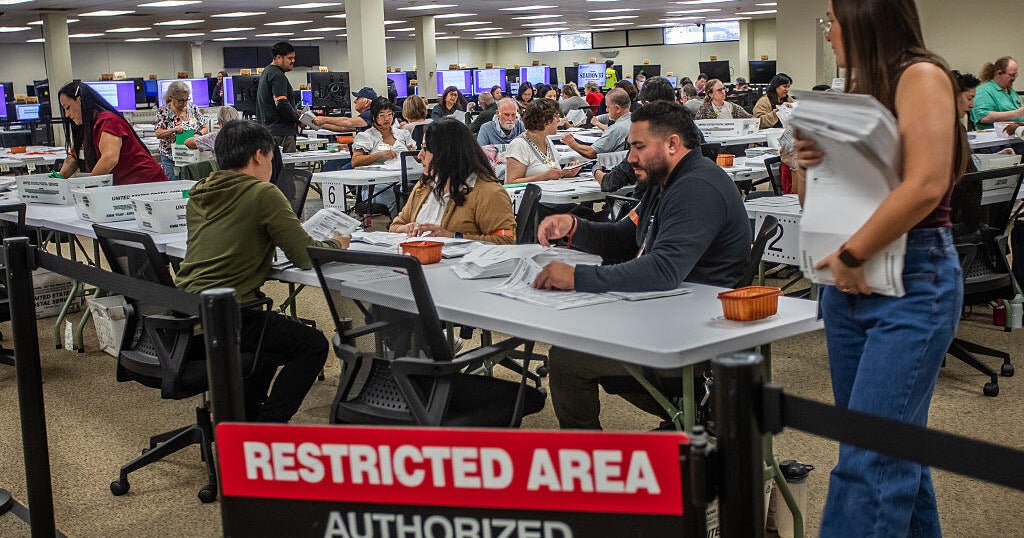
In the frantic, high-tension window preceding the November 3 midterm elections, a legal battle erupted that threatened to fundamentally alter the mechanics of the democratic process in California. At the center of the storm was a targeted attempt by the Trump administration to isolate a specific subset of the electorate: 20,000 ballots that the Justice Department alleged may have been sent to individuals who are not U.S. citizens.

The administration's goal was precise and disruptive. They sought to compel California officials to set these ballots aside, effectively sequestering them from the official count until their citizenship status could be verified. It was a request for extraordinary relief, a legal maneuver designed to halt the counting of a significant block of votes based on the suspicion of non-citizen participation.
When the U.S. Court of Appeals for the 9th Circuit stepped in to address the petition, the decision was not merely a procedural dismissal, but a profound statement on the threshold required to interfere with an active election. The court found that the government had failed to meet the heavy burden of proof necessary to justify such a move.
The 9th Circuit's dismissal of the petition to invalidate these 20,000 ballots was driven by a concern for the very foundation of the voting process.
"The United States has not made the required showing that such extraordinary relief, during an ongoing election, is clearly required by law," the 9th U.S. Circuit Court of Appeals panel noted. In the American legal system, 'extraordinary relief' refers to judicial actions that go beyond standard remedies, often involving the suspension of normal processes. To grant such a request, a court must be convinced that the law demands it with absolute clarity—a standard the administration simply did not meet.

🚨BREAKING🚨 A federal appeals court has again rejected the Trump administration’s latest attempt to force California to set aside ballots cast by more than 20,000 people it alleges may be noncitizens. The “United States has not made the required showing that such extraordinary relief, during an ongoing election, is clearly required by law,” a three-judge panel of the 9th U.S. Circuit Court of Appeals ruled 2-1. Source: @NBCNews
This rejection by the appeals court was not an isolated incident of judicial resistance; it was the latest chapter in a series of setbacks for the administration's legal strategy. Prior to the 9th Circuit's decision, U.S. District Judge David Carter had already ruled against the administration's request.
Judge Carter's refusal to grant the segregation of ballots was rooted in both constitutional principles and a fundamental skepticism regarding the evidence presented. He pointed to the unreliability of the government's methodology, suggesting that the data used to identify these 'likely non-citizens' did not hold up under the scrutiny required to disenfranchise voters.
The crux of the legal fight rested on a specific number: 20,000. The Trump administration claimed that nearly 20,000 'likely non-citizens' had received mail-in ballots for the midterm elections. The Justice Department alleged that California had sent these ballots to people who may not be U.S. citizens, creating a perceived vulnerability in the state's electoral integrity.
However, California officials countered these claims with a sharp critique of the administration's math. They argued that the list provided by the federal government was highly unreliable and likely contained many individuals who are, in fact, U.S. citizens. This disagreement highlighted a deep rift between federal oversight and state-level election administration, where the accuracy of voter rolls becomes a battlefield for political legitimacy.

Federal appeals court again rejects Trump bid to set aside 20,000 California ballots https://t.co/sHNQG8NUFu
The 9th Circuit's dismissal of the petition to invalidate these 20,000 ballots was driven by a concern for the very foundation of the voting process. The court weighed the administration's allegations against the risk of voter disenfranchisement—the act of preventing a qualified citizen from exercising their right to vote.
By rejecting the bid to invalidate or segregate the ballots, the court prioritized the stability of the election and the protection of constitutional rights over the administration's claims of potential non-citizen voting. The decision underscored the difficulty of using disputed data to strip away the voting power of a large group of people during the heat of an election cycle.
While the California case captured significant attention, it was part of a wider, more systemic push by the administration to scrutinize local elections across the country. The legal challenges in California were not occurring in a vacuum; the administration was simultaneously facing similar legal battles in Alaska and Washington state.
This pattern suggests a coordinated effort to challenge the administration of elections at the state level, testing the limits of federal authority to intervene in how states manage their own ballots. The California ruling serves as a significant roadblock in this broader campaign of federal oversight.

A federal appeals court for the second time denies a Trump administration request to block 20,000 ballots from California voters the administration alleges may be noncitizens. https://t.co/epNhBgdAyx https://t.co/IJNjAckc9u
Despite the court's rejection, proponents of the administration's move argued that the effort was a necessary step in maintaining election integrity. Patrick Bumatay, speaking in support of the administration's position, framed the issue as a matter of cooperation and enforcement.
"The federal government and the States can work together. California decided long ago that aliens can't vote in its elections. Today, the federal government merely seeks to safeguard that decision. We should have let them try," Bumatay stated. From this perspective, the Justice Department was not attempting to disrupt the election, but rather to ensure that the state's own rules regarding citizenship were being strictly upheld.
As the dust settles on this specific legal skirmish, the immediate threat to the 20,000 disputed ballots has been averted. The U.S. Court of Appeals for the 9th Circuit's decision on October 30, 2026, remains a definitive rejection of the administration's request to invalidate or segregate these ballots. The court's decision underscores the importance of upholding the integrity of the electoral process and the constitutional rights of all eligible voters.