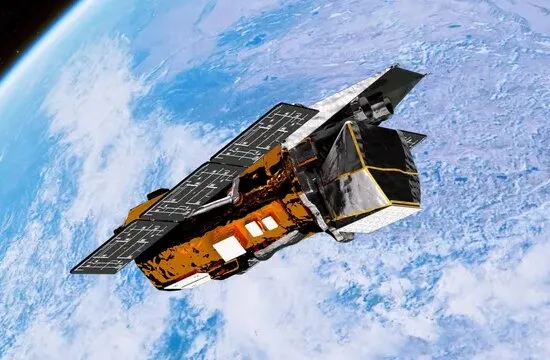
For twenty-two years, the Swift space observatory served as humanity’s primary sentinel against the sudden, blinding flashes of gamma-ray bursts—the most powerful explosions in the cosmos. Launched in November 2004, the 1.5-ton instrument was a triumph of international collaboration, uniting the scientific expertise of the United States, Italy, and Britain. Its primary directive was to capture the fleeting, high-energy signatures of these bursts, as well as the dramatic deaths of stars known as supernovae. Over the course of its long and storied operational life, Swift proved to be an unparalleled tool for astrophysics, successfully observing over 2,000 gamma-ray bursts and documenting 1,400 supernovae. It transformed our understanding of the dynamic, ever-changing nature of the universe, providing a steady gaze where once there was only mystery.
By the mid-2020s, however, the inevitable pull of gravity began to claim the observatory. As its orbit decayed, the satellite faced an increasingly precarious future. The challenge was not merely the natural degradation of its altitude, but the volatile environment of space itself. Geomagnetic storms, triggered by intense solar activity, further complicated the satellite's stability, pushing the aging observatory toward an premature conclusion. It became clear that without intervention, the telescope that had spent over two decades mapping the heavens would soon be reduced to a streak of fire across the sky.
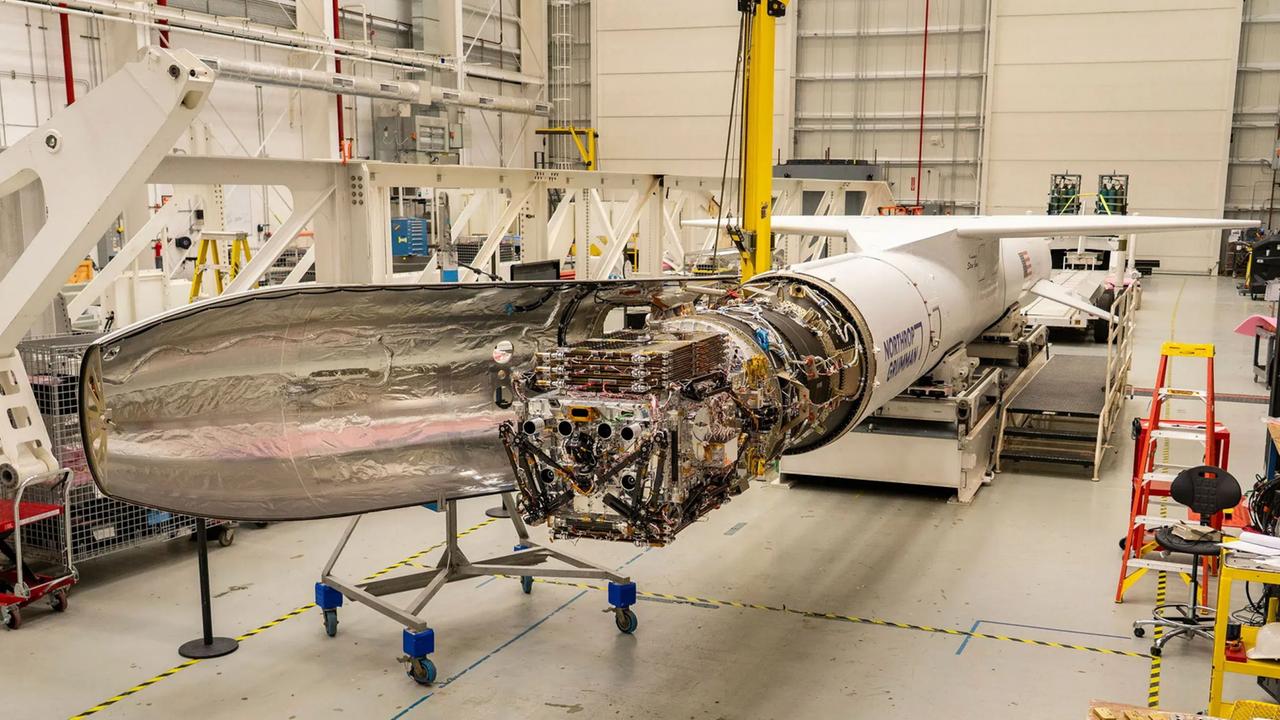
In a last-ditch effort to extend the life of this vital asset, NASA turned to private industry. In July 2026, Katalyst Space Technologies launched a specialized space tug—the 'Link' spacecraft—with the ambitious goal of reaching Swift, adjusting its orbit, and delaying its inevitable re-entry. The mission was a high-stakes gamble, requiring precise maneuvering to dock with an aging, drifting satellite. However, the complexity of the operation soon became apparent. The rescue attempt was plagued by persistent issues with the Link spacecraft’s control system. These technical failures, which hindered the tug's ability to stabilize and maneuver effectively, ultimately doomed the mission. By August 2026, the effort was officially canceled, leaving Swift to its fate.
These technical failures, which hindered the tug's ability to stabilize and maneuver effectively, ultimately doomed the mission.
On November 4, 2026, the Swift space telescope reached the end of its journey. As it plummeted toward the Earth, the 1,450-kilogram observatory entered the atmosphere at 22 times the speed of sound. The friction of the descent created an intense, searing heat, causing the satellite to break apart and burn up high above the surface of the planet. The final moments of the observatory occurred over North Sumatra, Indonesia. While the spectacle of a satellite re-entry is often a cause for concern, NASA had long anticipated this outcome, noting that the vast majority of the telescope's components would be consumed by the intense heat of the atmosphere.
Despite the dramatic nature of its final descent, the impact on the ground was negligible. NASA reported that no damage was recorded in the region of North Sumatra, confirming that the atmosphere had acted as a final, effective shield. As American specialists noted, while the agency had predicted that most of the orbital telescope would burn up, there remained a possibility that some components might survive the fall; however, the lack of reports suggests a clean end to a mission that defined an era of high-energy astronomy. With the loss of Swift, the scientific community loses a dedicated observer, but the data it gathered over its 22-year tenure remains a permanent contribution to our knowledge of the stars.