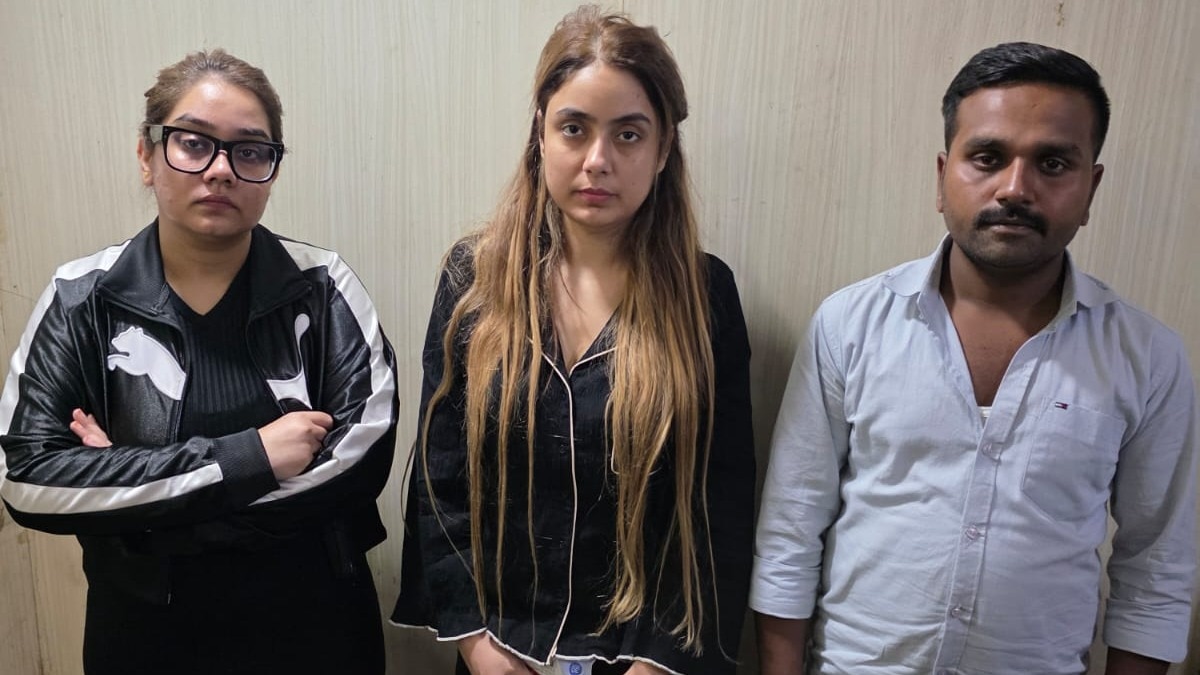
Her escape from custody after the case first came to light was a testament to her knowledge of police procedures, which delayed her arrest.

The murder of Shiva Sharma, though not detailed here, sparked a coordinated response from law enforcement agencies.
The operation involved teams from Lucknow, Varanasi, and Nagpur, each bringing local intelligence and logistical support. The collaboration illustrates how Indian law enforcement can transcend state boundaries when a case demands it. The arrest of Dubey in Nagpur on 20 October 2026 was the result of painstaking coordination among the three city teams.
When a suspect understands the procedural steps, they can anticipate and evade each move, making the task of law enforcement more difficult.
According to the STF chief, Amitabh Yash, Dubey's knowledge of police procedures delayed her capture. Yash's statement, “Sharda Dubey had knowledge of police procedures and techniques, which is why it took time to arrest her,” offers a rare glimpse into the tactical challenges faced by investigators. When a suspect understands the procedural steps, they can anticipate and evade each move, making the task of law enforcement more difficult.
Police procedures are not merely bureaucratic formalities; they are the scaffolding that supports every arrest, interrogation, and courtroom appearance. Familiarity with these processes can enable a suspect to exploit loopholes, forcing the STF to recalibrate its approach. Yash's acknowledgment of Dubey's expertise underscores the need for law enforcement to constantly evolve tactics when confronting individuals who have studied the system from within.
Following her capture, Dubey, along with two other suspects, was placed in transit remand before the Lucknow court. This step ensures that the suspects remain under the watchful eye of the law as they are transferred to the venue where the trial will ultimately be held.
Dubey's arrest marks a turning point in a case that once seemed to be slipping through the fingers of justice. The successful coordination among Lucknow, Varanasi, and Nagpur demonstrates the capacity of Indian law enforcement to adapt when faced with a suspect who knows the game better than most. As the three suspects await further legal proceedings in Lucknow, the broader narrative serves as a reminder: even the most knowledgeable evader can be caught when agencies align their resources, share intelligence, and remain vigilant against the very procedures that once shielded the fugitive.