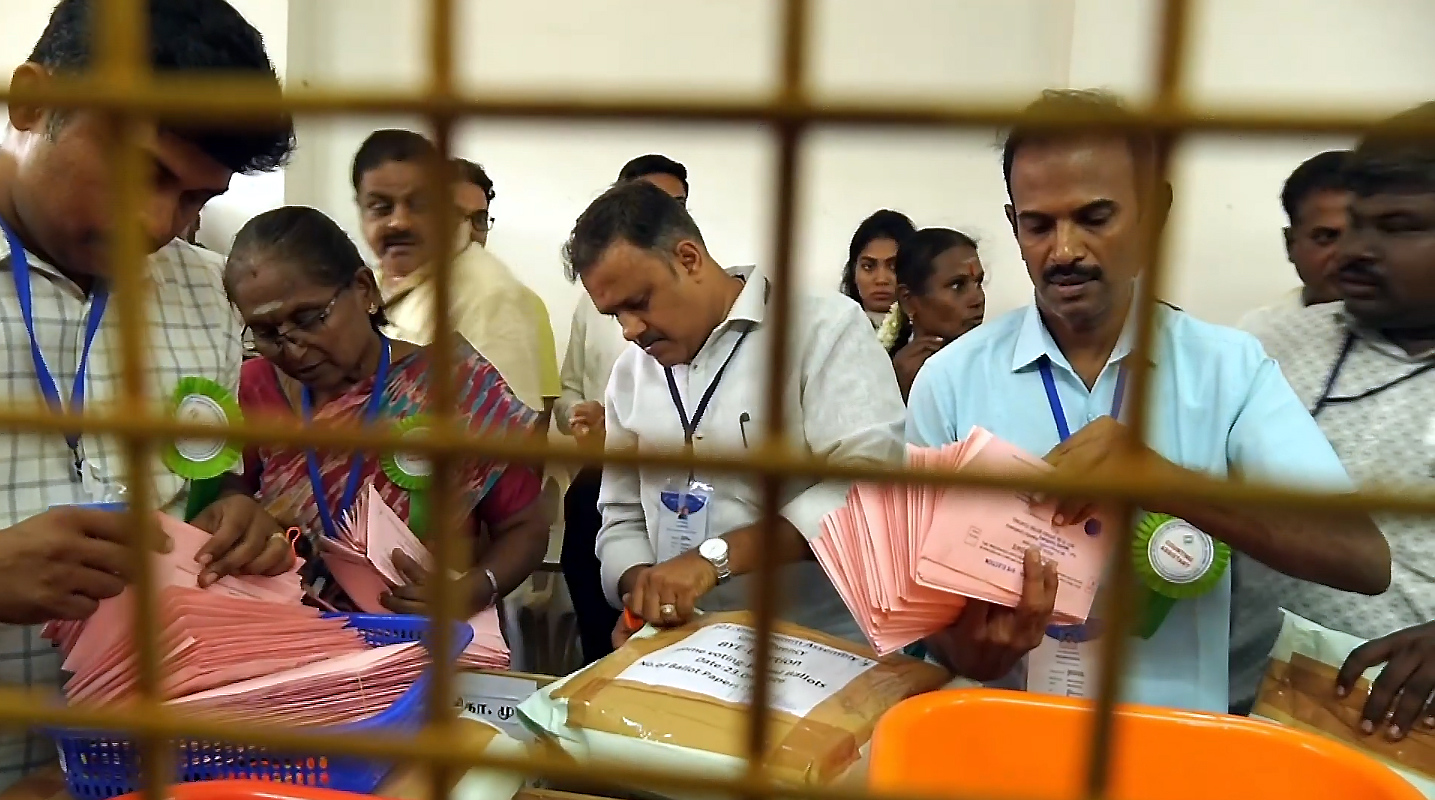
When the votes were tallied for the by-elections held on October 6 across several Indian constituencies, the headline wrote itself. The Bharatiya Janata Party had not merely defended ground in West Bengal; it had widened its footprint in the state it only recently pried away from the Trinamul Congress after a 15-year run. Two assembly seats — Nandigram and Rejinagar — returned results that amounted, in the words of the BJP's own leaders, to a verdict on the Suvendu Adhikari-led state government barely months into its tenure.
Nandigram is one of those rare Bengal constituencies whose name resonates well beyond the state — a place long shorthand for fierce political emotion. The bypoll here, after counting day, delivered the most striking number of the cycle: BJP candidate Hasirani Rath holding a lead of 1,15,589 votes. Trailing far behind, Milan Pradhan polled 34,530 votes and Shanti Gopal Giri just 5,020 — a lopsidedness that made the contest feel less like a race than a coronation. For the BJP, the implication is straightforward: a seat once treated as opposition territory is now being absorbed into its coalition map, and the scale of the lead buries any narrative of a competitive fight.

Bengal bypolls: BJP wins Nandigram by record margin, bags Muslim-majority Rejinagar by over 75,000 votes https://t.co/3ToFr2M59e
If Nandigram was a symbolic prize, Rejinagar was the operational one. There, BJP candidate Shankharav Sarkar won by 75,661 votes — a margin large enough to dismiss any suggestion that the result hinged on local quirks. Adhikari, the man whose political career is bound up with Bengal's swing toward the BJP, claimed the party had built its winning coalition by drawing into its fold voters who had never previously considered it. He said the "minority community had found a 'friend' in the BJP," a phrase that did double work: it celebrated the victory while sharpening the social claim the party wanted to make about who had delivered it.
In Madurantakam, Maragatham Kumaravel held a lead of 13,000 votes; in Dharapuram, P.
The Bengal picture came wrapped in a dispute. Congress leaders alleged that party workers had been assaulted, campaign vehicles vandalized and polling booths compromised during the October 6 polling — a catalogue of complaints that, if substantiated, would temper any reading of the BJP's sweep as a clean expression of voter preference. The BJP denied the allegations. The exchange matters because it foreshadows the kind of post-poll litigation and narrative fight that has become standard in Indian bypolls: margins large enough to discourage legal challenges, but small enough disputes over process to remain politically alive long after the EVMs have been sealed.

BJP Wins Nandigram Bypoll By Record Margin, Also Secures Rejinagar Seat @RittickMondal - https://t.co/OlpLUIEYEn https://t.co/qVwaYS2Yaq
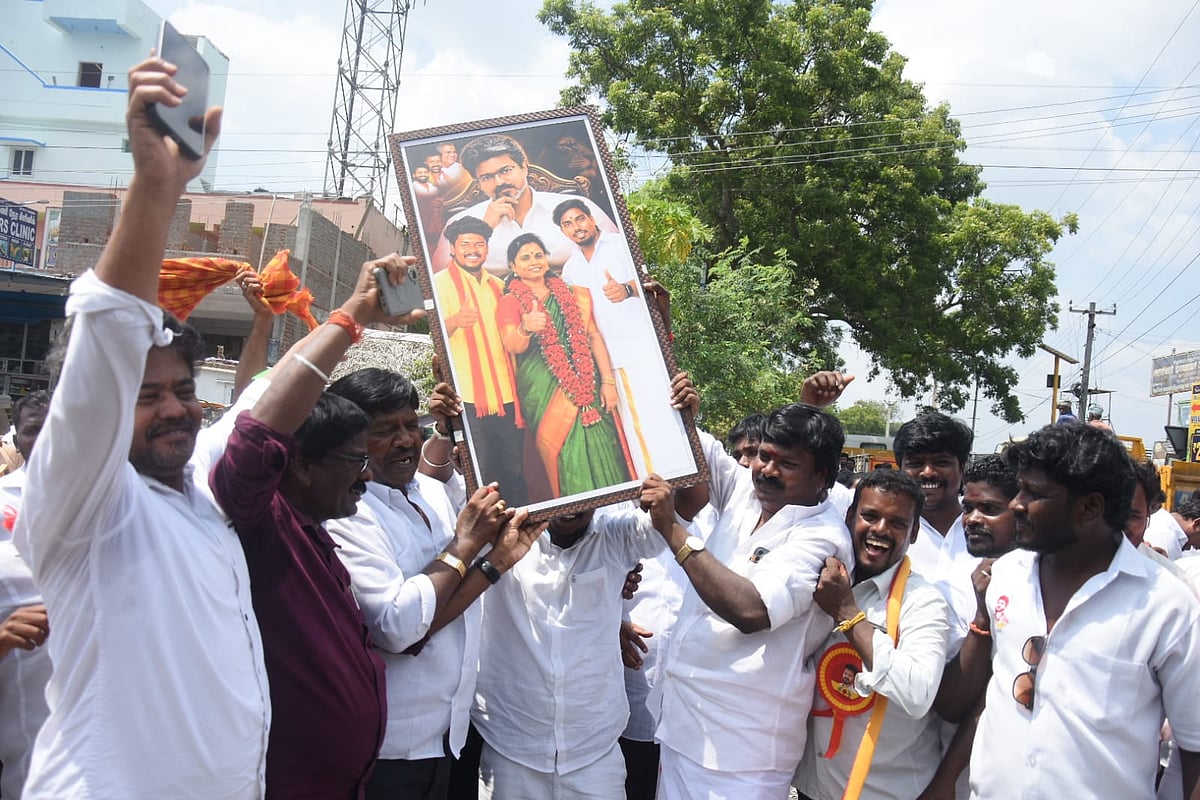
South of Bengal, a different kind of political story was unfolding. In the state assembly by-elections in Madurantakam and Dharapuram, the Tamilaga Vettri Kazhagam (TVK) was leading — a result that redraws the arithmetic of a state long defined by a two-party fight between the DMK and the AIADMK. The high turnout told part of the story: 86.26 percent in Madurantakam and 80.30 percent in Dharapuram, both unusually crowded polling days even by Tamil Nadu standards.
In Madurantakam, Maragatham Kumaravel held a lead of 13,000 votes; in Dharapuram, P. Sathyabama's vote count reached 51,253. The TVK, the relatively newer entrant that now has 107 MLAs in a 234-seat assembly including the Speaker, is no longer a curiosity — it is the third pole of a triangular contest whose geometry the established parties will have to reckon with.
The Union Territory of Puducherry offered a more compact headline. The AINRC retained the Thattanchavady assembly seat with a victory margin of 8,482 votes — a modest but serviceable hold, the kind of result that confirms an incumbent's grip without altering the broader political weather. In a place where assembly majorities are small and terrain is built from negotiated coalitions, simply keeping the seat is the story.

BJP wins Nandigram bypoll as Hasirani Rath secures landslide victory https://t.co/fyoY5wKq06
Farther east, in the Nagaon Lok Sabha by-election, BJP candidate Devasish Sharma opened up an unassailable lead of 1,10,629 votes over his nearest rival, AIUDF's Badruddin Ajmal. A Lok Sabha contest carries a different weight from an assembly bypoll — turnout is heavier, attention is national, and the symbolism carries into national coalition arithmetic. The size of Sharma's lead suggested that the contest was effectively settled long before the last round of counting.
Read individually, each of these bypoll outcomes is a local story with local characters. Read together, they sketch the early outlines of a political cycle in which the BJP is converting incumbency into deeper penetration in the east, a newer regional party is interrupting a long-standing bipolar order in the south, and smaller incumbents in Union Territories and northeastern states are absorbing the pressure without yet cracking. The Bengal results will draw the loudest headlines because the stakes there — ending a 15-year rival's run — were always the highest. But the quieter verdicts from Madurantakam, Dharapuram, Thattanchavady and Nagaon suggest that the country's political map is being redrawn in more places, and along more different lines, than any single bypoll could capture.