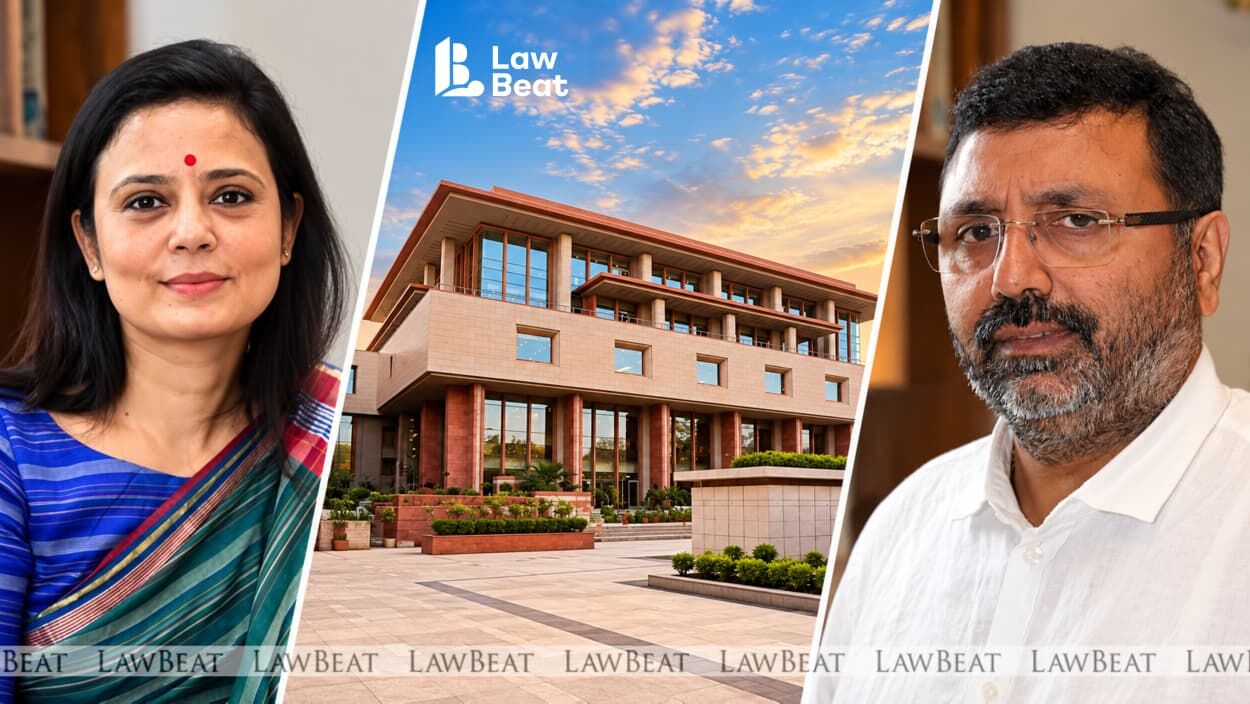
In a hearing that drew sharp attention to the boundaries of political free speech and legal liability, the Delhi High Court issued a directive that effectively forced two key figures to walk back their most aggressive attacks on a Bharatiya Janata Party leader. The court now ordered the removal of a specific piece of content: a tweet by Mahua Moitra, a Member of Parliament for the All India Trinamool Congress. That tweet, which had found a large audience on social media, explicitly described Dubey as a 'fake degree man.' In a significant concession during the proceedings, Moitra's legal team agreed to the court's request, signaling a willingness to strike the line from the public record rather than risk further legal exposure.
But the digital takedown was only half the battle. The other half involved the audio files of a podcast, a format that had become a powerful vehicle for political storytelling but also a minefield for defamation. Dubey alleged that Subhash Chandra Garg, a former finance secretary, had used a platform on September 17, 2023, to amplify accusations that Dubey had tried to exert pressure on him in 2018. Garg had framed Dubey as a 'blackmailer,' a term the court found particularly objectionable. The court issued a directive that Garg should block or remove the offensive content from the podcast, setting a clear legal precedent that even in the realm of spoken word on the internet, specific words carry specific weights that can cross the line into defamation.
The court's skepticism toward the language of politics was palpable. Justice Tushar Rawat Gadelia echoed the court's concerns, stating plainly that 'Garg should block offensive words used in the podcast.' This was not a casual suggestion. It was a mandate to surgically excise the most damaging parts of the narrative. Garg's defense team, navigating the tightrope between public accountability and legal safety, is reportedly considering muting the specific offensive segments rather than removing the entire video. This technical nuance highlights a broader tension in how media organizations and individuals handle content that has outlived its legal welcome.
The chronology of this dispute reveals a pattern of escalating tension.
The stakes for Dubey extend well beyond the removal of a tweet or a few seconds of audio. He is not merely seeking an apology; he is seeking a permanent injunction and a significant financial reckoning. The compensation he has demanded stands at 2 crore rupees. This sum is not trivial, especially in the context of a political rivalry where accusations often fly daily. The court issued summons to both Moitra and Garg, forcing them to formally respond to these allegations and the demand for compensation. The lawyers for both men are now scrambling to prepare these responses, knowing that their words will be scrutinized not just by the bench, but by a public that has already consumed their earlier attacks.
The chronology of this dispute reveals a pattern of escalating tension. The original accusation traces back to 2018, a year when political alliances were shifting and the lines between legitimate grievance and political vendetta blurred. Dubey has consistently denied ever attempting to exert pressure on Garg. For him, the 'blackmailer' label was not just an insult; it was a legal anchor that kept him in a defensive posture for years. The podcast interview, released on September 17, 2023, re-ignited these old wounds, bringing them into a new era of digital media where reach is instantaneous and correction is difficult. The court's involvement in October 2023 marked the first major legal check on this spiral, but the current hearings indicate that the fight for control over the narrative is far from resolved.
For Moitra and Garg, the order to block or delete content represents a significant tactical shift. They are no longer just political actors engaging in a public debate; they are defendants in a civil suit where their past words are now subject to judicial audit. The court's objection to the term 'blackmailer' suggests that the bench is drawing a firm line between criticizing a politician's conduct and legally actionable defamation. This distinction is likely to have ripple effects beyond this single case, setting a tone for how future disputes involving high-profile podcasts and social media posts will be handled in India's courts.
As the parties prepare their formal responses, the atmosphere in the legal corridors remains charged. The demand for 2 crore rupees hangs over the proceedings, a figure that reflects the severity with which Dubey views these accusations. The court has made clear that it expects both Garg and Moitra to engage seriously with the allegations.