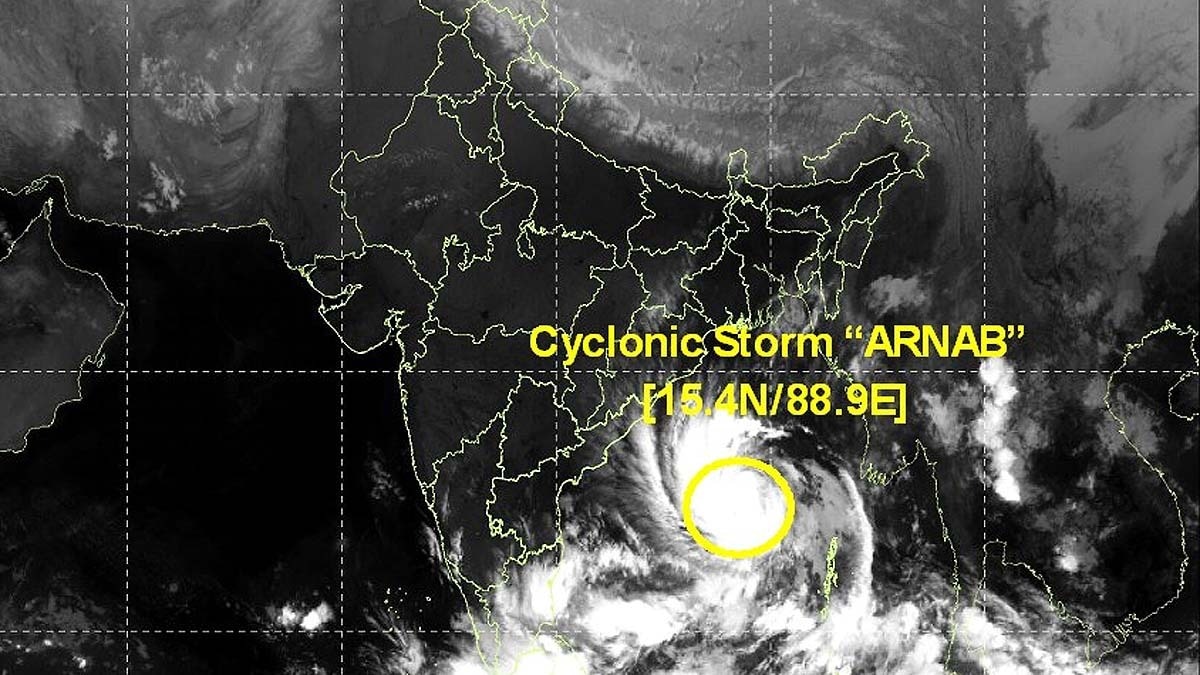
In the vast expanse of the Bay of Bengal, a weather disturbance has been gathering strength. What began as a deep depression has rapidly intensified into a cyclonic storm named 'Arnab.' This meteorological system, currently situated in the east-central part of the bay, is moving steadily toward the coast of India at 15 kilometers per hour. The Indian Meteorological Department (IMD), the nation's official weather authority, has been closely monitoring its development, tracking its every shift and intensification.
The cyclone is following a trajectory that will bring it perilously close to the densely populated coastal regions of Andhra Pradesh. According to IMD projections, Arnab is expected to intensify further into a severe cyclonic storm before making landfall. The critical moment is anticipated on the morning of October 28, when the storm's eye is projected to cross the coast between the towns of Bapatla and Visakhapatnam, near Yanam. This path places several communities directly in the storm's potential path of destruction.

The cyclonic storm that is brewing over the Bay of Bengal has intensified into cyclonic storm ‘Arnab’ and is likely to intensify into a ‘very severe cyclonic storm’ on the morning of October 27, according to the India Meteorological Department (IMD). https://t.co/nIZ9y2Sefc
What makes Arnab particularly concerning is the sheer power it is expected to unleash when it reaches land. Meteorologists predict wind speeds reaching 115 to 125 kilometers per hour, with gusts that could climb as high as 140 kilometers per hour. Such velocities can uproot trees, damage buildings, and create dangerous flying debris, posing significant threats to life and property in the affected areas. The IMD has issued warnings to residents, advising them to secure their homes and prepare for the impending onslaught.
Five additional districts are under orange alert, and seven more under yellow alert, creating a gradient of preparedness across the region.
The coastal regions of Andhra Pradesh and southern Odisha are now under heightened alert as authorities prepare for the storm's arrival. Red alerts have been issued for the most vulnerable areas, indicating the highest level of danger. These warnings are not issued lightly; they represent a collective call to action for residents and officials alike. Emergency services are on standby, evacuation plans have been reviewed, and supplies of food, water, and medical essentials have been stockpiled in anticipation of the storm's impact.

#Cyclonic storm “#Arnab” [Pronunciation :#Ornab]” https://t.co/B7TAgFj3Ik
While the primary impact will be felt along the coast, the effects of Arnab are expected to extend far inland. The cyclone's influence will reach the neighboring state of Telangana on October 28, prompting authorities there to issue their own set of warnings. Four districts in Telangana—Mulugu, Mahabubabad, Bhadradri Kothagudem, and Khammam—have been placed under red alert, indicating the likelihood of heavy to very heavy rainfall. Five additional districts are under orange alert, and seven more under yellow alert, creating a gradient of preparedness across the region.
Special attention has been directed toward the fishing communities that dot the coastline. Fishermen have been advised not to venture into the sea as the storm approaches, as the combination of high winds and rough seas creates extremely hazardous conditions. Similarly, residents in low-lying areas near the coast have been urged to remain vigilant and be prepared to evacuate if necessary. The IMD's warnings are clear and urgent: when a cyclone of this magnitude approaches, caution and preparedness can mean the difference between safety and danger.

Cyclone Arnab is likely to cross the Andhra Pradesh and Yanam coasts between Bapatla and Visakhapatnam by the forenoon of October 28, the India Meteorological Department (IMD) said on Monday. https://t.co/tKOKkqw5ML
Cyclones like Arnab form over warm ocean waters, where heat and moisture fuel their development. As the storm system moves over land, it begins to lose its energy source, which is why the most destructive impacts are typically concentrated near the coast. However, the remnants of the cyclone can still bring significant rainfall to inland areas, as is expected in Telangana. The IMD's ability to track and predict these storms has improved dramatically over the years, allowing for earlier warnings and more effective preparations.
As October 28 approaches, all eyes are on the Bay of Bengal and the approaching cyclone. The IMD continues to monitor Arnab's development, providing regular updates to help authorities and residents prepare. The storm's exact path and intensity may still shift slightly in the coming days, but the general direction and potential impact are becoming increasingly clear. For those in the path of Cyclone Arnab, the next few days will be a test of resilience and preparedness as they brace for the storm's arrival.