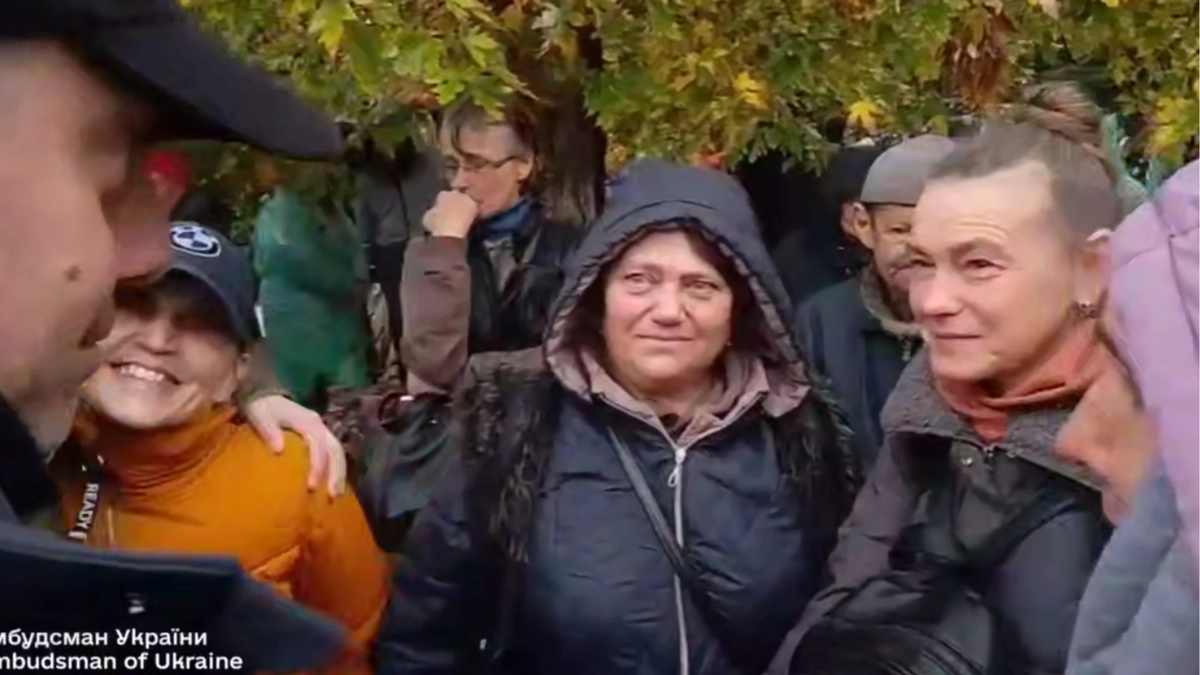
In the volatile landscape of the Kherson Oblast, time is often measured not in months or years, but in the narrow, precarious windows provided by temporary truces. For the residents of Oleksy, that window opened on October 27, when the Russian military announced a ceasefire at 04:00 Moscow time. It was a pause designed for a specific, singular purpose: a humanitarian operation to move people out of harm's way.

This was not a simple movement of civilians. The operation required a delicate coordination between Ukrainian, Russian, and Belarusian representatives, turning a zone of conflict into a corridor of transit. The logistical complexity of such an undertaking cannot be overstated, requiring diplomatic alignment even as the broader conflict continues elsewhere.
Before the first bus could roll or the first plane could take flight, the groundwork had to be laid through direct engagement. On October 29, the first face-to-face meeting between the participating parties took place in Gomel, Belarus. This meeting served as the diplomatic anchor for the mission, establishing the protocols necessary to ensure that humanitarian aid could reach those in need and that evacuees could move safely across borders.
Landing in Gomel was not the end of the journey, but rather a critical waypoint.
These discussions set the stage for the heavy lifting that would follow. Without the consensus reached in Gomel, the subsequent movement of people and supplies through contested territory would have been impossible. The meeting transformed abstract agreements into a functional, albeit temporary, operational reality.
Once the diplomatic channels were open, the mission moved into its active phase. On October 30, the humanitarian mission began its work in Alekseyevo. This phase was characterized by the direct delivery of essential supplies to residents, a critical step in stabilizing the local population before the evacuation could proceed.
A humanitarian convoy moved through the region, distributing aid to those remaining in Alekseyevo. This act of delivery was a vital component of the broader mission, ensuring that the immediate needs of the community were addressed even as the larger machinery of evacuation was being mobilized. It was a race against the clock, as the window of the ceasefire was strictly defined.
As the aid was being distributed, the massive logistical undertaking of the evacuation itself commenced. To facilitate the movement on the ground, 25 buses were prepared to transport residents, creating a steady stream of movement out of the Oleksy area. The scale of the operation required more than just buses; it required a synchronized effort of flights to move people across the necessary distances. The evacuation was not a single event but a rolling process, a series of departures designed to maximize the utility of the truce before it reached its scheduled conclusion.
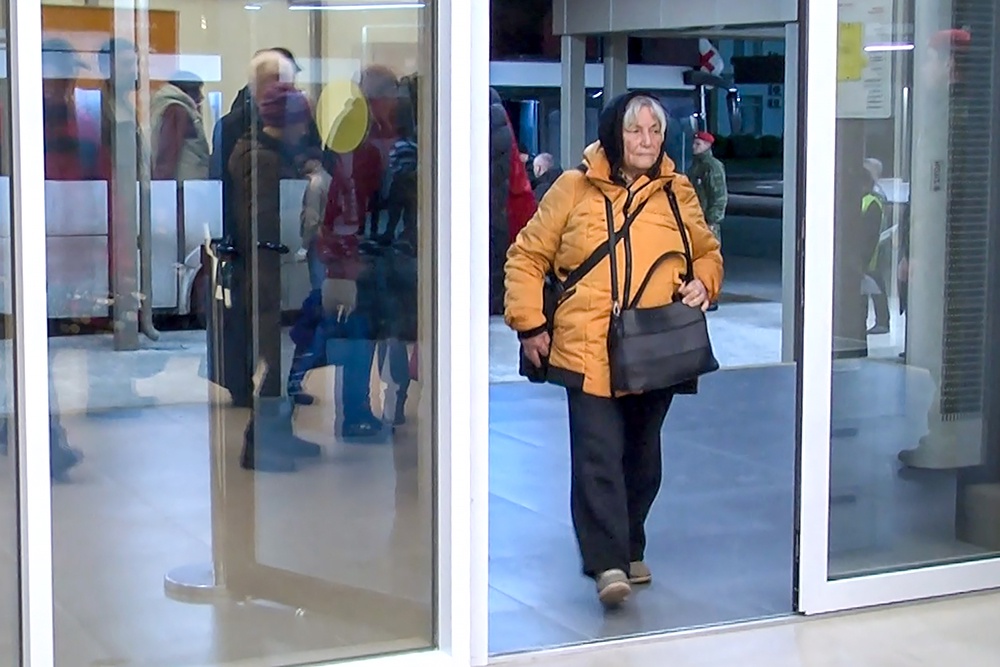
The momentum of the evacuation reached its crescendo on October 31. By this time, the mission had transitioned into its final stages. The fourth and final flight, carrying Ukrainian citizens from Oleksy, successfully landed in Gomel, Belarus. This arrival marked the end of the aerial component of the evacuation, signaling that the bulk of the targeted population had been moved from the immediate danger zone of the Kherson Oblast.
This final landing was the culmination of days of intense movement. The arrival of this last group in Gomel meant that the primary objective of the mission—the removal of these citizens from Oleksy—had been achieved. The focus now shifted from the mechanics of departure to the complexities of transit.
Landing in Gomel was not the end of the journey, but rather a critical waypoint. The evacuees faced a multi-stage transit to reach safety. The planned route for the citizens involved traveling via Anapa and Gomel to reach the Ukrainian border. This path highlights the circuitous nature of humanitarian corridors in modern conflict, where the shortest distance between two points is rarely a straight line.
David Arakhamia, the head of the 'Servants of the People' faction, monitored the progress of these final groups. As the last plane touched down, the mission transitioned from an active evacuation to a repatriation effort. The goal was clear: to ensure that every individual moved during this operation would eventually stand on Ukrainian soil.
As the evacuees moved through the transit corridors, the clock was ticking on the truce itself. The ceasefire that had enabled the entire operation was set to expire on November 1. This expiration meant that the window for safe, coordinated humanitarian movement was rapidly closing, placing immense pressure on the final stages of the transit.
The end of the truce in Oleksy serves as a stark reminder of the volatility of these humanitarian pauses. They are temporary lifelines, providing a brief respite from hostilities to allow for the movement of the vulnerable, but they are inherently finite. Once the truce ends, the landscape returns to its previous state of conflict.
In the immediate aftermath of the final landing, the focus turned to the final stretch of the journey. David Arakhamia confirmed the successful completion of the evacuation, noting the proximity of the citizens to their destination. The mission's success was measured by the movement of the entire Ukrainian delegation. All Ukrainian citizens, evacuated from Oleksy, together with the Ukrainian delegation, will be on Ukrainian territory within a few hours. The last flight lands in Gomel, and all evacuees will travel to Ukraine via Belarus.