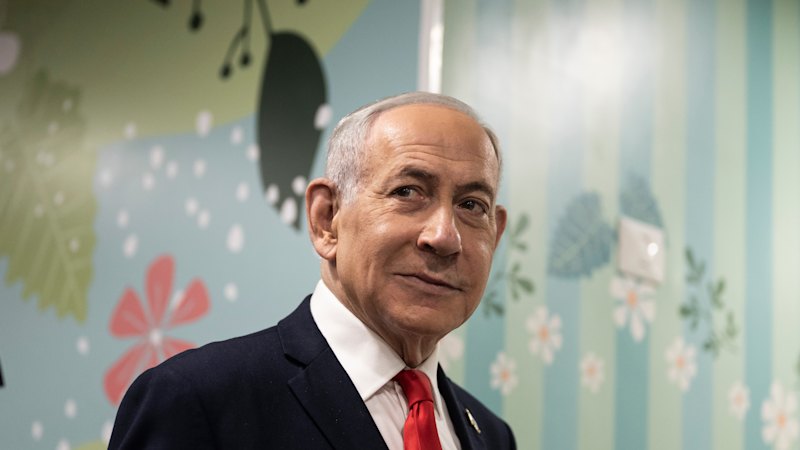
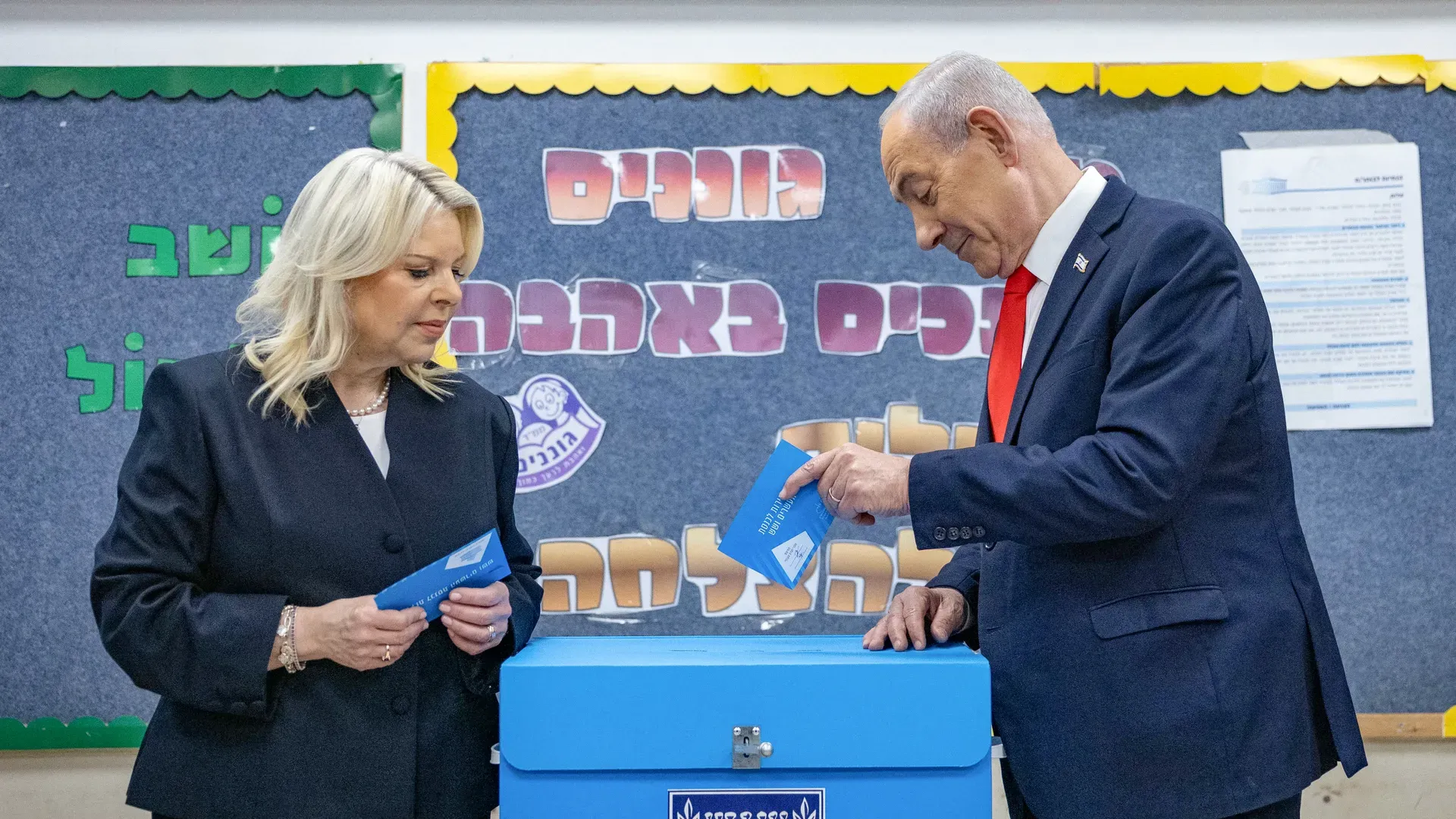
For Benjamin Netanyahu, the night ended not with a victory, but with a profound uncertainty. As exit polls from Israel’s general election rolled in, the Prime Minister faced a reality that contradicted the confidence of his campaign: his right-wing coalition had failed to secure the 61-seat majority necessary to form a government. Instead, the results pointed to a stalemate, a political limbo that has no clear winner, as noted by analyst Jeremy Diamond, who stated, "Right now, we are seeing a result that is showing no clear winner." This outcome represents a significant shift from the most recent elections in 2022, where Netanyahu’s bloc had comfortably won 64 seats. Now, the numbers suggest a far tighter race, with the right-wing coalition projected to hold only 50 seats. Despite this decline, the result is not a total collapse; Netanyahu’s Likud actually outperformed many pre-election opinion surveys to emerge as Israel’s single biggest party, a testament to an energetic election-day effort that successfully drove the party’s traditional conservative supporters to the polls. Likud itself is projected to win between 24 and 25 seats, a strong performance for a single party, but insufficient to carry the broader alliance to the threshold of power.
Across the political divide, the opposition bloc led by Gadi Eisenkot fared slightly better in terms of seat count, with exit polls indicating they hold 52 seats. For Eisenkot, the night was defined by a sense of moral clarity, even if the math was incomplete. In a statement reflecting the sentiment of his camp, Eisenkot declared, "The initial exit poll results indicate a total vote of no confidence in Netanyahu and his October 7 government by the Zionist majority and the majority of Israel’s citizens." This framing highlights the deep ideological divide that continues to fracture Israeli politics. The opposition, often referred to as Gidi Azikun's coalition in some reports, holds a narrow edge over the ruling bloc but struggles to bridge the ideological gaps among its constituent parties. Forming a government will be challenging, not only because of the lack of a simple majority but because of the difficulty in uniting parties with vastly different visions for the country's future. The future of Netanyahu’s political career now hangs in the balance; he may need to seek new coalition partners or face the prospect of a repeat election, a scenario that adds further instability to an already tense political landscape.
Perhaps the most significant story emerging from the Knesset’s 120 seats is the dramatic surge of Arab-led parties. These lists are on track to win between 17 and 18 seats, up from just 10 in the 2022 elections. This sharp increase has elevated Arab parties from peripheral players to critical kingmakers in future coalition negotiations. A surge in voter turnout among Arab-Israeli voters has transformed their electoral weight, meaning that neither the right-wing nor the opposition bloc can afford to ignore them. The implications of this shift are profound for Israeli politics, as these parties are becoming key players who can tip the balance of power. For the Zionist blocs, the challenge is now twofold: they must secure enough seats to reach the majority threshold of 61, and they must navigate the delicate diplomatic negotiations required to court the Arab parties. This dynamic has fundamentally altered the coalition calculus, forcing leaders to reconsider alliances that were once thought impossible. The result is a Knesset where no single side can dominate, and where the 17 to 18 seats held by the Arab lists will likely determine who sits in the Prime Minister’s office.
This dynamic has fundamentally altered the coalition calculus, forcing leaders to reconsider alliances that were once thought impossible.

Israel's first exit polls are in. According to News 12: ➡️ Likud, led by Benjamin Netanyahu: 24 seats ➡️ Yashar, led by Gadi Eisenkot: 22 seats ➡️ Beyachad, led by Naftali Bennett: 12 seats ➡️ Joint List, an alliance of Arab-led parties: 11 seats ➡️ The Democrats, led by Yair Golan: 9 seats ➡️ Yisrael Beiteinu, led by Avigdor Lieberman: 9 seats Israeli Government Formation 101: Class is now in session. Israel's parliament, the Knesset, has 120 seats. To form a government, a party leader needs to assemble a coalition with the support of at least 61 members. Take note (it's on the exam): the leader of the party that wins the most seats doesn't automatically become prime minister. What matters is who can persuade enough other parties to join them and build a governing majority to get to 61 seats. The political bargaining begins now. Party leaders will negotiate alliances, policy priorities, and cabinet positions to determine who can form the next government.
The political landscape that has emerged is one of fragmentation. The Knesset is divided, with the opposition holding a slight numerical advantage but lacking the cohesion to govern alone. The total of 120 seats means that the difference between success and failure is measured in a handful of votes. The stagnation is a reflection of a country in transition, where the traditional dichotomy of right versus left has been complicated by the rising influence of other political voices. As the parties move into the post-election period, the focus will shift from celebration or mourning to the painstaking work of negotiation. For Netanyahu, the uncertainty of his next move looms large; for Eisenkot, the task of building a stable government remains daunting. The result is not just a failure of one side or the other, but a systemic gridlock that will likely require a new approach to Israeli governance.