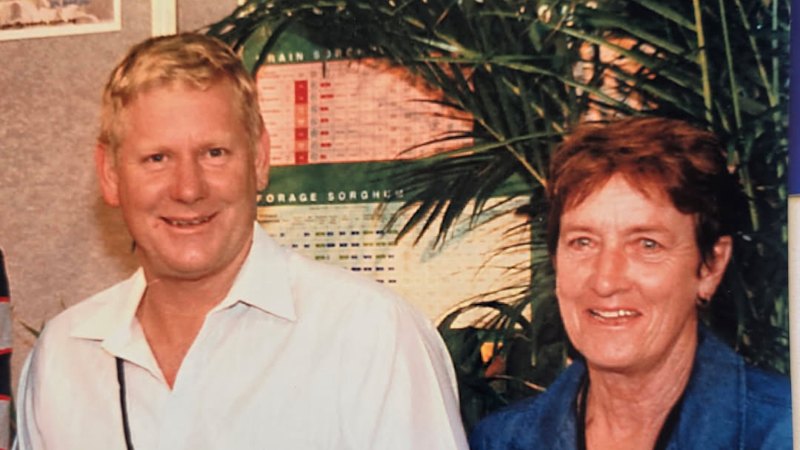
In a small Queensland paddock, a $10,000 filly emerged with a name that felt more myth than measure. Fred Noffke, a grazier who knows the rhythm of the land, whispered to the world that this horse would be a constellation for his partner Aliceson Moore. He spoke emotionally about her seven-and-a-half-year battle with Multiple System Atrophy, describing the cruelty of the disease and the injustice of her fate. The phrase carries a bittersweet pulse. Moore’s struggle against MSA ended six years ago, a tragic conclusion that built the filly’s purpose as nothing less than a living testament to resilience.

The filly’s early shows were the stuff of local lore, but it was the flat-track arena that promised a new horizon. When the TAB set the odds at $1.80, the Queensland community stepped forward. Sheza Alibi, the favorite for the $10 million Golden Eagle at Randwick, earned an echo: not of money but of legacy. Noffke explained, “Most of whatever success I had, she was there, always backing me up, backing my judgment. She always tried to benefit everybody else around her.” Those words wrapped the filly’s career in a companionable narrative of faith.

Sheza Alibi will jump from barrier 6 in Saturday's Golden Eagle! Are you backing her in? 🦅 https://t.co/qGeQlnZrxf
On the day of the barrier draw, the charities aligned with each runner were assigned. For Sheza Alibi, the Royce Simmons Foundation, a charity dedicated to dementia research, was paired. The race itself, a 1500-meter sprint at Randwick, attracted a field where each chest was laden with hope and heritage. The match between the filly’s charity and the cause that had long been shrinking the world’s awareness of MSA speaks to the synergy between sport and social activism. While she was called a “favorite,” it was the almond-shaped camaraderie of the racing fraternity that gave the day its flavor.
The only other horse on the track that held a shared story was Rivellino, trained by Kris Lees.
As the race unfolded in the blinding light of the stadium, the crowd swelled with alive energy. Noffke watched from where he had leaned on the rail. Each kick of the horses, each turn of the post, seemed to echo the tenured pain his beloved Aliceson once endured. The competition was fierce; the betting spread did not remain static. Yet in the roar, the filly’s name was chanted like a prayer — a living memory keeping her cruel disease at bay.

It's barrier 6 for the favourite, Sheza Alibi in the Golden Eagle 🙌 https://t.co/q82QEgmAvJ
The only other horse on the track that held a shared story was Rivellino, trained by Kris Lees. Rivellino, for whom MSAA (Multiple System Atrophy Australia) is the endowed charity, could finish in the money and elevate its partner beyond the finish line. Noffke phrased his hope, “I also hope Rivellino, trained by Kris Lees, finishes in the money… as Rivellino supports MSAA, the same charity tied to his loss.” The partial overlap of their causes gave the day a secondary thread of solidarity.
When the second hand of the clock fell on the final fourth, the field collapsed into a sleek vortex of color and ferocity. Sheza Alibi, a filly of disposition, did not just speed; she carried the weight of a lived dream—and in full stride did she puncture the ethos of the sport. When the million-payout was announced, the media shared a crisp number: ten percent of the $10 million prize funnelled to each runner’s chosen charity.

The final field and barrier draw has been completed for the $10,000,000 Golden Eagle. Sheza Alibi drawn ideally in barrier 6, can they beat her? https://t.co/CvFmGAXAS0
What is the tangible of a memory sold for ten thousand? For Noffke, the filly was a piece of heart. And in communal minds, the monetary gift, simply “10 percent,” extends to the communities that fight a disease nobody can outpace. The Royce Simmons Foundation, a champion for dementia research, stood to benefit from the filly’s performance.
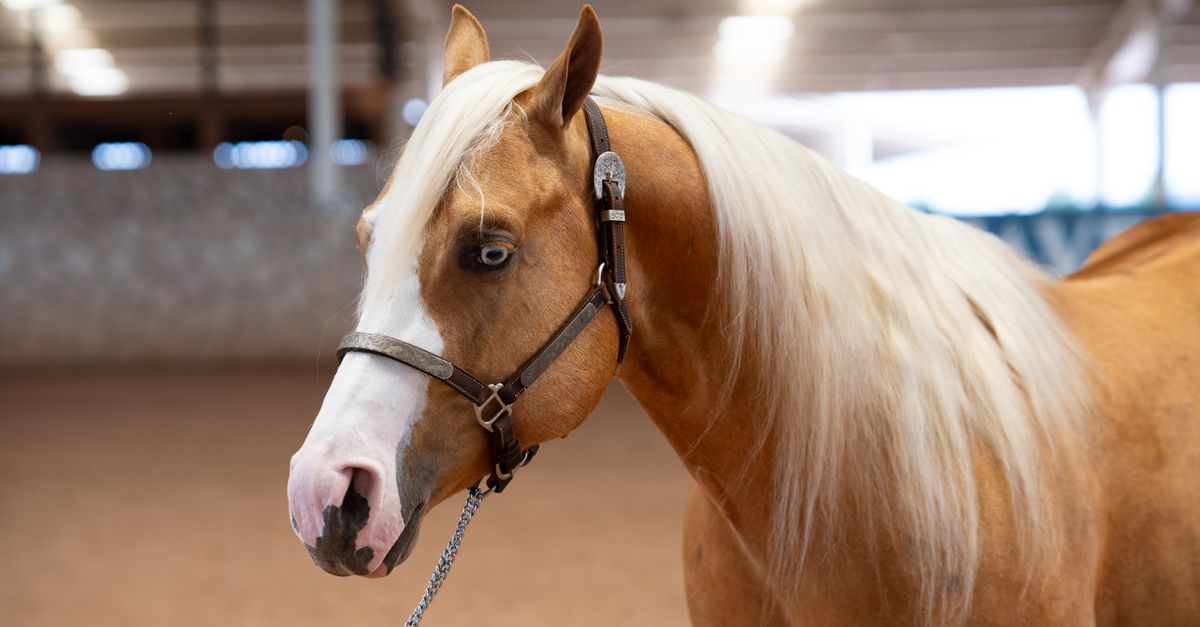
Beyond the finish line, the community felt the ripple of the race. Noffke’s own words captured the enduring sting: “It was just a travesty, an injustice that she ended up with this hideous disease, and that’s where life’s not fair, you know?” That moment marked a symbolic point: the sting of an illness that stripped consciousness and the resilience exuded in a sport that could scratch the memory left behind.
The mingled day sealed a future that had been lumped at the back of promising horses: a track that is quoted in the TAB’s book and a cause that continues to draw the eyes of many. Since the draw, Sheza Alibi’s name has risen in the records—a $1.80 favorite that promised a profit but delivered more than any centre door could. For the Australian racing community, it serves as proof that sport, charity and dignity can roll together like a herd in a pasture.
The story of the filly remains a message that a simple act—a name, a donation—can storm through an entire day and bring the world quietly closer together.