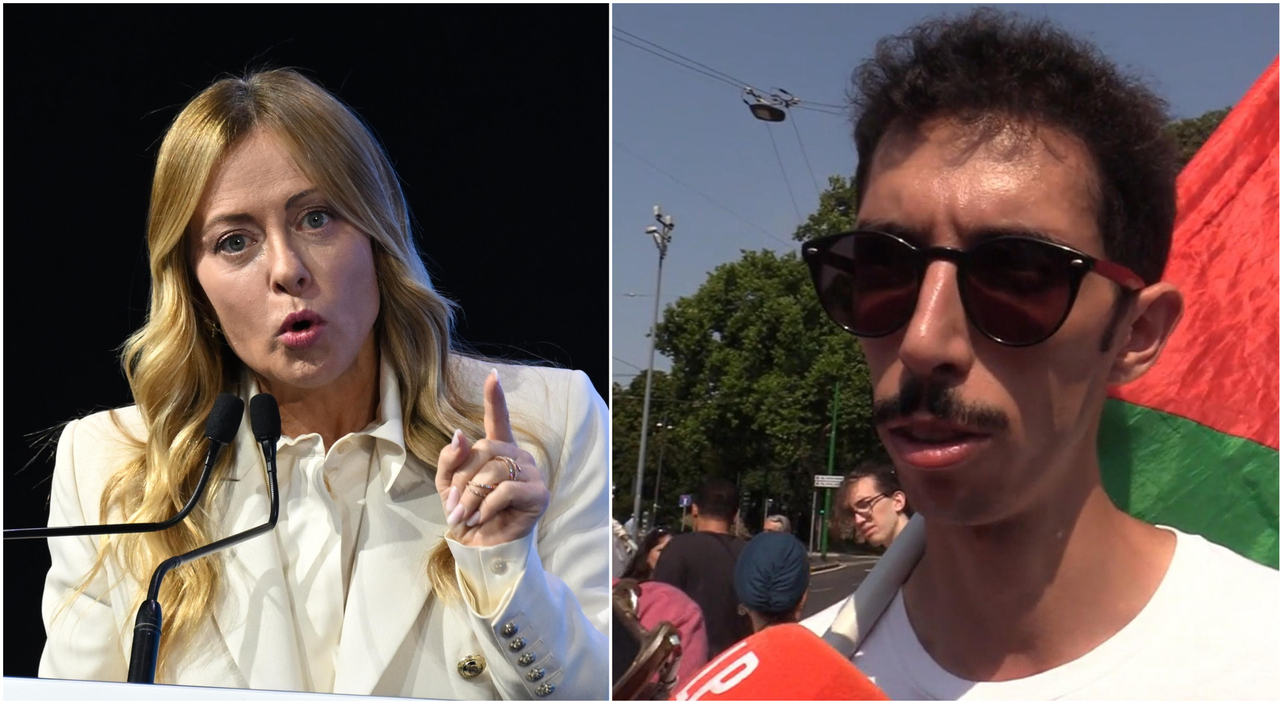
For a new observer to Italian politics, the most jarring element of the recent drama in Milan is not the protest itself, but the velocity with which it became a constitutional crisis. On October 28, 2026, a quiet ruling from a Milanese court set off a cascade of political fury that would echo through the corridors of power in Rome. At the center of this maelstrom is Youssef Siher, a researcher and the administrator of a Telegram channel called "October 17 Movement." While the name might sound obscure to those outside the Italian digital sphere, the reaction to his legal fate suggests that the case is far more than a minor digital nuisance. Prime Minister Giorgia Meloni did not issue a standard statement; she declared the judicial handling of Siher a "shameful" and "insufferable humiliation" for the state, marking a rare and heated public attack on the judiciary by the head of government.

To understand the stakes, one must look at who Siher is and what he did. The Italian government contends that through the "October 17 Movement," Siher articulated "forms of protest" against current government policies and explicitly invoked "acts of civil disobedience." In the modern era of governance, social media channels have become the new plazas for dissent. The authorities argued that these digital calls for disobedience were not abstract theory but a concrete threat to public order. This classification is significant; by framing a Telegram channel as a nexus for unrest, the state elevated a digital communication tool to the status of a security instrument, suggesting that the administrative work of online moderation is now inseparable from the physical protection of the city.
The friction point, however, lies in the legal interpretation of that threat. Judge Landoni of Milan, acting as the judge responsible for confirming arrests, made the decision on October 28, 2026, not to validate Siher's arrest. The logic offered was strictly procedural: there was a lack of evidence indicating that Siher posed a flight risk, and he had not been physically present during the search operations that originally led to his detention. In the eyes of the judge, these factors meant that keeping the suspect in custody was no longer legally justified. This is a standard application of the presumption of innocence, yet it collided head-on with the government's narrative of escalating danger.
The political fallout was reinforced by Matteo Salvini, the premier's government ally, who added his own critique to the chorus.
Prime Minister Meloni’s reaction was immediate and vociferous. She stated, "I consider the decision of the Milan judge to not confirm the arrest of Youssef Siher to be shameful." She expanded on this sentiment, describing the ruling as an "unbearable humiliation" for the work of law enforcement, investigators, and the Ministry of the Interior. By using such strong language, Meloni was not just criticizing a specific case; she was publicly questioning the efficacy of the police and the prosecutor in their roles. She argued that the decision failed to protect "decent people" from the risk of seeing their cities and businesses devastated. This framing positions the judicial release not as a safeguard for rights, but as a failure of the state’s protective duty.
The political fallout was reinforced by Matteo Salvini, the premier's government ally, who added his own critique to the chorus. Salvini described the release as "incredible," noting the stark contrast between the severity of the charges and the leniency of the outcome. He pointed out that the Milan Public Prosecutor's Office had alleged "extremely serious crimes" against Siher. These allegations included incitement to commit offenses with the intent to promote terrorism, alongside a highlighted risk that the defendant might flee or reoffend. By invoking the specific charge of terrorism, Salvini attempted to recontextualize the case away from general civil disobedience and toward national security, further justifying the government's demand for continued detention.
This episode highlights a deepening tension in the Italian system: the gap between the government’s instinct to use coercive power to maintain order and the judiciary’s mandate to uphold individual liberties. When the Premier and a junior minister publicly label a judge’s decision "shameful" or "incredible," they are stepping into a domain traditionally reserved for the independent branch of government. It signals to the public that the executive branch views its relationship with the courts as adversarial rather than complementary.
The timing of these events is also notable. The release occurred amid a backdrop of protests against government policies, where the authorities cited the risk of property damage and the destabilization of businesses in cities like Milan. The government’s stance implies that without the ability to keep figures like Siher in custody, it loses the leverage necessary to deter such unrest. The narrative constructed by the executive is that judicial leniency in such cases directly enables the physical disruption of public life.

As of the ruling, Youssef Siher is free, but the political temperature remains high. The government’s criticism has set a precedent for how it will engage with future judicial decisions that it deems insufficient for maintaining public order. For Youssef Siher, the case has transformed his personal legal status into a symbol of the broader struggle between state power and judicial independence. The episode does not end with the gavel falling; it continues in the political arena, where the definition of "security" is still being contested.