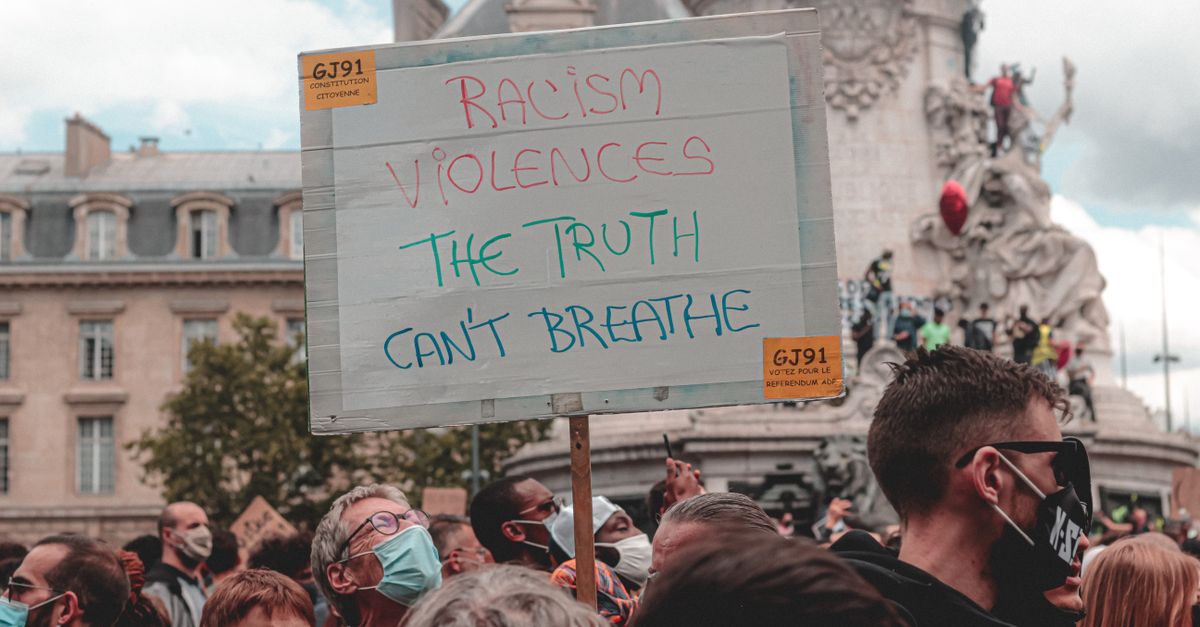
For most teenagers, the courtyard of a high school is a space of routine, routine arguments, and the occasional burst of adolescent energy. But for a growing number of students in the Paris region, the perimeter outside their schools has transformed into something far more volatile. As student protests erupted, drawing young people out of their classrooms and into the streets to make their voices heard, a collision course was set with law enforcement. It was in this charged atmosphere that two 16-year-old high school students found themselves caught in the machinery of public order, leading to encounters that would stretch far beyond the school day and into the halls of official accountability.
The friction reached a critical point on September 30. Outside the Observatoire high school in Meudon, police interpellated Emmanuel during the demonstrations. What began as a standard dispersal or arrest quickly devolved, according to the teenager's account, into a terrifying ordeal of physical and verbal abuse. Emmanuel would later recount being struck by a police shield, receiving kicks, and enduring targeted aggression that left physical scars. The encounter was not merely rough; it was, in the teenager's experience, degrading.
The physical confrontation, as described in formal complaints, was compounded by language meant to humiliate. During or after the interpellation, Emmanuel found his head pressed violently to the ground. In that vulnerable position, subjected to blows and the hard pressure of the earth, he heard the words that would stay with him long after the sirens faded. An anonymous police officer allegedly hurled a racist slur at the teenager, snapping, "Ferme ta gueule, on ne veut pas t'entendre, sale nègre." The combination of physical dominance and racial abuse marked a profound breach of the trust that is supposed to exist between citizens and those sworn to protect them.
Describing his son's lingering trauma, Fernand noted, "Les images de son interpellation lui reviennent en boucle [.
The immediate aftermath of the Meudon arrest required medical intervention. Emmanuel suffered a head injury significant enough to necessitate hospital treatment, a tangible marker of the violence that had occurred outside the school gates. Yet the wounds that do not bleed are often the hardest to heal. Fernand, Emmanuel's father, watched the psychological fallout unfold behind closed doors. Describing his son's lingering trauma, Fernand noted, "Les images de son interpellation lui reviennent en boucle [...]. Il a très peur de retourner à l'école car pour lui, c'est le lieu de son enfer." The classroom, once ordinary, had been recast as the epicenter of a lingering nightmare.
Emmanuel was not alone in his ordeal, nor was his experience an isolated anomaly in the broader landscape of the student demonstrations. Another 16-year-old student, Adam, was also interpellated during the protests at his school. Adam's encounter with law enforcement mirrored the themes of unnecessary force that marked the protests, as he alleged that a police officer hit him directly against a wall. Across the Paris region, the pattern of friction between protesting youth and security forces began to accumulate names, dates, and formal grievances.
Faced with the reality of what happened outside their schools, the two adolescents and their families chose a path of institutional pushback. They filed official complaints with the Inspectorate-General of the National Police, commonly known as the IGPN. This internal agency, tasked with investigating the conduct of police officers, suddenly found its docket growing as the student movement continued. In fact, a total of 36 investigations have been opened by the IGPN at this stage to probe allegations of police violence since the student movement first began.
Yet the road to accountability is complicated by the legal realities facing the teenagers themselves. Both Emmanuel and Adam are scheduled to face court proceedings for alleged acts of violence committed during the protests—charges that both adolescents firmly deny. For Emmanuel, the judicial timeline is already set. The Nanterre prosecutor's office stated that Emmanuel will be tried on December 9, forcing the young man to pivot from the trauma of his arrest to defending himself in a court of law, even as the state's own internal watchdog examines the behavior of the officers who arrested him.