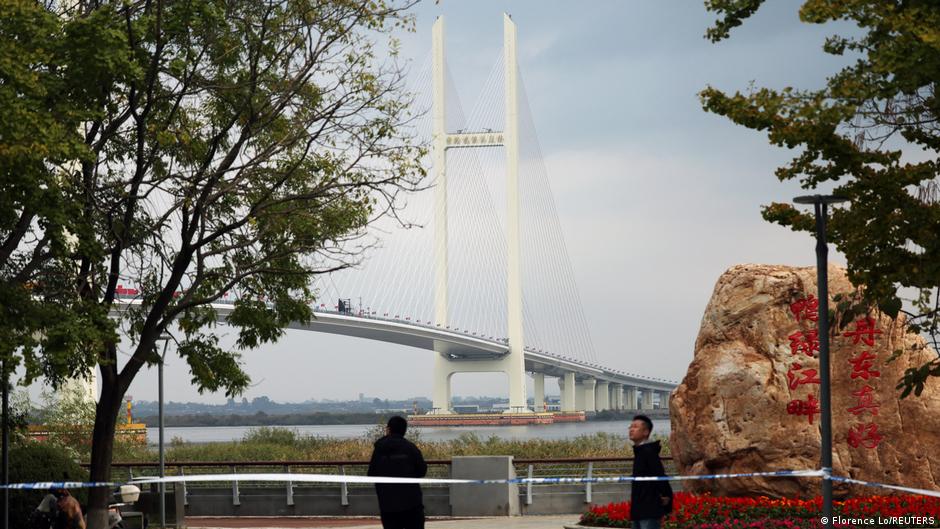
The air over the Yalu River was charged with a quiet sense of history and possibility. Kim Jong Un, the supreme leader of North Korea, stepped onto the freshly paved deck of the New Yalu River Bridge, a 3‑kilometre artery that now links the North Korean city of Sinuiju with its Chinese counterpart, Dandong. The bridge, whose construction spanned 12 years and drew an investment of 2.2 billion yuan, had officially opened only a week earlier. Its four lanes gleam under the October sun, a testament to the engineering ambition of both nations.

The visit was timed to coincide with the 76th anniversary of the arrival of Chinese volunteers in the Korean War. Kim Jong Un’s presence in Dandong was a symbolic nod to that legacy, a reminder that the bonds forged in the 1950s still echo in the corridors of power today.

JUST IN: 🇰🇵🇨🇳 North Korea's Kim Jong Un arrives in China. https://t.co/7x3ssiEWvx
Beyond the symbolic, the bridge itself is a concrete step toward deepening economic ties. Chinese officials, who welcomed Kim Jong Un, underscored the importance of this development for regional stability and prosperity.
The bridge’s 12‑year construction period reflects the logistical challenges of building across a major international river.
The bridge’s 12‑year construction period reflects the logistical challenges of building across a major international river.

North Korean leader Kim Jong Un has arrived in the Chinese border city of Dandong via the New Yalu River Bridge, which officially opened about a week ago, according to South Korean officials https://t.co/afUNRL0eRX https://t.co/8T1UjmEVkL
Kim Jong Un’s trip to Dandong also served as a prelude to the upcoming APEC summit in China. By showcasing a tangible symbol of cooperation, the North Korean leader aimed to signal to the international community that his country is open to dialogue and integration, at least on a pragmatic level. The bridge’s opening could be interpreted as a gesture of goodwill ahead of the summit’s discussions on trade, security, and regional cooperation.
When Kim Jong Un crossed the bridge, he did so not just as a leader of a nation, but as a participant in a broader narrative of reconciliation and partnership. The act of stepping from one side of the Yalu to the other carries a weight that extends beyond the physical structure; it represents a willingness to move forward, to bridge divides that have long separated the two peoples.

S.Korea presidential Blue House: monitoring North Korean leader Kim Jong Un’s China visit - Newsis
Today, the New Yalu River Bridge stands as a symbol of renewed ties between North Korea and China. While the broader geopolitical landscape remains complex, this infrastructure project offers a tangible point of contact, a place where commerce and diplomacy can intersect. As the world watches the unfolding of the APEC summit, the bridge will likely remain a quiet but powerful reminder that even in the most entrenched conflicts, new pathways can be forged.