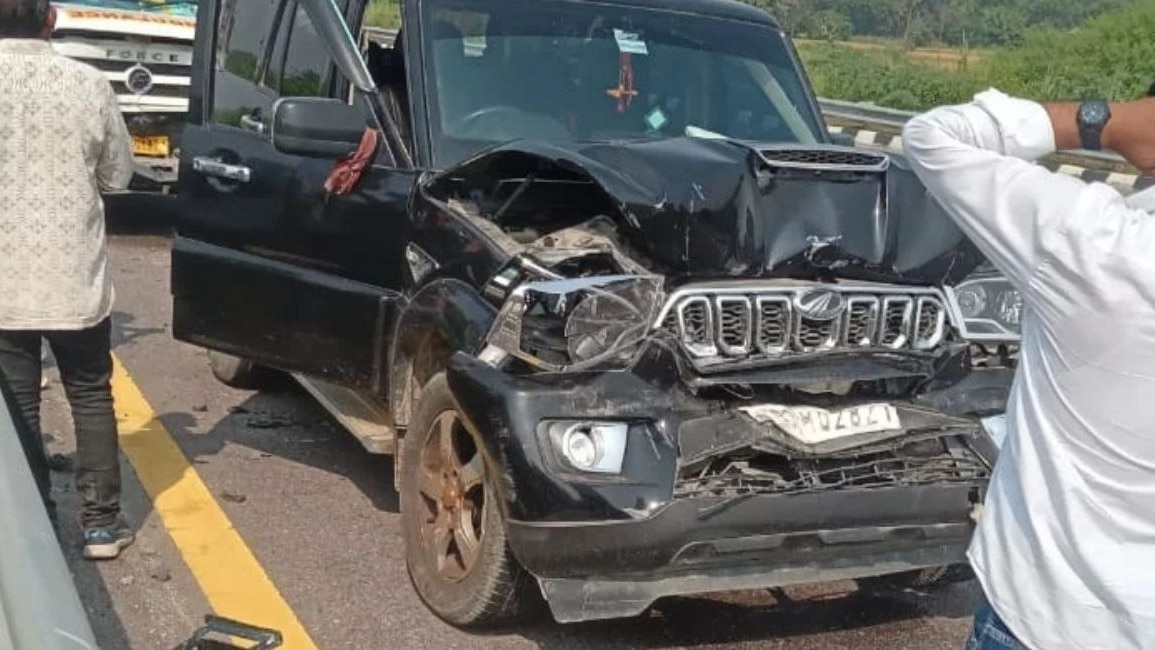
In the chaotic rhythm of Indian politics, where every mile of a leader’s travel is mapped, monitored, and occasionally marred by friction, the road from Lucknow to Sultanpur usually offers a predictable stretch of highway. But for Rahul Gandhi, that specific journey on October 26, 2026, broke from routine. What began as a standard transit to a scheduled court appearance quickly turned into a national news story when vehicles in his convoy collided with one another on the Purvanchal Expressway in Uttar Pradesh. For a newcomer to the political landscape, it is crucial to understand that Gandhi’s travel is never just about moving from Point A to Point B; it is a mobile headquarters, a symbolic presence, and a logistical challenge that security agencies manage with intense scrutiny. When that machinery jams, even momentarily, the implications ripple outward.

The incident occurred near the 91 km milestone, roughly 89.5 to 100 kilometers from Lucknow, placing the scene in the vicinity of Haliyapur and Sultanpur. Reports indicate that the collision involved vehicles following Gandhi’s car, specifically among a convoy that included five cars. In one account, these vehicles bumped into each other; in another, the group was involved in a broader incident with five vehicles and an ambulance. The variance in numbers between different reports is typical of emerging accidents, where initial police sketches evolve as more data arrives. What remains consistent is the location: the Purvanchal Expressway, a major artery connecting Lucknow to the east. The proximity to the 91 km marker situates the accident in a high-speed zone, where even minor failures in vehicle spacing or braking can escalate rapidly. The fact that this happened while the convoy was moving toward a judicial mandate rather than a public rally adds a layer of tension; the vehicles were on a strict schedule, not just making a show of presence.

Vehicles in Rahul Gandhi’s convoy collide in UP’s Sultanpur, leader safe Read: https://t.co/6kqiHNFj8H https://t.co/WwVKvXcCXt
Gandhi was not traveling for a campaign stop or a press conference. He was heading to Sultanpur for a special MP-MLA court appearance related to an eight-year-old criminal defamation case. This legal battle traces back to 2018, specifically to speech made by Amit Shah during the Karnataka assembly elections. For those unfamiliar with Indian electoral law, defamation cases of this nature can carry significant weight, not just legally but symbolically. The court date represents a final showdown in a dispute that has simmered for nearly a decade. The fact that the convoy’s destination was a courthouse, rather than a political stage, shifted the public’s gaze from partisan cheering to a somber recognition of the judicial risks facing opposition leaders. The collision, therefore, was not just a traffic incident; it was an interruption in a high-stakes legal timeline. If the vehicles had been delayed, the court proceedings might have been affected, adding logistical complexity to an already crowded docket.
The mention of Amit Shah in the context of the underlying court case serves as a reminder that the legal battle is part of a larger, ongoing political rivalry.
One of the immediate questions that arose after the crash was about Gandhi’s well-being. Claims circulated that he was safe, and initial reports indicated no injuries or damages to the principal vehicle. However, other sources noted that multiple Congress workers and officials in the following cars were injured. This discrepancy highlights a common challenge in reporting on VIP movements: the distinction between the leader’s safety and the safety of their support staff. Convoy protocols are designed to create a buffer, but in a multi-vehicle setup, that buffer can turn into a liability if communication breaks down. The mention of an ambulance among the vehicles involved suggests that medical response was quickly deployed, a standard procedure but one that underscores the severity of the impact. For a first-time observer, this moment clarifies that the ‘security state’ of a national leader is a fragile ecosystem, dependent on precise coordination between cars, drivers, and local police.

In Uttar Pradesh, several vehicles in Congress leader Rahul Gandhi’s convoy collided on the Purvanchal Expressway. The accident took place in the Haliyapur area of Sultanpur district. Rahul Gandhi was travelling from Lucknow to Sultanpur to appear in court in connection with a 2018 defamation case involving remarks against Union Home Minister Amit Shah. Police said Rahul Gandhi is safe and no serious injuries were reported in the accident. #RahulGandhi #UttarPradesh #Sultanpur #PurvanchalExpressway
The accident did not happen in a political vacuum. The framing of the event quickly became a site for partisan commentary. Local BJP factions and some Congress-aligned critics offered varying interpretations, with some voices critical of the convoy’s management and others supportive of the leader’s resilience. Uttar Pradesh Congress officials maintained a neutral to supportive stance, focusing on the leader’s safety, while the Uttar Pradesh Police, neutral in their initial statements, likely coordinated the immediate aftermath. The mention of Amit Shah in the context of the underlying court case serves as a reminder that the legal battle is part of a larger, ongoing political rivalry. The collision, in this sense, became a fresh episode in a narrative that stretches back to the 2018 elections. For the public, the story blurred the lines between a traffic accident and a political event, forcing readers to consider how infrastructure, security, and law intersect in modern Indian democracy.
This incident has sparked broader conversations about the protocols governing political travel in India. The Purvanchal Expressway, a newer piece of infrastructure, is designed for high-speed transit, but the presence of multi-vehicle convoys can sometimes conflict with regular traffic flow and driver habits. The specific involvement of five cars and an ambulance in the pile-up suggests a failure in chain-of-command or communication among the driver team. For policy experts and security analysts, the event serves as a case study in how convoy dynamics operate under pressure. It is not just about who was driving, but about how the system absorbed a shock without catastrophic failure. The fact that the convoy was heading to a court date meant that time was a critical variable; any significant delay could have had procedural consequences.
As of the latest reports, the immediate danger has passed, and the convoy continued its journey or arranged alternative transport to reach Sultanpur for the hearing. The physical injuries, if any, are being treated, and the legal process in the defamation case is poised to move forward. The incident stands as a stark reminder that in the theater of Indian politics, even the safest routes can be fraught with unexpected collisions. For Rahul Gandhi, the road to Sultanpur was marked not just by the miles traveled, but by the sudden, violent interruption of routine. It was a day when the machinery of security stumbled, and the public watched closely, not just to see if their leader was hurt, but to understand how the system holds when it doesn't.
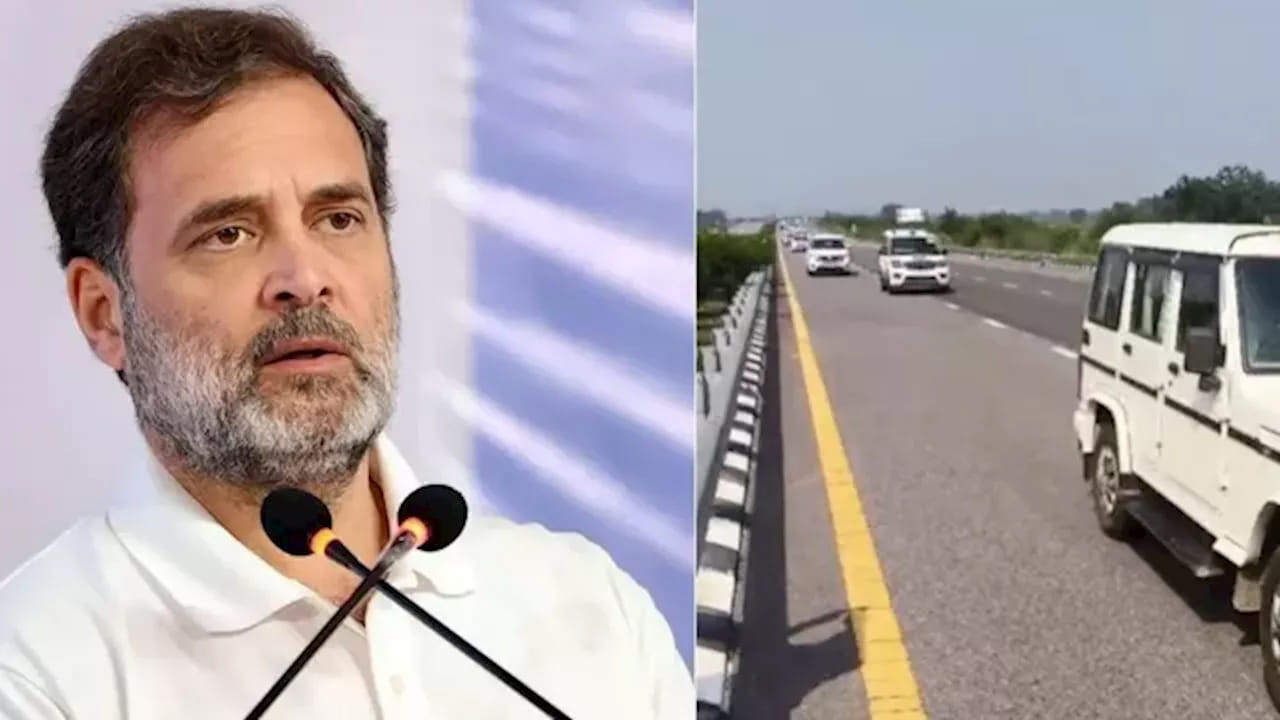
Beyond the numbers and the headlines, there is the human element of the workers and officials who accompany these leaders. They are often the first to bear the brunt of accidents, as seen in the reports of injuries among Congress staff. Their presence is essential to the leader’s visibility and safety, yet their well-being is rarely the focus of public concern. This incident brings that gap into view. For a newcomer to politics, understanding this hierarchy of risk is key. The leader is protected by protocol; the staff are protected by presence. When the protocol falters, the presence is what makes the difference. The collision on the Purvanchal Expressway was a test of that difference, and the outcome remains a part of the evolving story of safety in public life.
In the end, the accident was a small moment in a large year, but it captured the attention of a nation divided by political loyalties. It forced a pause in the discourse, a brief return to the shared experience of road travel and risk. Whether the final court verdict will be celebrated or contested, the memory of the convoy stopping on the expressway will linger, a symbol of the unpredictable nature of power, protection, and passage in contemporary India.