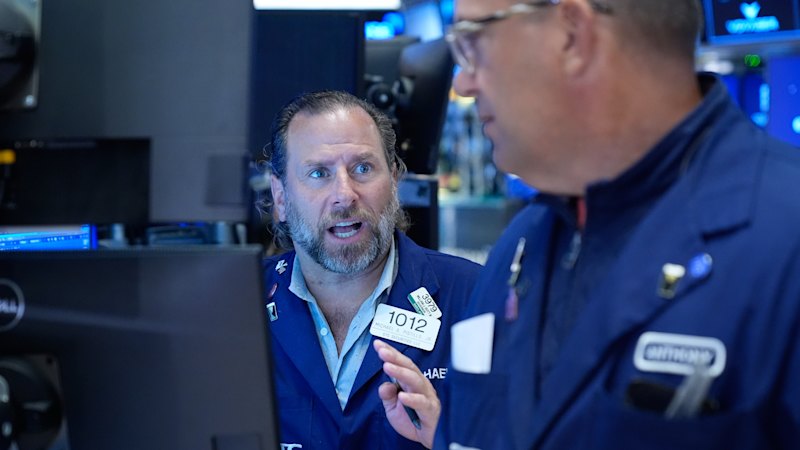
The day began with anticipation as the United States held its midterm elections. As the results became clear, Wall Street responded with a strong rally, with the S&P 500 and Dow Jones both posting significant gains. The election outcome sent ripples through the financial markets, setting up expectations that the Australian sharemarket could follow suit.

The S&P 500 and Dow Jones indices experienced significant gains, with the S&P 500 jumping 1.8% and the Dow Jones gaining 1,524 points. The Nasdaq composite also saw a 2.1% increase, reflecting a broad-based rally across the board. The strong performance on Wall Street was evident as investors reacted to the election results.

#Alert I US President Donald Trump says the Iran war will end “whenever I want it to,” while acknowledging that the conflict largely contributed to Republican losses in the midterms #DonaldTrump #IranWar #USMidterms #Republicans #OilPrices https://t.co/8DDAroCQfZ
The Australian sharemarket is expected to follow the strong performance of its American counterparts. ASX futures are indicating a rise of 172 points, suggesting that the market is optimistic about the upcoming trading session. However, the rally is not expected to be uniform. Sectors such as solar power and artificial intelligence are likely to experience mixed reactions, as investors digest the implications of the election results.
This shift in the energy sector is part of the changing market dynamics following the election results.
While the broader market is seeing gains, specific companies are experiencing a different trajectory. Tesla saw its shares fall, reflecting concerns over the company's future in the post-election environment. Similarly, Trump Media also saw its shares decline. The mixed reactions highlight the complex interplay between politics and business, with investors focusing on company-specific factors rather than broader political trends.
Another notable development is the decline in oil prices. This shift in the energy sector is part of the changing market dynamics following the election results.
Despite the mixed reactions and specific declines, market strategists are advising investors to focus on company earnings rather than political outcomes. The election results are expected to have a significant impact on future market movements, particularly in areas such as trade and defense policies. However, in the short term, the market is likely to be driven by company-specific news and earnings reports. Investors are encouraged to stay informed and adapt their strategies accordingly.
As the market moves forward, the key will be to watch how the election results translate into policy changes and corporate actions. The Australian sharemarket is poised to follow the strong performance of Wall Street, but the mixed reactions in specific sectors highlight the complexity of the current market environment. The coming weeks and months will be crucial in determining the long-term impact of the election on the global economy and the financial markets.
