
On October 22, 2026, the earth beneath the high-altitude plateau of Tibet did more than move; it buckled. A massive 7.0 magnitude earthquake struck the region, sending shockwaves through the landscape and triggering a cascade of destruction that has left communities in a state of profound shock. For those living in the shadow of the Himalayas, the sudden violence of the tectonic shift turned familiar streets into zones of panic, as the ground refused to stay still.
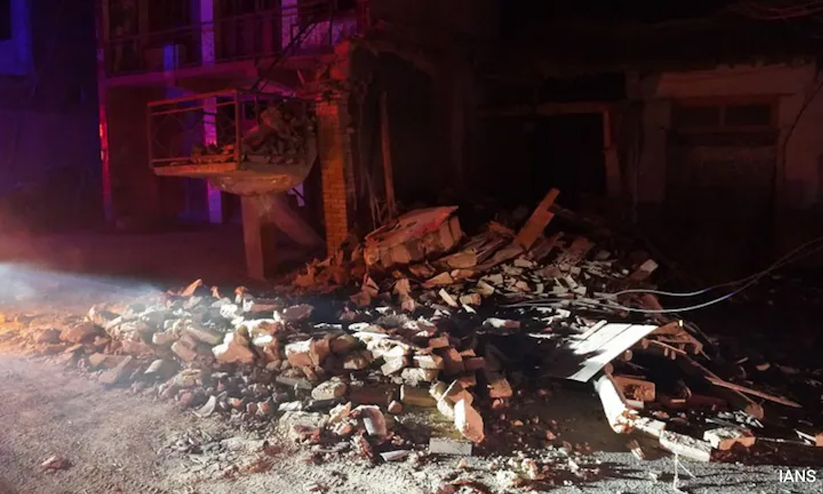
The epicenter of the disaster was located in northern Tibet, with the US Geological Survey placing the point of origin approximately 190 kilometers into the northern reaches of the territory. The quake struck at a relatively shallow depth—recorded at 10 kilometers by Xinhua News Agency and 10 kilometers by the US Geological Survey—a factor that often intensifies the surface violence of such seismic events. The impact was felt most acutely near Nagqu, with the tremors rippling out toward Baqen and its neighboring counties, turning the quiet of the plateau into a scene of chaos.
As the magnitude 7.0 quake tore through the crust, social media footage captured the immediate, visceral reaction of the population. Residents, caught in the sudden upheaval, fled their homes and rushed into the streets to escape the crumbling structures above them. The terror was not a singular moment but a sustained ordeal, as continuous aftershocks forced people to remain in the open, wary of when the next violent jolt might arrive.
Hospitals have been working through the chaos to treat the injured, with reports indicating between 32 and 46 people have sustained injuries.
The physical toll on the built environment has been staggering. In the wake of the shaking, the structural integrity of entire neighborhoods vanished. Local media and geophysical authorities have reported that over 300 buildings collapsed, with some reports specifying that as many as 339 homes were damaged or destroyed. The scale of the wreckage suggests a landscape transformed almost overnight, where the landmarks of daily life have been reduced to piles of stone and timber.
Beyond the residential devastation, the earthquake struck at the very foundations of local life. Reports indicate that at least 20 livestock sheds collapsed, a devastating blow to the agricultural stability of the region. In a territory where livelihoods are often tied closely to the land and the animals that graze upon it, the loss of these structures represents more than just property damage; it is a disruption of the fundamental means of survival for many Tibetan families.

At least sixteen people have been confirmed dead after a magnitude 7 earthquake struck 400km from the Tibetan capital of Lhasa. https://t.co/WSHcE53IdT
As the dust settles, the human cost of the earthquake continues to emerge through the wreckage. The numbers coming from local authorities paint a grim picture of the disaster's impact. Chinese state media, citing local officials, reported that at least 16 people were killed in the immediate aftermath. However, other reports have placed the death toll as high as 18 individuals.
While the search for survivors continues, the number of those wounded is also climbing. Hospitals have been working through the chaos to treat the injured, with reports indicating between 32 and 46 people have sustained injuries. The severity of these wounds is significant; medical facilities have noted that at least 11 of the injured are currently in critical condition, fighting for stability in the wake of the disaster.

In the immediate aftermath, the priority has shifted from survival to rescue. The scale of the destruction necessitates a massive mobilization of resources. Authorities have deployed more than 300 police officers to the affected areas to manage the crisis and assist in the search for those potentially trapped beneath the debris.
Rescue operations are currently underway, moving through the damaged counties of Baqen and the surrounding areas. The work is being conducted under the constant threat of aftershocks, which complicate every attempt to clear rubble or reach survivors. As rescuers navigate the ruins of the 300-plus collapsed buildings, the window for finding those missing grows narrower with every passing hour.

NEW: A magnitude 7.0 earthquake hit Tibet in the middle of the night, and at least 16 people are dead. The quake struck around 10:30 p.m. Thursday in Nagqu, a remote region about 250 miles north of Tibet’s capital, Lhasa, where most people live more than three miles above sea level. Chinese state media reports dozens injured and at least 339 homes collapsed, and the damage is still being counted. China has activated its second-highest emergency response level. Out there, help can take hours to reach families buried under the rubble in the cold. Please keep the people of Tibet in your prayers tonight. Have you ever lived through a major earthquake?
For those who survived the initial shock but lost their homes, the challenge of the coming days is one of basic necessity. With hundreds of houses rendered uninhabitable, the displaced population faces a sudden lack of sanctuary. To address this, authorities have begun setting up temporary shelters to provide refuge for the residents of the hardest-hit areas.
As the region grapples with the reality of the damage, the full extent of the catastrophe is still being calculated. Authorities are working to assess the total impact on infrastructure and the economy, a process that will likely take a significant amount of time. For now, the focus remains on the immediate: the injured in hospital beds, the survivors in temporary tents, and the rescuers working through the ruins of northern Tibet.