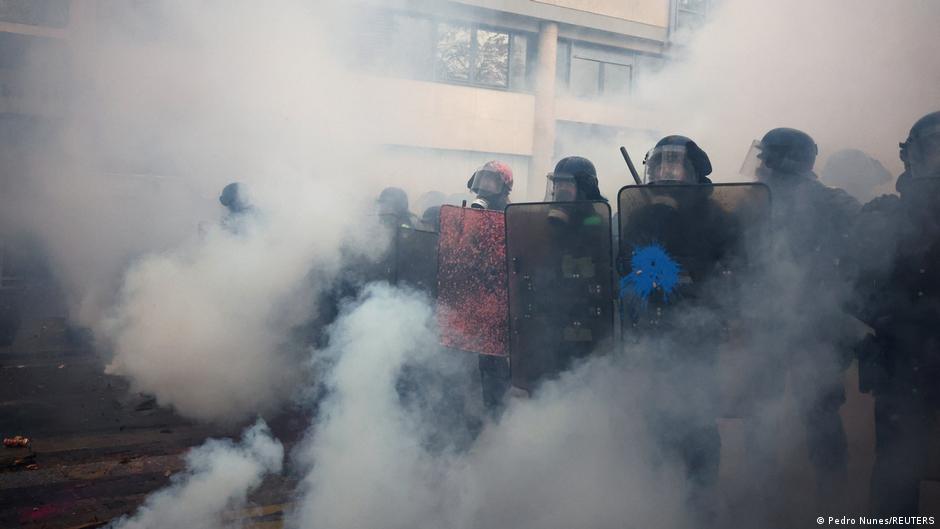
On the morning of October 24, 2026, the capital and cities across France found themselves in the throes of a protest that would ripple through the nation for days. The demonstrations, sparked by a growing discontent over wages, living costs, and the state of public services, drew an estimated 410,000 participants according to the Interior Ministry. Trade unions, ever vigilant, offered a higher figure—800,000—underscoring the depth of the unrest.
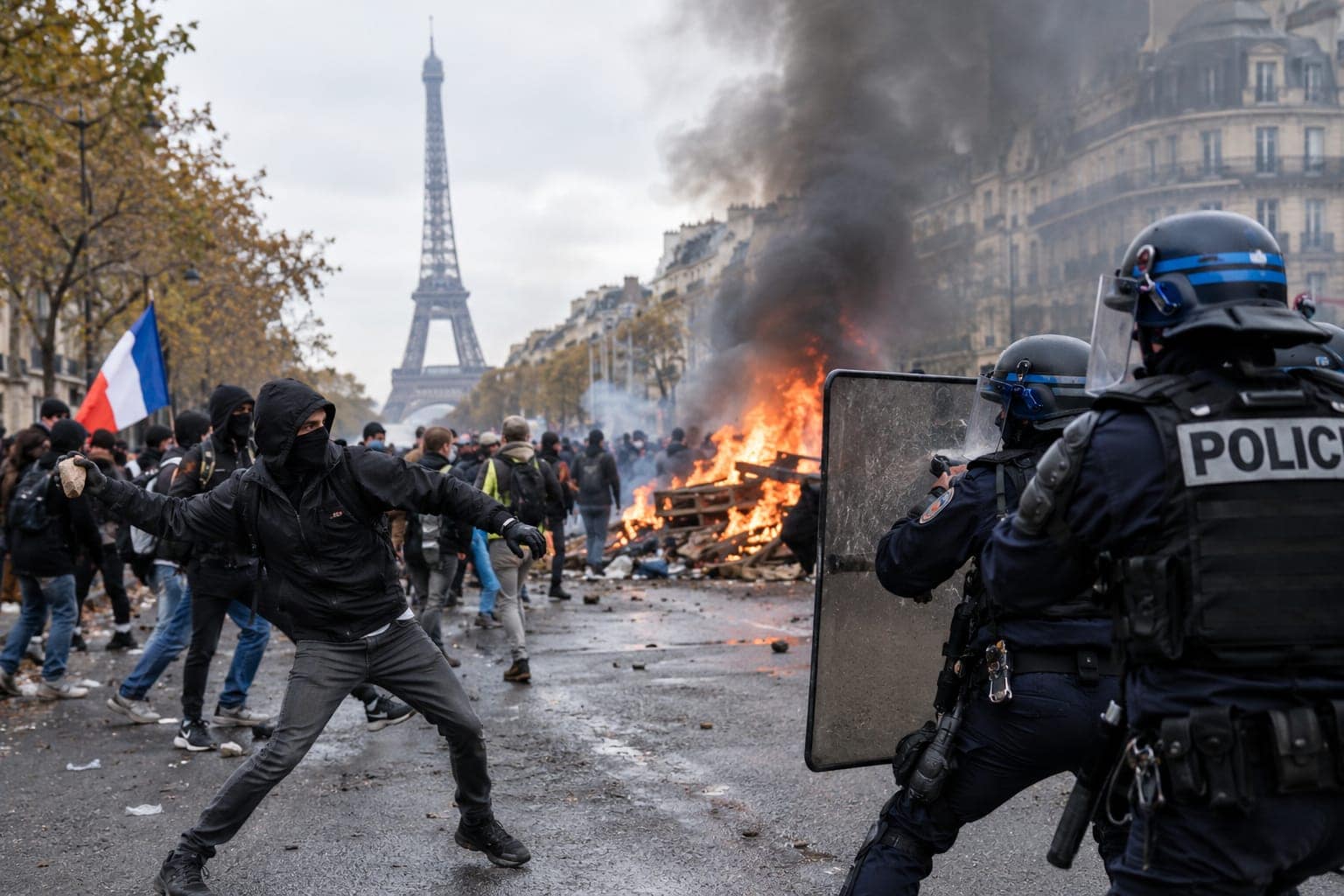
The atmosphere was charged, and as the day progressed, the protest lines grew more determined, their chants echoing through city squares and along avenues that had once been quiet. The sheer scale of the movement made it impossible for the authorities to ignore.
When the police rolled out, they brought with them a force of 70,000 officers and support personnel. This deployment was significant, reflecting the government's assessment that the situation required a robust presence to prevent widespread chaos.
The deployment of 70,000 security forces, while aimed at restoring calm, also served as a stark reminder of the state's capacity to suppress dissent.
The confrontation was not without violence. Over the course of the day, 75 fires were set, signaling the intensity of the protestors’ anger. In addition, 24 businesses were looted, a grim reminder of how quickly civil unrest can turn into property damage. The police, meanwhile, suffered injuries themselves: 53 officers were reported hurt during the clashes, a statistic that underscores the perilous nature of crowd control.
By the end of the day, the authorities had made 1,314 arrests. This number, while slightly higher than the initial estimate of 1,000, reflects the difficulty in accounting for every individual in a sprawling, chaotic environment. The arrests spanned a range of offenses, illustrating the breadth of the protest’s impact.
The sheer volume of detentions prompted a swift response from the government. In the hours that followed, officials opened talks with union leaders, signaling a willingness to engage in dialogue. The unions, in turn, called for further demonstrations, arguing that the root causes of the unrest remained unaddressed.
The protests and the subsequent crackdown highlighted a deep fissure within French society. On one side were citizens demanding reforms, while on the other were state actors tasked with maintaining public order. The deployment of 70,000 security forces, while aimed at restoring calm, also served as a stark reminder of the state's capacity to suppress dissent.

President Trump is questioning why the NFL is moving forward with its historic first regular-season game in France as nationwide protests raise security concerns. "I would have said the NFL could have probably postponed that match ... because France is really in trouble," Trump tells reporters. The Steelers and Saints are facing off today just outside Paris, but the unrest is already disrupting major sporting events. A Steelers fan event has been canceled, and a Paris Saint-Germain soccer match has been rescheduled at the request of police. The State Department is also urging Americans attending the NFL game to exercise caution. See which events are already being affected and why security concerns are growing: https://t.co/eZt6nfWEDG
In the days that followed, the narrative of the protests continued to evolve. The Interior Ministry released a final tally of 1,314 arrests, while union leaders maintained that the protests would persist until tangible reforms were enacted. The 53 injured officers were treated, though the incident left an indelible mark on the policing community.
The government’s decision to engage in dialogue with unions was a pivotal moment. It suggested a recognition that force alone could not solve the underlying grievances. Yet the path forward remained uncertain, as the unions demanded concrete policy changes.
Today, France sits at a crossroads. The protests of October 24 have left a trail of fires, looted businesses, and a significant number of arrests. The state’s response’deploying 70,000 security forces and engaging in talks’has set the stage for a potential shift in policy. Whether the government will heed the unions’ demands or continue to rely on force remains to be seen. For now, the nation watches, waiting to see whether the storm will calm or whether the fires will flare anew.

🇫🇷 An estimated 410,000 people join nationwide protests in France, according to the Interior Ministry, as demonstrations over the cost of living and public services sweep the country 💢 Protests initially proceed peacefully before clashes erupt in several cities, with more than 1,000 people arrested nationwide