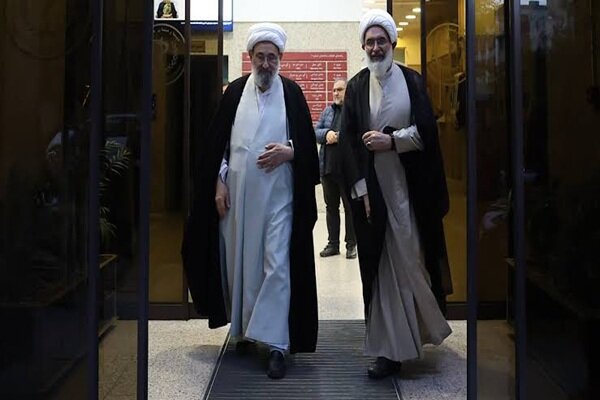
In the corridors of a Tehran hospital, the air is usually thick with the hum of machinery and the quiet murmur of concern. On November 5, 2026, the atmosphere in the intensive care unit was different. It was thick with protocol, with the unspoken language of power, and with the specific gravity of a visit paid by the highest echelons of the Islamic Republic. Representatives of the Supreme Leader arrived to check on Ayatollah Vahid Khorasani, a figure whose influence extends far beyond the walls of his mosque. They were not there merely as well-wishers; they were there to convey the Supreme Leader’s greetings and prayers, a ritual that carries immense symbolic weight in the clerical hierarchy.

The delegation included Hojjatoleslam Rahimian and Mohammadi Araghi, names that resonate within the corridors of power. They were joined by Haj Aliakbari, all bearing the official mandate to assess the condition of a man who commands the loyalty of 29,221 followers. This number is not a statistic; it is a measure of influence. In the complex ecosystem of Iranian clerical politics, a following of this size represents a network of students, seminarians, and religious scholars who look to a single figure for guidance. When the Supreme Leader’s representatives visit such a figure, it is a signal that the health of the institution is as fragile as the health of the individual at its center.
To understand the significance of this visit, one must understand the role Ayatollah Vahid Khorasani plays. He is a high-ranking cleric whose guidance is sought by a large number of followers. In Iran, where the state and religion are deeply intertwined, the religious establishment is a pillar of the social order. A cleric's health is not a private matter; it is a matter of national concern because their rulings shape the behavior of millions of believers. The visit was a confirmation that the Supreme Leader views the stability of this network as a priority, a check to ensure that the flow of religious authority remains unbroken.
They are two arms of the same body, and when one arm is in the ICU, the other is there to ensure it survives.
The visit was not limited to the representatives of the Supreme Leader. The Revolutionary Guard, a military force with a vast network of influence that extends into the religious sphere, also sent its own team. Hajj Reza Ghorbani, Mohammad Iraqi, and Hujjat Islam and Muslim Rejaee were there, their presence a reminder that the military wing of the regime is deeply invested in the health of its clerical leadership. This dual visit—state and military—underscores the integrated nature of the Iranian power structure. They are two arms of the same body, and when one arm is in the ICU, the other is there to ensure it survives.
The fact that Ayatollah Vahid Khorasani is in the intensive care unit adds a layer of urgency to the scene. The ICU is the stage where the most critical moments of a patient’s life play out, and it is here that the political theater of the regime was enacted. The officials were checking on his medical condition, a routine act that took on a profound meaning in this context. They were not just checking on a man; they were checking on the stability of the religious order he represents. The Supreme Leader’s greetings, conveyed through his representatives, were a message of solidarity to the network of believers who look to him for guidance.
The visit was a carefully choreographed display of unity and concern. It was a reminder that the health of the Supreme Leader’s allies is a matter of national security. The officials were there to convey the Supreme Leader’s greetings and prayers, a ritual that carries immense symbolic weight. They were there to ensure that the network of influence remains intact, that the rulings continue to flow, and that the religious authority remains unchallenged. The visit was a testament to the importance of Ayatollah Vahid Khorasani in the hierarchy of the Islamic Republic, a man whose health is a matter of national concern.