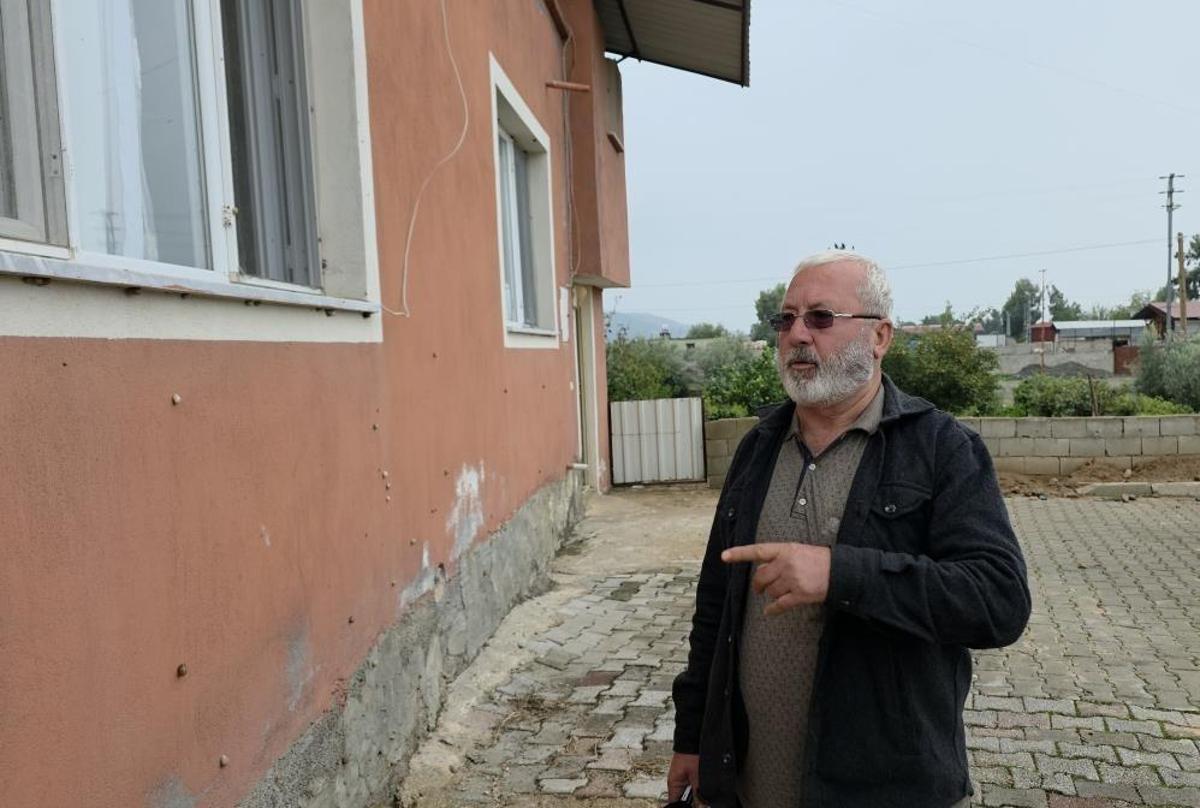
In the Bintaş neighborhood of Hatay's Hassa district, residents already reeling from the catastrophic Kahramanmaraş-centered earthquakes are confronting an unexpected and relentless adversary: a massive snail infestation. What began as a nuisance has now escalated into a full-blown crisis, affecting approximately eight houses and surrounding agricultural lands. The snails have overrun vegetable gardens, invaded homes, and left residents feeling helpless as their food sources disappear.

Local resident Ahmet Çalışır describes the scene with palpable frustration: "We are very troubled by these snails. We plant vegetables, we can't eat them, and they surround our garden. They even enter our homes." Despite numerous attempts to control the infestation using salt, sulfur, and chemical pesticides, residents have found their efforts to be futile. "We've applied pesticides, salt, and sulfur, but we haven't found a solution," Çalışır explains. "The pesticide works for only one day, and then they return. Its effect lasts just one day, and they continue to come back."
The cyclical nature of the problem has created a daily battle with no apparent end in sight. Each morning, residents wake to find their gardens once again teeming with snails, undoing the previous day's work. The persistence of these creatures has left many wondering what has changed in their environment to fuel such a population explosion. The timing suggests a connection to the earthquakes that devastated the region, though the exact mechanism remains unclear.
Faced with this seemingly insurmountable problem, residents have turned to local authorities for help.
The impact on the community's food supply has been devastating. "When we shake the lettuce, snails just pour out," Çalışır recounts. "It's become inedible." This agricultural devastation threatens the community's food security and self-sufficiency at a time when resources are already stretched thin. The psychological toll of watching carefully tended crops destroyed daily has added to the residents' distress.
Faced with this seemingly insurmountable problem, residents have turned to local authorities for help. On October 19, 2026, Bintaş neighborhood residents formally appealed to the Provincial Directorate of Agriculture and Forestry and municipal teams, requesting professional spraying and support. "If the authorities can find a solution for these snails, we would be very pleased and grateful," Çalışır stated, reflecting the community's desperate hope for intervention.
The snail invasion raises broader questions about how natural ecosystems respond to major environmental disruptions like earthquakes. The soil conditions, water availability, and predator-prey dynamics may have all been altered in ways that inadvertently created ideal conditions for snail proliferation. While the immediate focus remains on protecting homes and crops, the long-term ecological implications of this phenomenon remain unexplored.
As of now, the residents of Bintaş continue their daily struggle against the snail infestation, their appeals to authorities unanswered. The community remains trapped in a cycle of temporary relief followed by renewed invasion, their gardens and homes under constant siege. Until a more permanent solution is found, the people of Bintaş face an ongoing battle against an unexpected consequence of the natural disaster that already took so much from them.
