
For thirteen years, Canva has operated under a singular, almost gravitational momentum. From its origins in Sydney to its status as a global design powerhouse, the platform has grown with a consistency that few technology companies ever achieve. But on November 4, 2026, that momentum met its first significant friction. The company announced a major corporate restructuring that includes the loss of 1,271 roles—a move that represents nearly 22% of its global workforce. It is a moment of profound transition, marking the first time in the company's history that it has had to execute mass layoffs.
To understand the weight of this announcement, one must look at the trajectory Canva has maintained since its inception. For over a decade, the company has been a symbol of scaling success, moving from a niche graphic design tool to an essential utility for millions. However, the numbers that once signaled unstoppable expansion are beginning to show the first signs of deceleration. The company is expecting 20% revenue growth this year, a figure that, while still substantial, marks a sharp departure from the 38% growth seen in 2025 and the 45% recorded in 2024. This cooling of revenue growth is the first time in ten years that the company has recorded such a slowdown, signaling that the era of hyper-growth is evolving into something more complex.
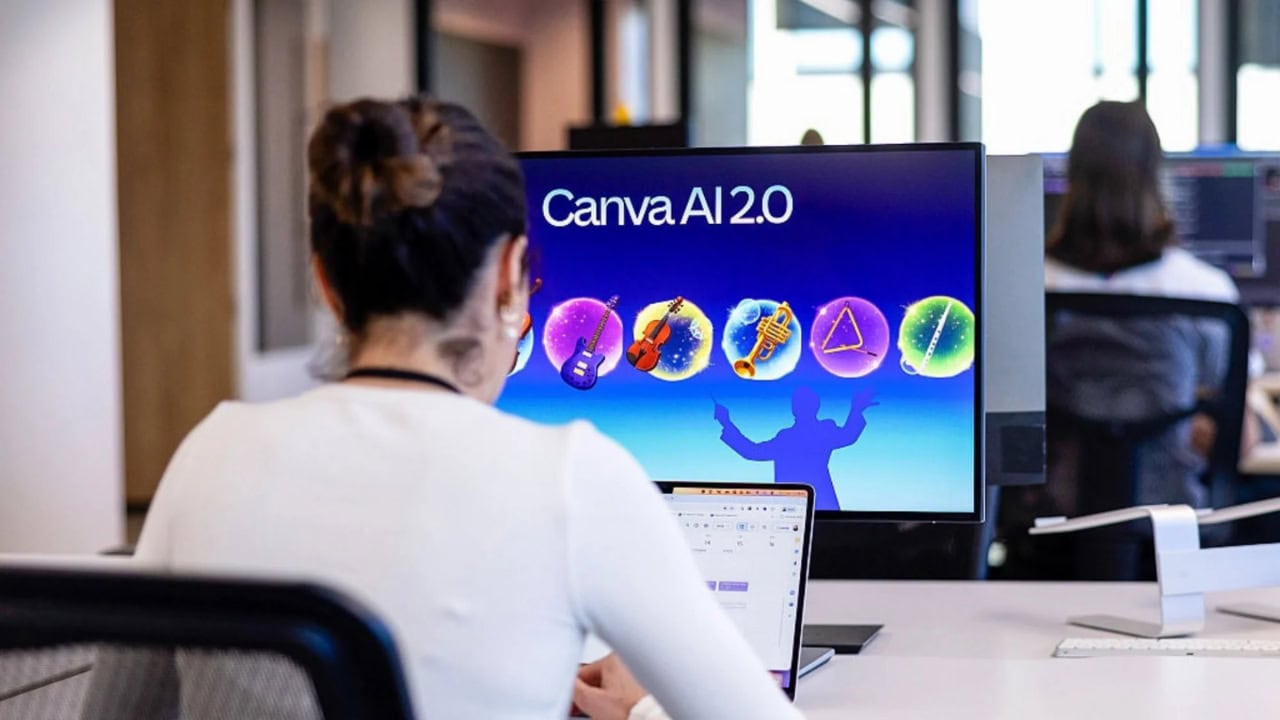
The cause of this shift is not merely a matter of market saturation, but a fundamental change in how people create. The rapid integration of artificial intelligence into day-to-day user workflows has fundamentally altered the landscape of digital design. As AI tools become more capable of automating tasks that previously required manual intervention, the very nature of the design process is being rewritten. For Canva, this technological shift necessitates a strategic realignment. The company is not just reacting to a change in consumer behavior; it is restructuring its entire internal engine to ensure its product priorities match a world where AI is no longer a novelty, but a core component of the creative workflow.
The decision to cut 1,271 roles is a move to simplify what has become a massive global organization.

Canva is laying off 22% of its workforce which is 1271 employees, and this is what their CEO said. We need more founders like thissss. https://t.co/YFczt81dyR
This restructuring is as much about internal efficiency as it is about external competition. The decision to cut 1,271 roles is a move to simplify what has become a massive global organization. According to Canva leadership, the goal is to "simplify our structural overhead and return to operating through small, empowered teams." In the high-speed world of software development, large hierarchies can often become obstacles to the agility required to implement new technologies like AI. By reducing its workforce by 22%, Canva is attempting to shed the weight of its own success, betting that a leaner, more focused structure will allow it to pivot more effectively toward its new technological priorities.
Behind the clinical language of "restructuring" and "realignment" lies a deeply personal reality for the thousands of people who built the platform. For the employees being let go, the announcement marks the end of a chapter in a company that had, until now, been defined by its upward climb. Melanie Perkins, the co-founder, did not shy away from the emotional gravity of the decision. "This is the hardest moment in the company’s 13-year history," Perkins noted, acknowledging the human impact of the corporate pivot. The scale of the reduction is significant, affecting nearly one in every five employees globally.

This is a masterclass in how to handle layoffs. Today, Canva CEO’s announcement is next-level classy. Thoughtful, honest and generous. CEOs worldwide should take note! Canva is laying off 22% of its workforce, but look at how they’re handling it. 6 months of salary, 12 months of healthcare, career support, removal of the equity vesting cliff, a $10,000 fund for employees who want to start their own business, and even letting employees keep their MacBooks. You can’t always avoid layoffs, but you can choose how you treat people when they leave.
There is a particular poignancy in losing the very people who helped establish a company's culture and capability. The layoffs target individuals who have been instrumental in scaling Canva from a Sydney startup to a global entity. Perkins addressed this directly, noting that the restructuring "will mean saying goodbye to teammates and friends who have helped build Canva into what it is today." To mitigate the impact of this transition, the company has announced that affected employees will receive a generous severance package, an attempt to provide stability as the organization undergoes its most significant internal change in over a decade.

layoffs are never easy, but Canva really offered a generous severance package 💀 https://t.co/ggGsKeUSHy