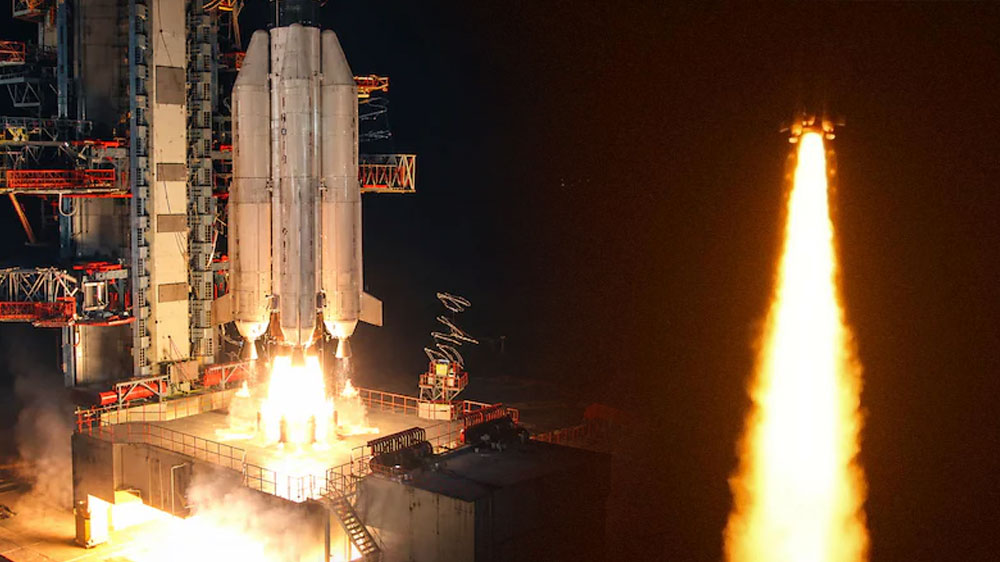
On a Friday night at 11:51, the Indian Space Research Organisation (ISRO) etched another success in its storied history. From the second launch pad of the Satish Dhawan Space Centre in Andhra Pradesh, the GSLV-F18 rocket lifted skyward, carrying with it the NVS-03 navigation satellite. Twenty minutes later, the rocket had precisely placed the satellite into its designated orbit, marking another triumph for India's space ambitions.

The NVS-03 satellite wasn't just another addition to India's space fleet—it was a critical component of NavIC, India's indigenous satellite navigation system. Unlike global systems like GPS or GLONASS, NavIC is designed specifically to serve India's needs, providing location and time determination services across the nation's landmass and extending up to 1,500 kilometers beyond its borders. This regional focus allows for more precise positioning tailored to India's geographical requirements.

Congratulations to our scientists and engineers at ISRO on the successful launch of GSLV-F18 carrying NVS-03. This mission marks an important step in strengthening NavIC, our indigenous satellite navigation system. Equipped with enhanced capabilities, NVS-03 will further our pursuit of self-reliance in critical technologies and support navigation services that benefit our people. The dedication and ingenuity of our space scientists continue to make our nation proud. @isro
NVS-03 represents the next evolution in India's navigation satellites. What makes this particular craft noteworthy is its dual atomic clock configuration—featuring both a foreign-procured and an indigenous timekeeping mechanism. This redundancy ensures reliability while simultaneously advancing India's self-reliance in critical space technologies. Additionally, the satellite introduces the L1 frequency signal alongside the existing L5 and S-band signals, a crucial enhancement that improves compatibility with consumer devices and expands the system's utility for everyday applications.
Every successful space program faces challenges, and ISRO's navigation satellite initiative was no exception.
The launch itself was a testament to ISRO's growing technical prowess. The GSLV-F18 rocket performed flawlessly, executing its complex sequence with the precision that has become characteristic of India's space program. As ISRO Chairman V. Narayanan confirmed, "The GSLV rocket placed the satellite into the designated orbit 20 minutes after launch." This successful deployment came after the setback faced by its predecessor, NVS-02, making this recovery all the more significant.

GSLV-F18/NVS-03 Mission: Watch highlights of the journey from lift-off to spacecraft separation. Mission details: https://t.co/wtZ6TmjUhc #GSLVF18 #NVS03 #ISRO #NavIC https://t.co/wstykeeMK9
Every successful space program faces challenges, and ISRO's navigation satellite initiative was no exception. The failure of NVS-02 had temporarily compromised the operational capacity of NavIC, creating a vulnerability in India's independent navigation capabilities. The successful launch of NVS-03 not only restores this capacity but actually strengthens it, ensuring continued reliability of the system that countless Indian citizens and services depend upon daily.
The achievement resonated far beyond the space center, drawing congratulations from the highest levels of government. Prime Minister Narendra Modi took to social media to laud the scientists and engineers behind the mission, emphasizing its broader significance. "NVS-03 launch is a major step in enhancing India's indigenous navigation system's capability," Modi stated, highlighting how the mission advances the nation's self-reliance in critical technologies while simultaneously improving navigation services for citizens.

🚨 Liftoff of GSLV-F18 carrying NVS-03 at 11:51 PM IST from Second Launch Pad, SHAR! ISRO's rescue mission for NavIC is now underway 🚀 #ISRO | #GSLVF18 https://t.co/MizXSaUe4R
With NVS-03 successfully operational, India's navigation capabilities stand on firmer ground than ever. The satellite joins the NavIC constellation, providing more robust coverage and enhanced accuracy across the region. For ordinary citizens, this translates to more reliable navigation services on their devices. For India's strategic interests, it means reduced dependence on foreign navigation systems and greater autonomy in a domain increasingly crucial to modern life.
As ISRO continues to expand its capabilities with each mission, the successful launch of NVS-03 stands as both a milestone achieved and a foundation for future endeavors in India's journey among the stars.