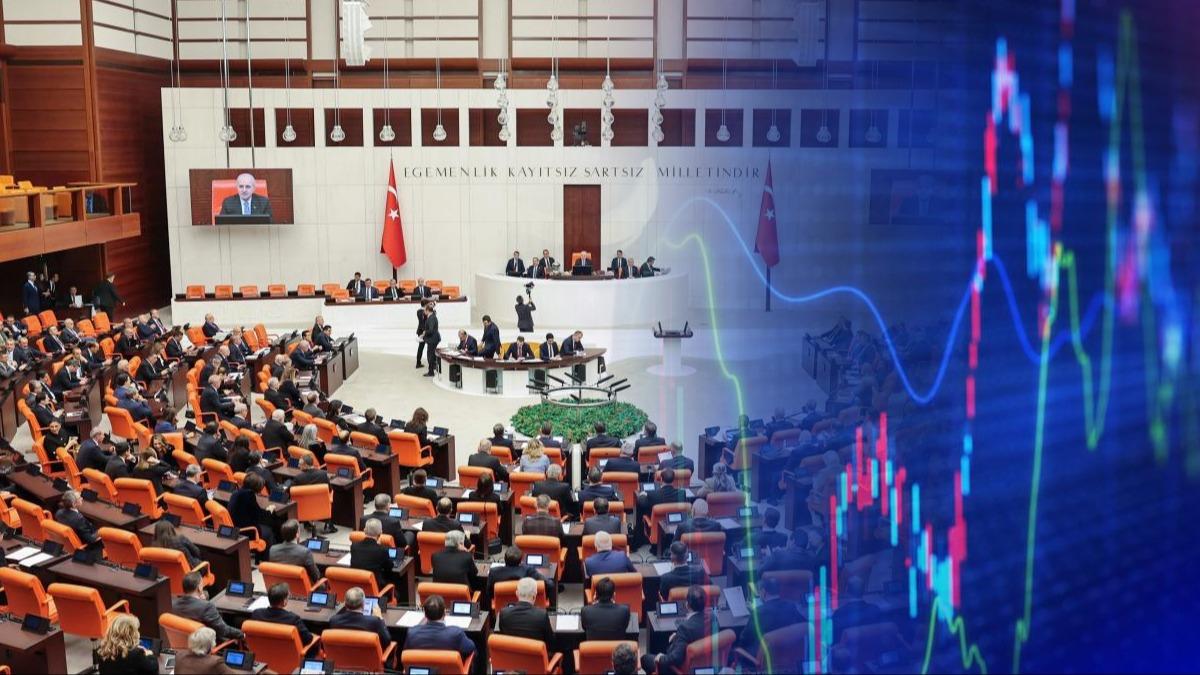
In the halls of the Turkish Grand National Assembly, a complex legislative puzzle is unfolding. This week, lawmakers are set to convene to discuss a law proposal that could fundamentally alter the landscape for specific investment funds currently slated for liquidation. It is a process that is as much about mathematical precision as it is about legal order, aiming to navigate the delicate transition from active investment to the final distribution of assets.

The proposed legislation, titled the 'Law Proposal Regarding Certain Investment Funds Decided to be Liquidated,' is not merely a procedural formality. It establishes a rigorous structure for how these funds will be dismantled. Central to this process is the Capital Markets Board (SPK), which will serve as the primary watchdog. Under the terms of the proposal, the liquidation of these funds will be carried out under the direct supervision and audit of the SPK. This oversight is designed to ensure that the winding-down process adheres to strict regulatory standards, providing a layer of institutional security during a period of financial transition.
As the liquidation progresses, the SPK carries a significant reporting responsibility. The agency is tasked with documenting and reporting any losses or damages incurred during the process to the Savings Fund Insurance Fund (TMSF). This mechanism ensures that the financial fallout of the liquidations is transparently tracked and communicated to the relevant state insurance bodies, maintaining a clear audit trail from the moment a fund begins its descent toward closure.
For those with larger stakes—investors holding 1 million Turkish lira or more—the compensation is capped.
Perhaps the most critical aspect of the debate concerns how the remaining assets will be distributed among those who held stakes in these funds. The proposal introduces a tiered system of interim payments, a method that seeks to balance the needs of different classes of investors based on the scale of their holdings. The math, however, is specific and leaves little room for ambiguity.
For investors whose net investment amount is less than 1 million Turkish lira within the liquidation assets of the relevant fund, the proposal suggests they may receive an interim payment of 1 million Turkish lira. For those with larger stakes—investors holding 1 million Turkish lira or more—the compensation is capped. These larger investors would be eligible for an interim payment of no more than 1 million Turkish lira. This distinction creates a clear threshold, separating smaller retail-scale interests from larger institutional or high-net-worth participants, and reflects a deliberate effort by legislators to set predictable parameters around who gets paid and how much.
While the law seeks to provide a pathway for compensation, it also draws a hard line regarding the conduct of those involved in the funds' histories. The proposal includes a strict prohibition: those who have acted in concert with the funds—referred to as those moving in conjunction with the funds—will be ineligible for any payments.
This principle of accountability is woven into the broader objective of the proposal, which is to ensure an orderly liquidation process that protects the integrity of the market while addressing the interests of those who were caught in the funds' dissolution. The legislation also touches upon the Turkish Kızılay Fund, noting that Kızılay will be the primary entity for receiving and using certain funds, while simultaneously being prohibited from allowing the movement of funds for certain activities.

The discussion of these fund liquidations does not exist in a vacuum. It arrives as part of a heavy legislative week for the Grand National Assembly. Alongside the debate over investment funds, the Assembly is also tasked with addressing significant budgetary matters. Vice President Cevdet Yılmaz is scheduled to present two major fiscal documents: the 2027 Central Management Budget Law proposal and the 2025 Central Management Final Account Law proposal.
As the lawmakers move through these various files, the liquidation proposal stands as a testament to the complexities of managing financial transitions. The outcome of these discussions will determine not just how much money returns to investors, but how the state manages the fallout of closed investment vehicles and the accountability of those who operated within them. For now, the focus remains on the fine print of the compensation tiers and the watchful eye of the SPK as the process moves toward a formal decision.