
On October 24, 2026, the intersection of global automotive manufacturing and American partisan politics became a site of profound friction. Gernot Döllner, the chief executive of Audi, arrived in the U.S. state of Georgia not merely to discuss logistics or supply chains, but to cast a decisive vote with his presence and his company's capital. In a move that blurred the lines between industrial expansion and political campaigning, Döllner announced a massive investment exceeding four billion dollars in the state, specifically a $4.2 billion commitment to a new plant dedicated to producing SUV sedans.
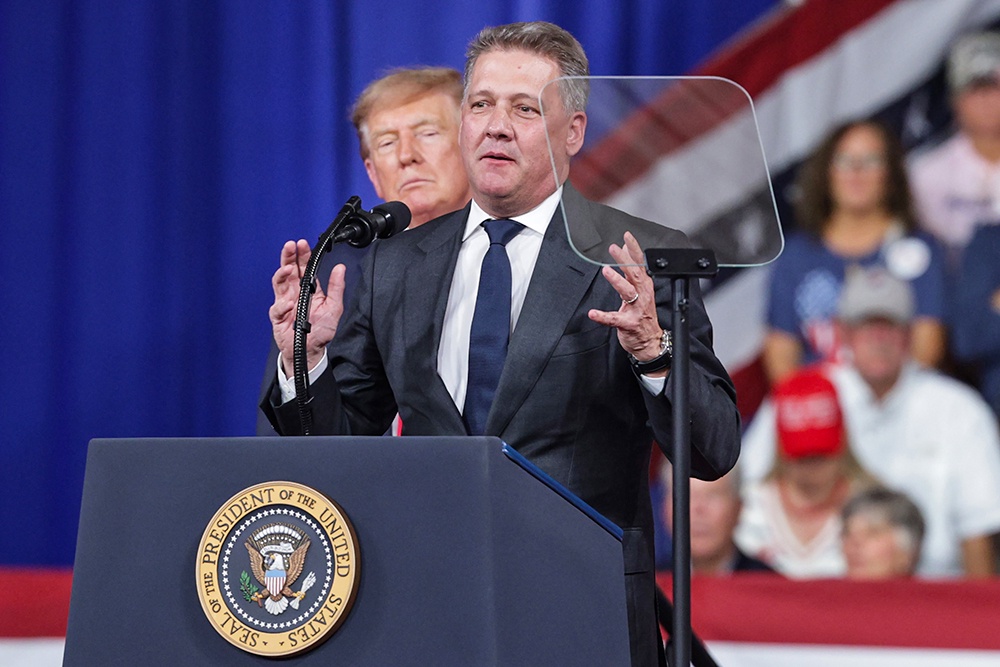
The scale of the announcement was matched only by its timing. As the 2026 midterm elections loomed, with Republicans facing difficult contests on November 3, Döllner’s presence in Georgia served a dual purpose. By October 26, the CEO had moved from formal announcements to the campaign trail itself, appearing alongside Donald Trump at a rally. The plan for the new facility is ambitious: the plant is expected to create 4,500 jobs and produce 200,000 SUVs annually. To the executive, it was a strategic foothold in the American market; to his critics, it was a calculated political endorsement.
For a company like Audi, which operates under the massive umbrella of the Volkswagen Group, the concept of political neutrality is more than a preference—it is a standard. The decision to participate in a political rally has sent shockwaves through the German industrial establishment. Internal committees within Volkswagen and the company's social democratic leadership have reacted with sharp condemnation, viewing the move as a violation of the rules that govern how a global corporation interacts with sovereign politics. The decision to tie such a massive capital expenditure to a specific candidate's campaign remains pending approval from Volkswagen's supervisory board.
Daniela Cavallo, a senior official of IG Metall, did not mince words when describing the atmosphere of the campaign event.
The fallout has exposed a deep rift regarding how German industry should navigate a changing American landscape. While some see the investment as a necessary evolution, others see it as a betrayal of national interests. The tension is fueled by a growing anxiety in Germany over rising energy costs and the threat of tariffs on imported cars—policies often associated with the Trump administration. Critics argue that by aligning with a leader whose platform may include trade wars against German interests, Audi is effectively subsidizing its own future economic hardship.
The rhetoric from labor leaders and industry observers has been blistering. Daniela Cavallo, a senior official of IG Metall, did not mince words when describing the atmosphere of the campaign event. She characterized the political environment as being filled with racist, sexist, and anti-trans hate, expressing open contempt for democracy. For Cavallo, the sight of a high-ranking group executive ascending the stage was not just a corporate error, but a moral one, describing the leader as acting like a "partner" to the Trump campaign.
This sentiment is echoed by those who view the move as a departure from the values of the workforce. Isabel Kademarotti struck a particularly sharp tone, suggesting that active support for an autocrat who is waging a trade war against Germany represents a "new low" for the Volkswagen Group. Even those who view international investment as a standard business practice find the execution of this particular move unsettling. Dennis Radtke noted that while it is normal for German companies to invest abroad, transforming that investment into an element of a U.S. election campaign is both "worrying and sad."
For many within the German automotive sector, the Georgia announcement feels like more than a strategic pivot; it feels like a violation of a fundamental boundary. Christiane Benner described the situation as a "manifest violation" and a "red line." This sense of unease is compounded by the perception that the company's identity is being leveraged to serve a political agenda that may ultimately work against the very industry that built it. The way the leadership presented Audi in the United States has been labeled by some as "politically unacceptable" and "unworthy" of the employees who power the brand.

As the November 3 midterms approach, the implications of Döllner’s Georgia trip continue to ripple outward. The $4.2 billion investment is a massive commitment to American soil, but the political cost in Germany is mounting. Audi finds itself at a crossroads, caught between the necessity of American market expansion and the strictures of corporate governance and national economic solidarity. Whether the supervisory board will ratify this path remains the central question for a company now navigating a storm of its own making.