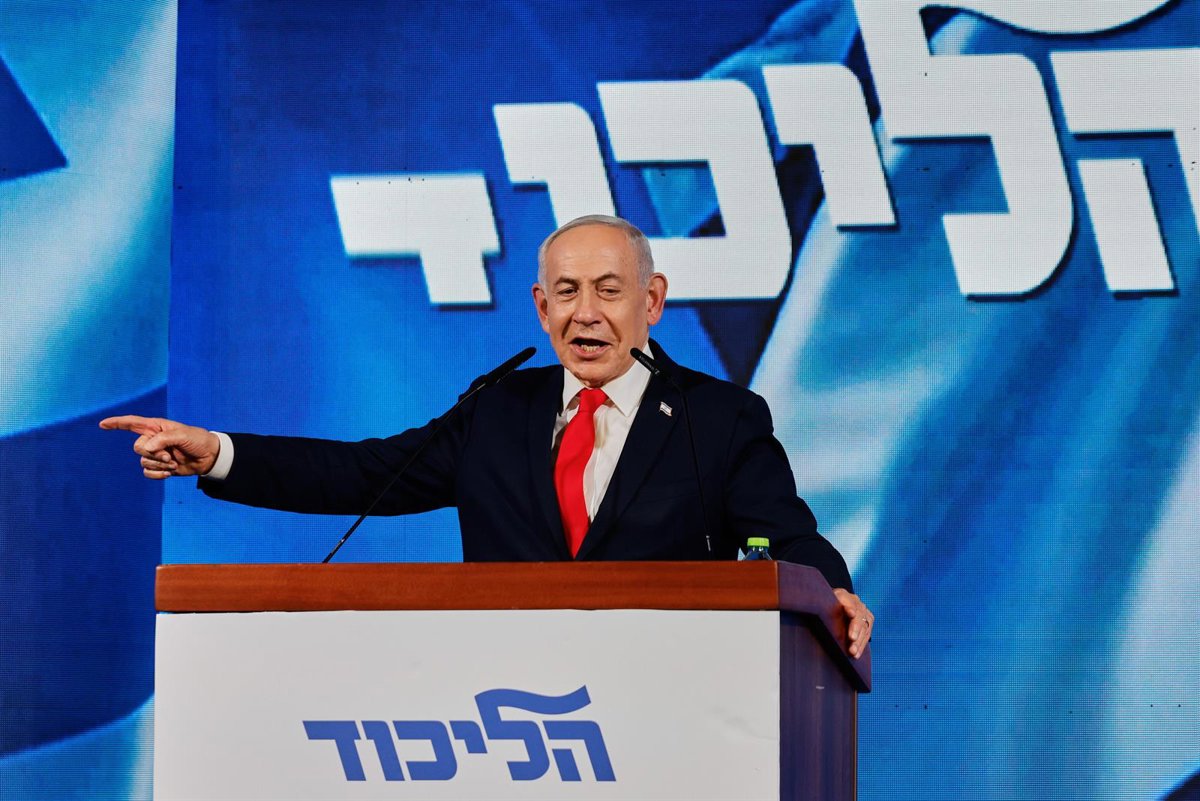
The night of the legislative elections in Israel, the focus shifted immediately to the shape of the government that would emerge. For Prime Minister Binyamin Netanyahu, the message was clear before the final numbers were verified: the mandate was already in hand. He stepped forward not to watch the polls in anxiety, but to dictate the terms of the next chapter, arguing that the conservative coalition had already secured the power to govern. This early assertion of dominance was a strategic move to shape the public narrative before any uncertainty could take root among the supporters of the right.
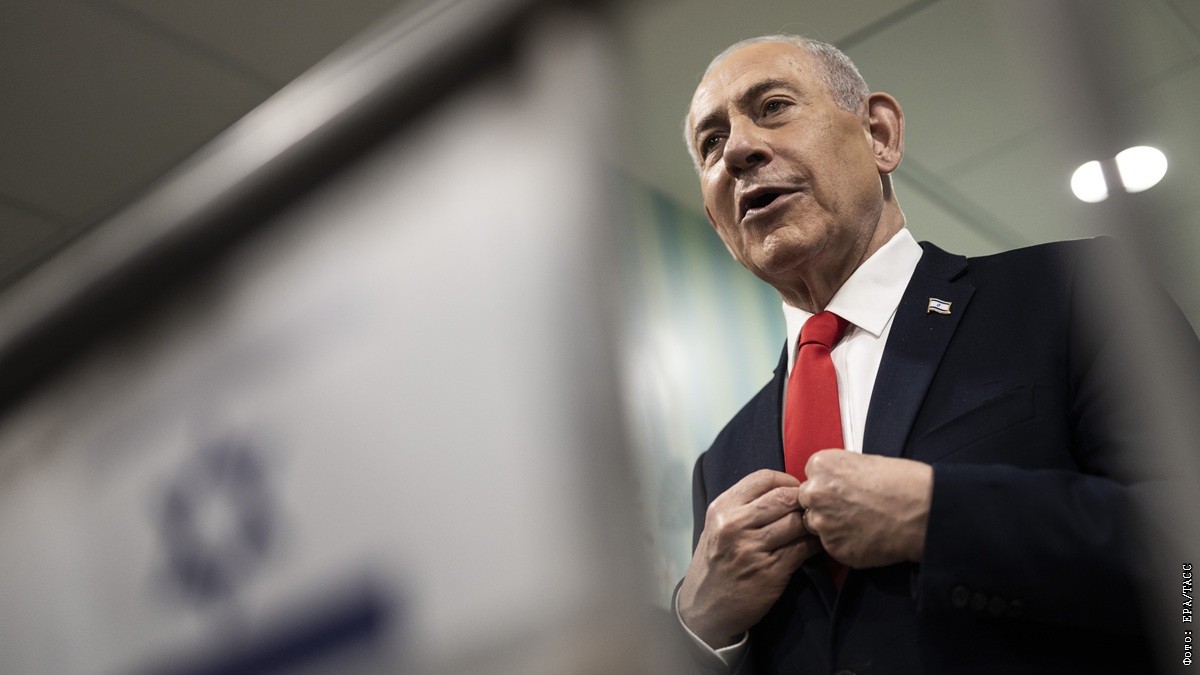
Central to Netanyahu’s post‑election address was a demand for internal unity among his base. He used the term "Zionist majority" with specific intent, signaling a strict boundary regarding coalition partners. He called for this segment of the public to "come to their senses" and unite behind a strong, national government. The implication was equally clear in his warning against forming a government with Arab parties. By drawing a sharp line between the "Zionist" electorate and potential coalition partners from other ideological blocs, Netanyahu was defining the ideological perimeter of the coming administration. It was a call for consolidation, suggesting that the center or the left did not have a role in the new power structure.

Former PLO official Xavier Abu Eid says Israel’s election outcome remains uncertain, with polls divided between Benjamin Netanyahu and Gadi Eisenkot. He suggests the two rivals could potentially form a national unity government despite their political differences. https://t.co/ukoYFUsWt0
To bolster his position, Netanyahu invoked the specific standing of his own political machine. He declared that "Likud is Israel's largest party." This was not merely a statement of pride; it was a lever used in the negotiations that would follow. In the complex arithmetic of Israeli coalition building, being the largest party grants disproportionate influence. By anchoring his claim in the size of Likud, he reinforced the broader argument that the right‑wing bloc held a "clear majority." The narrative he constructed was one of inevitability: the party with the most seats, representing the most supporters of the state, should lead the government.
He argued that the "decisive majority" was a fact that the press had ignored or undercounted.
While celebrating his perceived victory, Netanyahu did not hesitate to assign blame for the anxiety that had prevailed throughout the race. He criticized the media for publishing unfavorable polls that had clouded the picture for weeks. In his framing, the reality on the ground—the support of the base—had been masked by a media narrative that failed to capture the true strength of the conservative vote. This accusation served a dual purpose: it rallied his supporters who had felt uncertain due to conflicting data, and it positioned him as the one telling the truth about the public will, against a backdrop of what he characterized as misleading reporting. He argued that the "decisive majority" was a fact that the press had ignored or undercounted.

"Right bloc has a decisive majority among the Jewish bloc" NETANYAHU IS NOT OUT OF THE GAME AS YET. Israel's election result is too close to call, with Gadi Eisenkot's bloc neck and neck with Benjamin Natanyahu's camp in two exit polls; a third puts the PM's camp marginally ahead. Both have fallen short of a majority. But both have rejected Arab block's support. So either they come together and form a unity government or they begin to draw each other's allies out and over to their reapective sides. STAGE SET FOR INDIAN STYLE 'Jod-Tod'.
Perhaps the most significant pivot in his post‑election remarks was the shift from domestic politics to foreign threats. Netanyahu highlighted recent military successes, specifically pointing to actions against Iran. He made the stark claim that "Iran is weaker than ever, and Israel is stronger than never before." This assessment was not just military; it was political capital. By framing the state as a power on the rise, he offered a vision of national strength that resonated with voters who prioritized security. He suggested that this moment presented a historical opportunity to address the Iranian threat, citing support from the United States. The message was that a strong right‑wing government was the necessary vessel to capitalize on this fleeting strategic advantage.
Despite the confidence of the night, the final authority lay with the electoral commission. Netanyahu emphasized the need to wait for the official results, a standard procedural point that nonetheless served to legitimize his claims. By calling for patience while simultaneously asserting a "decisive majority" among those supporting the state, he maintained a position of strength. The argument was that the political center of gravity had already shifted, and that the coming days would simply confirm what was already visible in the street. The narrative of a unified, strong, national government led by the right‑wing bloc was set in motion, a story that would now shape the political landscape of Israel as it moved toward the formal certification of the election results.

Donald Trump and Benjamin Netanyahu are up to their old tricks: keeping their distance in public while preparing a dramatic move behind closed doors. The element of surprise was maintained; only this time, the victim isn’t the Iranian regime. It’s the Israeli opposition. Last night, in a statement that left even the media no room to find daylight, Trump gave Netanyahu his “Complete and Total Endorsement.” The Prime Minister’s Office insists it was spontaneous and unprompted. I suspect it was anything but. Either Trump has excellent intuition, or someone briefed him on the central message of the Likud campaign: “Netanyahu has been a Great Warrior Prime Minister, and an even greater Partner for Peace in combatting the Islamic Republic of Iran,” and, most of all, if Israel has “the wrong Leader, which would be anyone other than Bibi,” the U.S. would re-enter Iran alone. Why now? Contrary to what Tucker Carlson will likely say, the endorsement was not the work of some duplicitous Jew—I mean, Israeli agent—in Trump’s cabinet. Among Trump’s advisers, including those who happen to be Jewish, few would vote Likud. They likely told Trump to wait out the election, crossing their fingers for a government more receptive to American plans, only to be blindsided by a sudden outpouring of goodwill from the president. Despite the risk inherent in trying to read Trump, it is worth speculating what brought about his generous campaign contribution. Trump’s favorite people are winners and people who look good on TV; Netanyahu has remained the latter, but his status as the former has been called into question. The endorsement can be read as a vote of confidence from a super, if not higher, power. The White House runs its own polls in Israel, and presumably they look closer to Channel 14’s coalition majority than to Channel 13’s ignominious defeat. Yet according to a White House source, there are no new polls. The administration’s numbers supposedly show what most surveys have been pointing to: neither bloc has a majority. That doesn’t help Netanyahu. But it doesn’t help Gadi Eisenkot either. Rather than positive polling, the endorsement may be the result of a simple fact: when you’re president of the world’s greatest superpower, endorsing the wrong candidate costs nothing. In Hungary, Trump campaigned hard for Viktor Orbán, yet Péter Magyar, has refrained from retaliating. If invited, the new Hungarian prime minister will arrive at the White House beaming; any mentions of Orbán will be met with a polite change of topic and thanks for Trump’s previous support. Even if Trump starts attacking Bibi’s competitors by name, assuming he remembers them, upon taking office Eisenkot, Avigdor Liberman, or Naftali Bennett will smile and thank the president for his support of the State of Israel. Israel’s position is not so different from Ukraine’s. Even if Trump starts buying Iranian oil in November, Eisenkot, like Ukrainian President Zelensky, will keep his tone polite and deferential. If this episode teaches anything, it is that, like Mark Twain’s death, the reports of daylight between Trump and Netanyahu are greatly exaggerated. The difference is that the media only announced Twain’s death once before they learned their lesson. When it comes to Trump and Netanyahu, there is always more to the relationship than what makes it into print. Here, the “more” is the subject the endorsement kept returning to: Iran. It appears that after vanquishing Israel’s opposition, Trump and Netanyahu plan to move on to what is left of the Islamic Republic. If plans have already been set, it is understandable why Trump would want the leader already briefed to remain at the helm. Whether Trump’s claim that without Netanyahu “America will have to do this work ourselves” is a threat or an observation is an open question. If Trump is demanding Netanyahu as a precondition, that doesn’t mean he is voting for the coalition, only for a government with Netanyahu. America d