
On November 3, 2026, the political landscape of the American South underwent a transformation that had been decades in the making. Keisha Lance Bottoms, the former mayor of Atlanta, secured a decisive victory in the Georgia gubernatorial election, effectively ending 23 years of Republican control over the state’s highest office. As the final ballots were tallied on November 4, 2026, it became clear that the state had chosen a new path, electing Bottoms not only as the first woman and first Black person to lead Georgia, but as the first Black woman in United States history to serve as a governor.
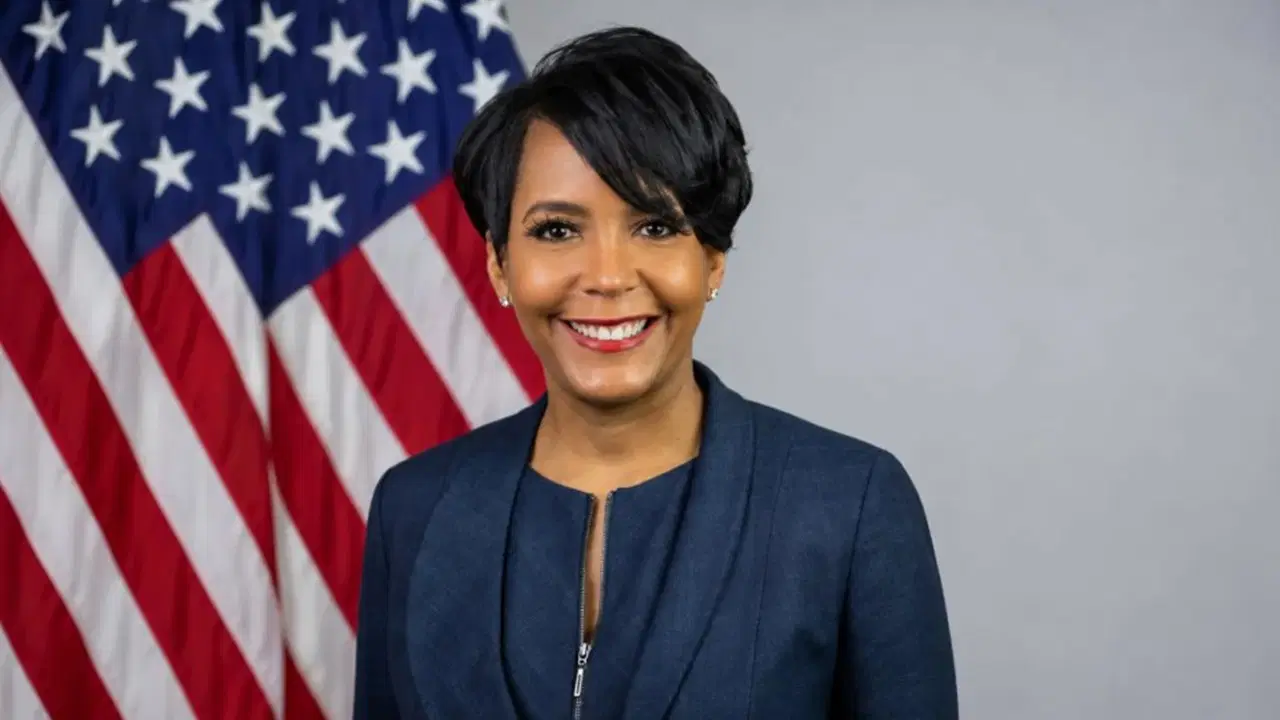
Bottoms’s path to the governor’s mansion was defined by a stark contrast in resources and ideology. Her opponent, Republican Rick Jackson, mounted an aggressive challenge, fueled by a staggering $200 million in self-funded campaign spending. In a race that pitted the deep pockets of a political newcomer against the seasoned experience of a former mayor, the stakes were high. Bottoms, an alumna of Florida A&M University and Georgia State University, navigated the intense scrutiny by focusing on a platform centered on the economic realities of low- and middle-income families. Her policy priorities—which included expanding Medicaid coverage, protecting abortion rights, and advancing criminal justice reform—resonated with a broad coalition of voters who were ready for a change in direction.

Keisha Lance Bottoms defeats Republican Rick Jackson in Georgia, becoming the first Black woman elected governor of a US state. https://t.co/GJXEUjbNwg https://t.co/XBpDdJ8LPH
Throughout the campaign, the rhetoric often centered on the identity and future of Georgia’s urban centers. Bottoms frequently pushed back against attempts to frame her home city as a political liability. "It’s a longstanding playbook to paint Atlanta as this big bad place," she noted, rejecting the divisive framing that often characterizes modern political contests. By keeping her focus on the tangible needs of her constituents, she managed to build a bridge between the state’s urban hubs and its rural communities, ultimately securing 55.4% of the vote, while Jackson finished with 44.6%.
The significance of this election extends far beyond the borders of Georgia.
The significance of this election extends far beyond the borders of Georgia. For many, Bottoms’s victory represents a milestone for historically Black colleges and universities (HBCUs), as her academic background at Florida A&M and Georgia State became a point of pride for supporters who see her win as a validation of the role these institutions play in shaping American leadership. As she prepares to succeed outgoing Republican Governor Brian Kemp, who served two terms, the transition marks the first time a Democrat has held the governorship since 1998.

Keisha Lance Bottoms wins Georgia! First black woman elected GOVERNOR of a US State!
In the wake of the results, the mood was one of both triumph and reflection. Acknowledging the outcome, Rick Jackson stated, "I respect their decision." For Bottoms, the victory is not merely a personal achievement but a moment of profound consequence. Reflecting on the gravity of her position, she remarked, "What we do in this moment will echo through history." As she prepares to take office, the eyes of the nation are fixed on Georgia, watching to see how the first Black woman governor in U.S. history will navigate the challenges of governing a state that has finally turned a new page.