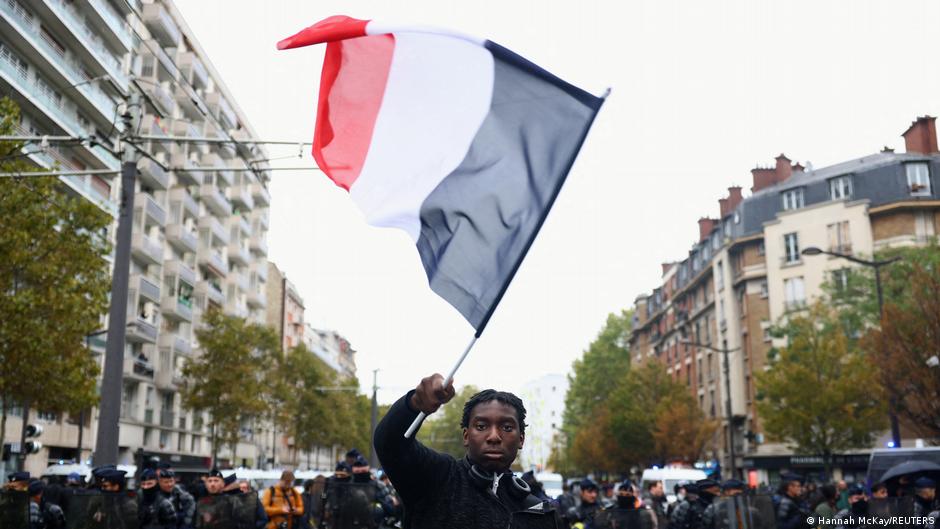
On October 24, 2026, the streets of France became the stage for a massive display of public discontent. From the historic boulevards of Paris to the regional hubs of Marseille, Lyon, and Nantes, citizens mobilized in a show of force that underscored the growing volatility of the French political climate. The atmosphere was one of profound tension, as the state, feeling the heat from both the political left and right, opted for an unprecedented show of force to maintain order.

As the crowds swelled, a familiar ritual of modern protest began: the battle over the tally. The French Interior Ministry reported that 410,000 people had taken part in the demonstrations across the country. Conversely, labor unions, led by figures like Sophie Binet, painted a far more expansive picture, claiming that nearly 800,000 participants had joined the movement. Binet characterized the day as a "massive and peaceful mobilization despite the provocations," highlighting the disconnect between the official government narrative and the lived experience of the protesters.

JUST IN: Police unleash tear gas and water cannons as massive protests sweep across France, with demonstrators flooding the streets over soaring living costs, rising fuel prices and underfunded schools. More than 100 people have been arrested as authorities deploy 70,000 police officers and military backup across Paris and other major cities. Major landmarks, including the Louvre Museum, are closed, while businesses board up their storefronts ahead of further unrest. Follow our live blog for the latest updates: https://t.co/qwT2eyHaWy
To manage this surge of dissent, the French authorities deployed a staggering 70,000 police officers and gendarmes. This massive security apparatus was designed to counter what the government labeled a 'high' threat of violence. In cities like Paris, where 250,000 people were estimated to have gathered, the authorities authorized a march with a strictly fixed route. Yet, despite these efforts to contain the movement, the presence of security forces became a flashpoint in itself. As one 21-year-old student observed, "The police are really mobile... They come and disperse marches before they even form."
In cities like Paris, where 250,000 people were estimated to have gathered, the authorities authorized a march with a strictly fixed route.
While Paris served as the epicenter, the unrest rippled outward. In Orléans, an antifascist rally took place. Meanwhile, in Lille, a significant number of protesters marched, and in other cities like Strasbourg and Grenoble, there were sporadic but intense clashes, with the use of gas canisters. The day was marked by a mix of authorized marches and spontaneous clashes, reflecting the broader tension in the country.

Ruins of Limoges city hall a symbol of France divided by national protests https://t.co/kXyA9fb49i
For the current French government, the day was a test of its ability to govern under fire. Caught between mounting pressure from opposition parties and the demands of the labor unions, the administration's strategy of heavy-handed security reflects a state on edge. The protests represent more than just a disagreement over policy; they are a manifestation of a country struggling to reconcile competing visions for its future. As the dust settles on the events of October 24, the question remains whether this mobilization will force a change in direction or merely entrench the current stalemate.