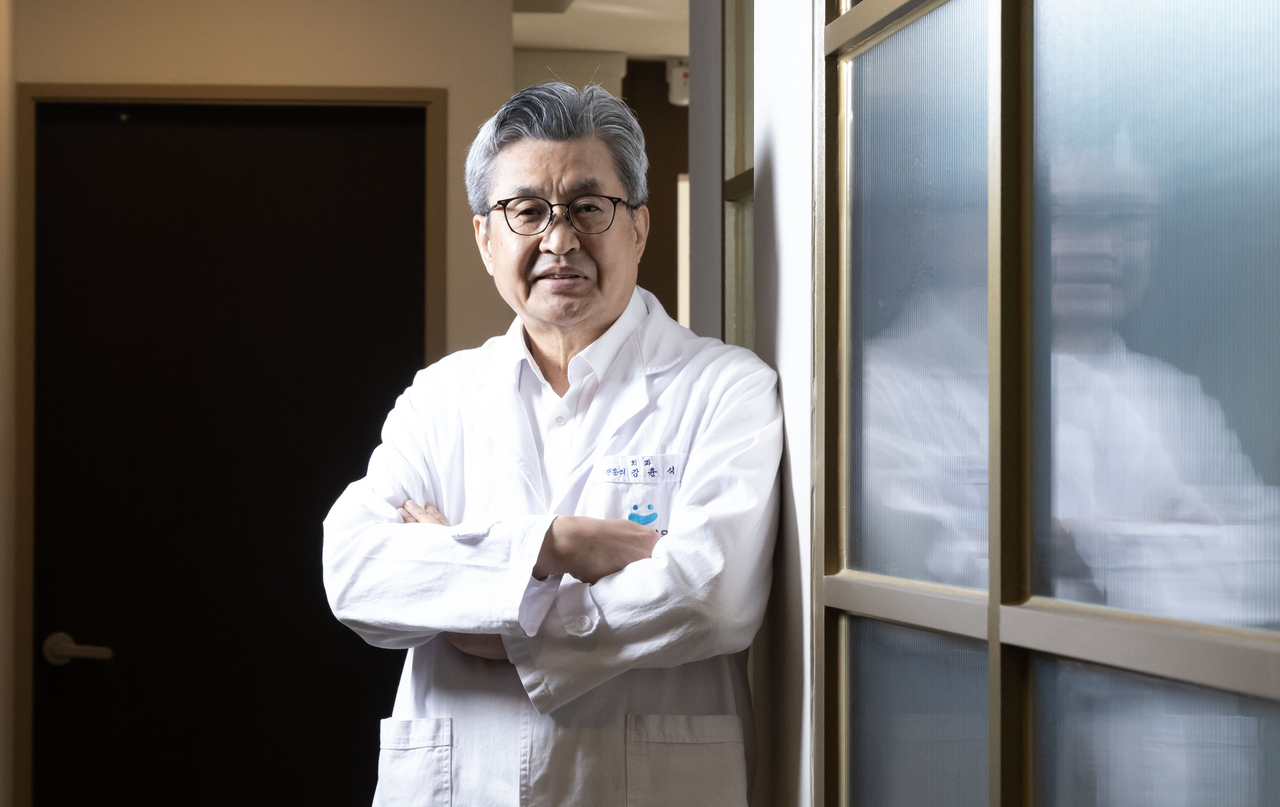
In the world of modern surgery, the introduction of synthetic mesh was once hailed as a definitive solution to the problem of inguinal hernias. For years, the standard procedure involved reinforcing the weakened abdominal wall with a man-made material, a method designed to prevent the protrusion of tissue. But for some patients, this technological advancement came with a heavy price: chronic, debilitating post-surgical pain. It was this specific tension between surgical efficiency and patient well-being that would eventually drive Yoon-Sik Kang to rethink the very foundation of hernia repair.

Kang’s journey into the complexities of the human body began long before he became a specialist in hernias. Having qualified as a surgeon in 1987, he spent his early career immersed in the demanding field of colorectal surgery. It was a period of intense learning and foundational growth. By 1990, he had opened a clinic in Seoul, honing the technical precision required for complex abdominal procedures. However, around the year 2000, a professional pivot began to take shape. Kang decided to narrow his clinical lens, shifting his focus toward the specific challenges posed by hernias.
"I thought that if I focused on one field, I would gain more experience and become better at what I did," Kang explained, reflecting on the decision to specialize. This commitment to mastery would eventually lead him to leave his previous practice in 2005 to establish Gibbeum Hospital in Seoul, a move that set the stage for a radical departure from conventional surgical wisdom.
This process resulted in the development of what is now known as 'Kang Repair.
While Kang initially utilized conventional synthetic mesh in his practice, a single clinical encounter in 2012 served as a profound catalyst for change. He treated a patient who was suffering from severe, persistent pain following a previous hernia surgery—pain directly linked to the presence of the synthetic mesh used to repair the defect. The necessity of removing the mesh to alleviate the patient's suffering forced a confrontation with the limitations of the current standard of care.
This moment did more than just change a single patient's life; it sparked a rigorous, iterative quest for a better way. Kang realized that if he were to move away from synthetic materials, he had to solve the primary obstacle that had plagued previous attempts at mesh-free surgery: the high rate of recurrence. Historically, older mesh-free repair methods faced recurrence rates as high as 20 percent, a margin that was simply unacceptable for a surgeon seeking long-term patient stability.
What followed was a period of intense refinement. Kang did not simply attempt a new technique; he engineered one. Through more than 100 iterations, he worked to perfect a method that could provide the necessary structural support without the introduction of foreign materials. This process resulted in the development of what is now known as 'Kang Repair.'
This technique is not a one-size-fits-all approach. Recognizing the anatomical nuances of the condition, Kang Repair utilizes distinct mesh-free techniques tailored specifically for both direct and indirect inguinal hernias. By differentiating the approach based on the type of hernia, the procedure aims to address the specific mechanics of the tissue weakness, seeking to bring that historical 20 percent recurrence rate down through precision and anatomical respect.

For Kang, the drive toward a mesh-free approach is rooted in a fundamental philosophy of surgical intervention: less is more. He views the act of surgery itself as a form of stress on the human organism. "The simpler and quicker the operation, the better, as surgery causes trauma to the patient’s body," Kang noted.
This philosophy manifests in the efficiency of his current practice. On his busiest days, Kang performs up to 15 operations. These are not drawn-out, marathon sessions; each operation lasts approximately 20 to 30 minutes. The goal is to achieve a successful repair while minimizing the duration of anesthesia and the physical impact of the procedure on the patient.
Today, the specialized focus of Gibbeum Hospital has transformed it from a local clinic into a center of international interest. The success of the Kang Repair has attracted a high volume of patients, not only from across South Korea but also from overseas. These patients are often those specifically seeking alternatives to the conventional synthetic mesh treatments that have long dominated the field.
What began as a surgeon's response to a patient's pain has evolved into a specialized practice that challenges the status quo. As the medical community continues to weigh the benefits of synthetic reinforcement against the risks of chronic pain, the work being done in Seoul stands as a testament to the power of iterative, specialized refinement.